
 Pin it
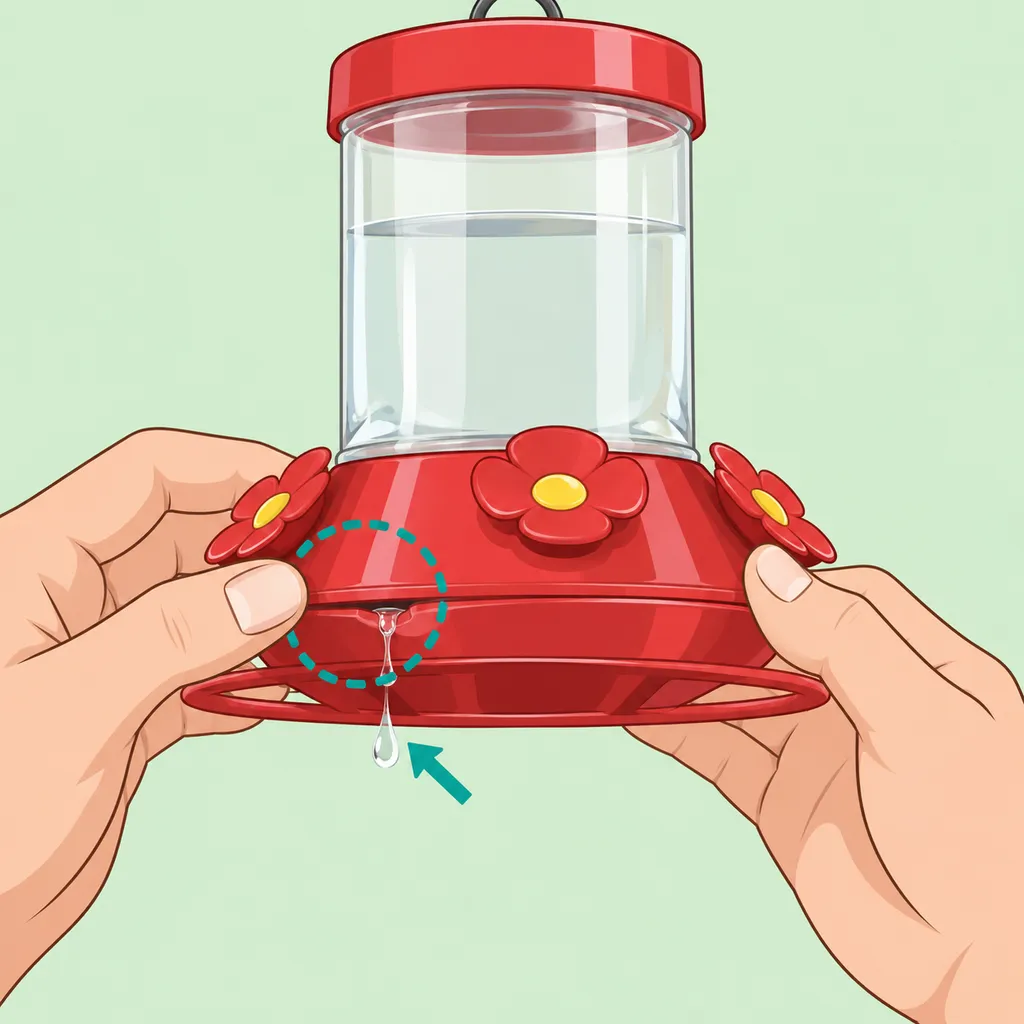
A leaking hummingbird feeder wastes nectar, makes the feeder harder to keep clean, and can draw ants or bees to the ports. Most leaks come from loose parts, worn seals, cracks, wind, or heat building pressure inside an inverted bottle feeder. This guide walks you through the practical checks that usually stop the drip.
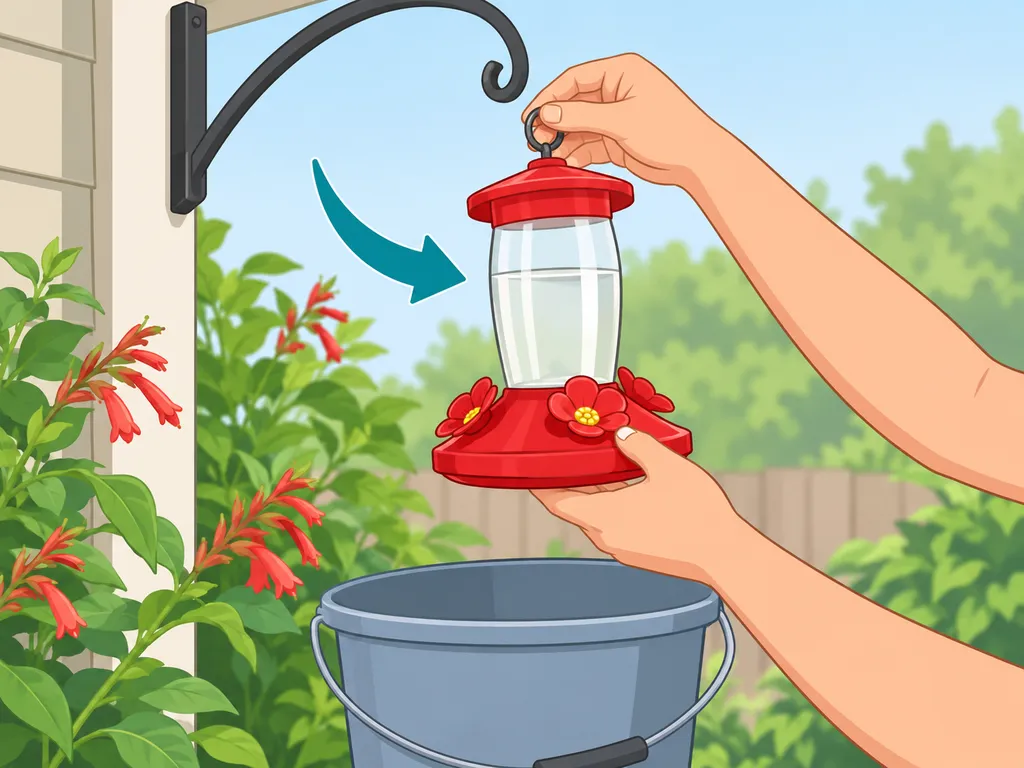
Take the feeder down and empty it
Remove the feeder as soon as you notice steady dripping, then pour out the old nectar and rinse the sticky areas before troubleshooting. Cornell's Project FeederWatch recommends taking hummingbird feeders apart and cleaning them frequently, ideally whenever you refill them, because sugar water builds up quickly in warm weather: cleaning guidance for hummingbird feeders. Audubon recommends hot water or a weak vinegar solution for routine feeder cleaning, while some authorities allow mild dish soap only with very thorough rinsing.
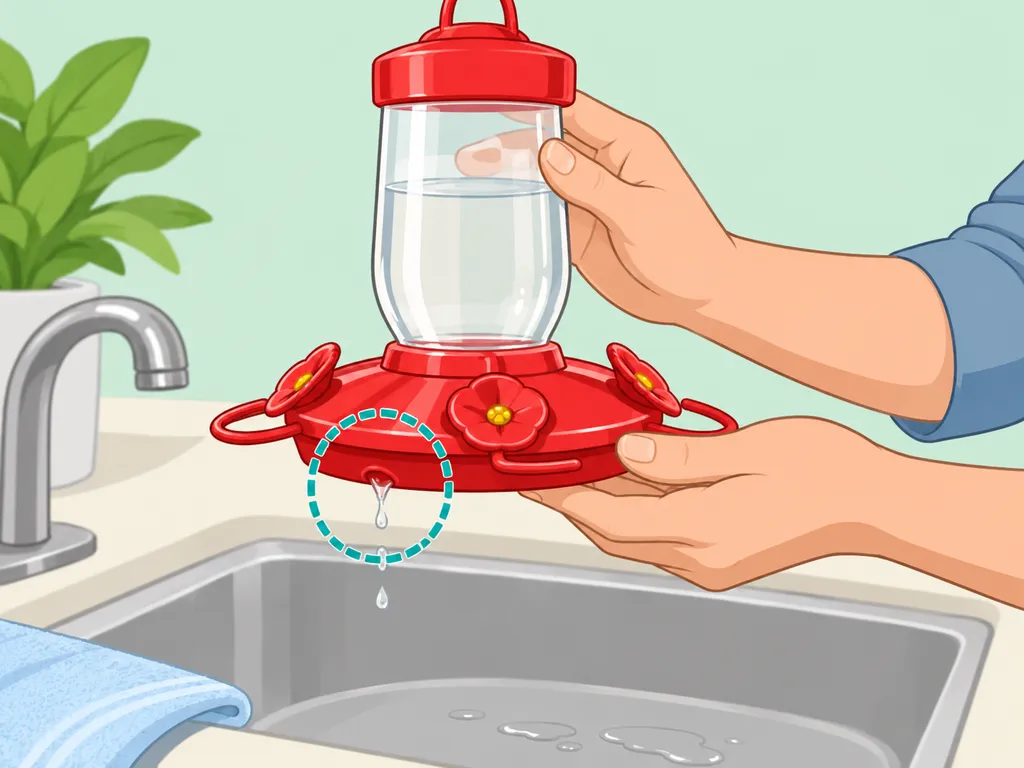
Test the feeder with plain water
Fill the feeder with plain water and hold it over a sink, bucket, or towel so you can see exactly where the drip starts. Look at the base seam, hanging hook, bottle threads, flower ports, bee guards, and any removable gasket. Testing with water keeps fresh nectar out of the repair process and makes it easier to repeat the test after each adjustment.
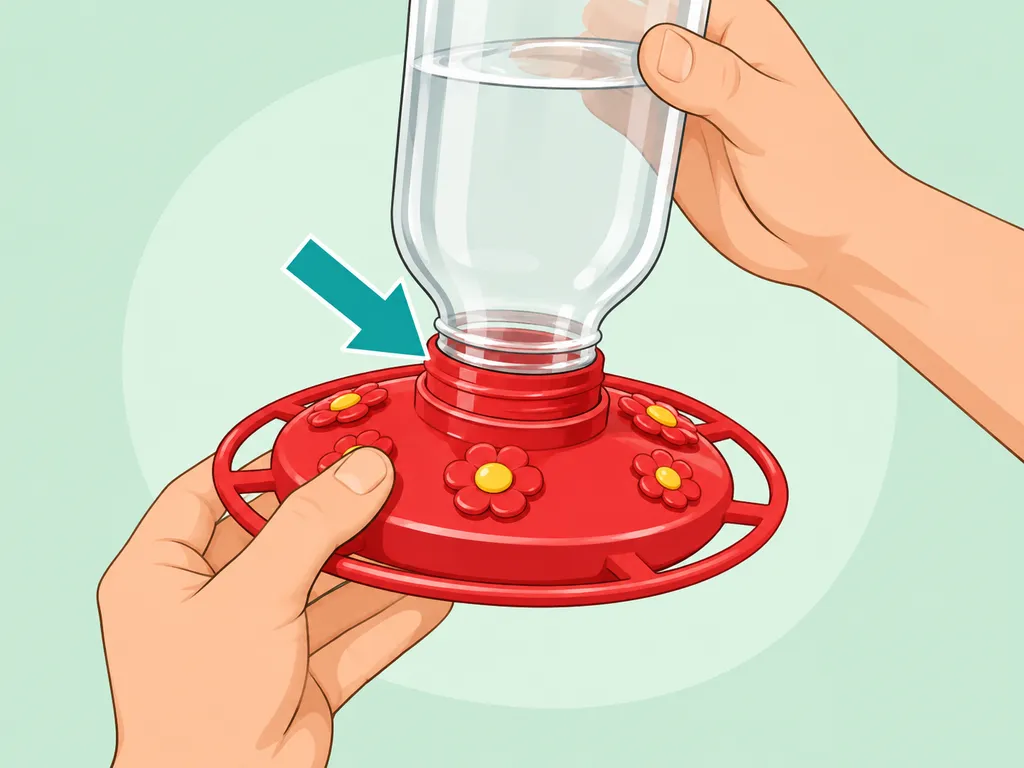
Tighten and reseat every removable part
Unscrew the reservoir, base, ports, flowers, and guards one at a time, then put them back squarely without cross-threading. Audubon notes that hummingbird feeders can drip when they are not assembled securely, and recommends checking that parts are tightened: feeder leakage and pest prevention. Do not overtighten plastic parts, since a warped cap or cracked thread can make the leak worse.
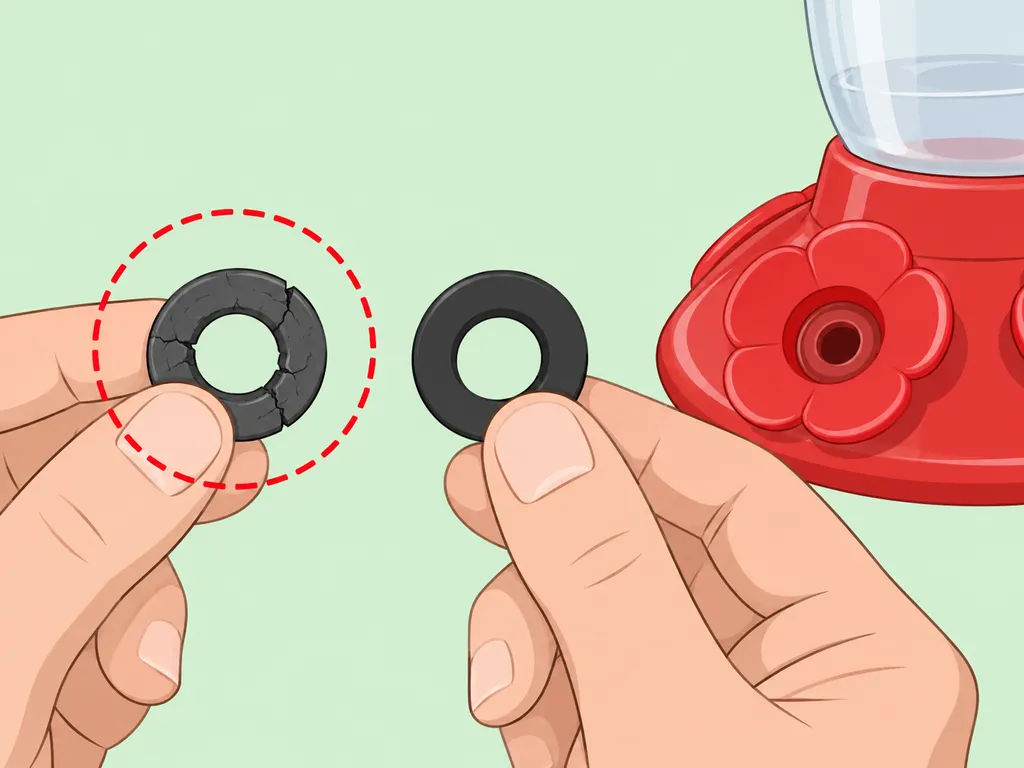
Replace worn seals, ports, or cracked pieces
Inspect rubber gaskets, silicone rings, port flowers, and screw threads for flattening, gaps, splits, or warping. If a gasket no longer springs back or a port wiggles after tightening, replace that part with a matching feeder part when possible. If the reservoir or base is cracked, retire the feeder instead of trying to patch a nectar-contact surface.
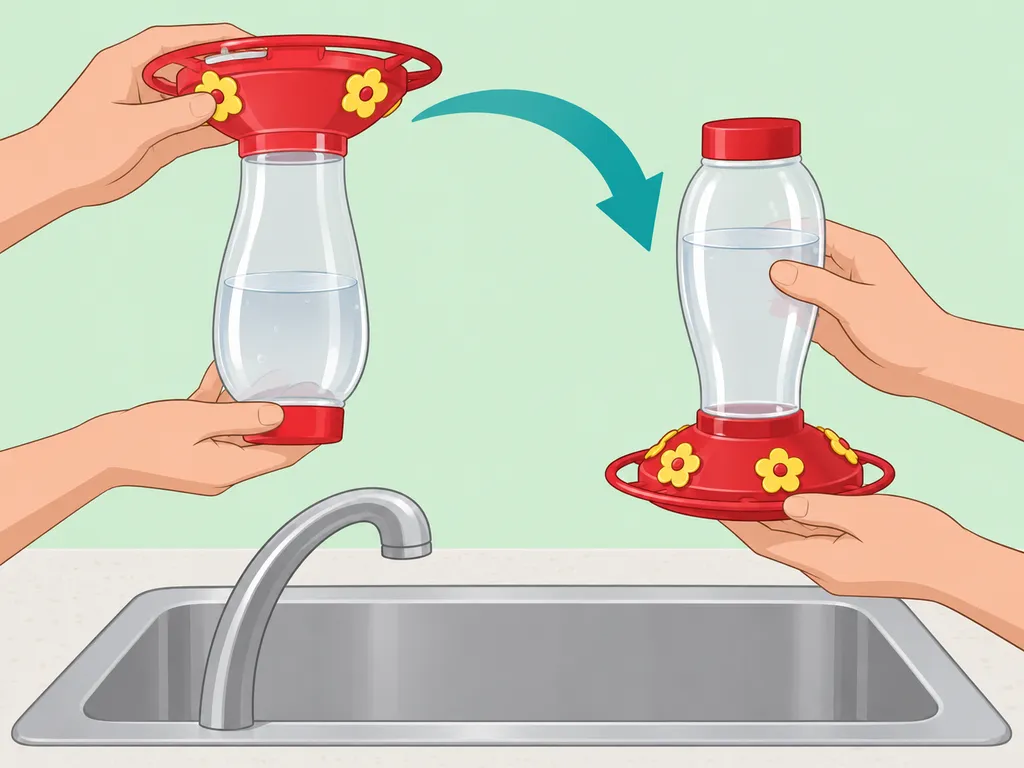
Refill an inverted bottle feeder carefully
For an inverted bottle feeder, fill only to the feeder's intended level, attach the base while the feeder is level, and turn it upright in one smooth motion over the sink. Let the first few drops settle before rehanging it. Cornell Lab explains that bottle or tube feeders can leak in sun because trapped air expands and pushes nectar out: Cornell Lab feeder placement advice.
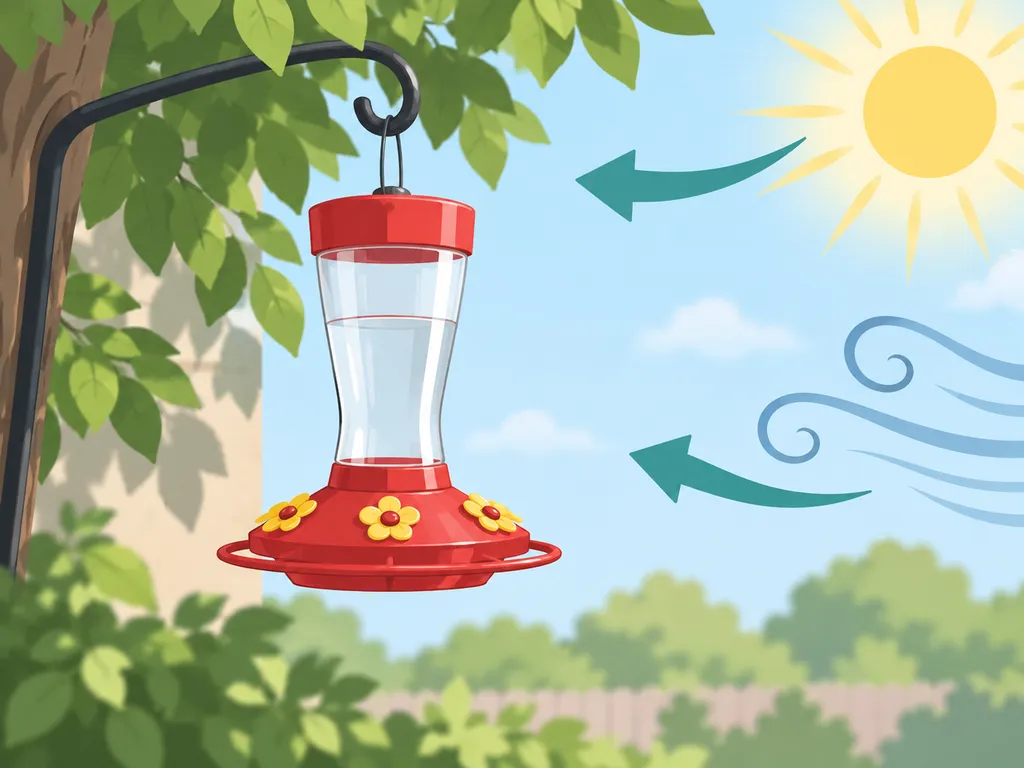
Move the feeder to shade and calmer air
Hang the feeder where it gets bright visibility but not long stretches of direct afternoon sun. Cornell Lab recommends avoiding direct sun because it can speed spoilage and contribute to bottle-feeder leaks, and Audubon recommends placing feeders away from strong wind that can whip them around. A steady hook, short hanger, or sheltered branch can reduce swinging and stop nectar from sloshing out of the ports.
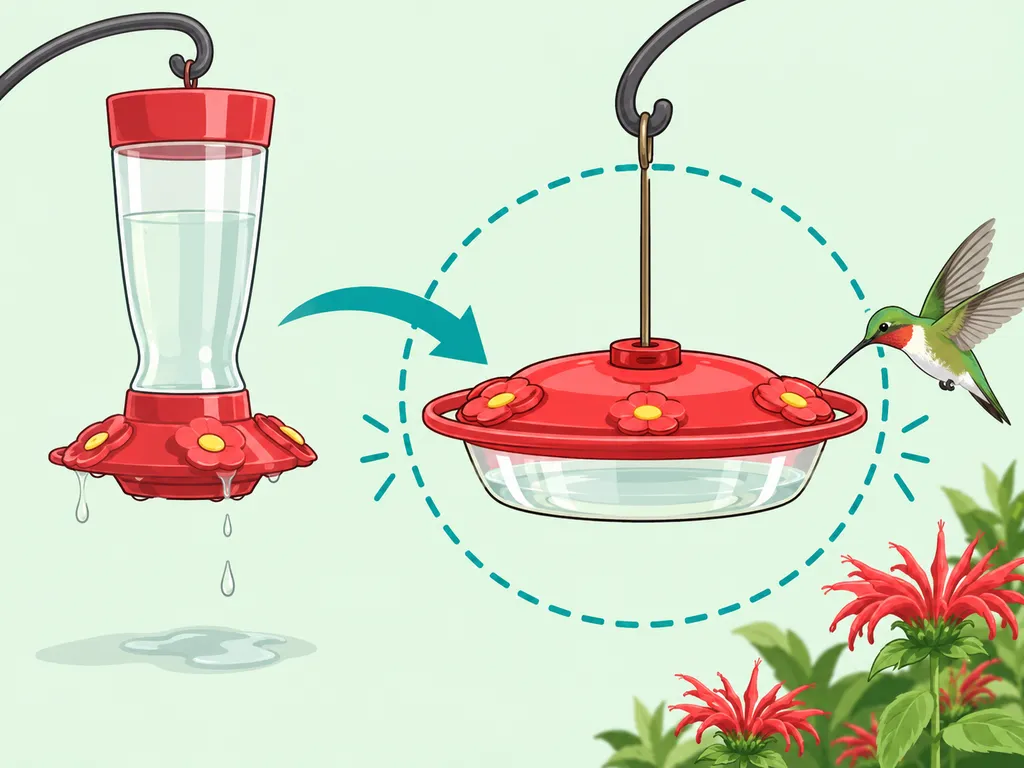
Switch designs if the same feeder still drips
If the feeder still leaks after cleaning, tightening, part replacement, careful filling, and better placement, the design or damaged body is probably the problem. A saucer-style feeder is often easier to keep level, and Cornell Lab notes that tray feeders avoid the trapped-air leak that can happen in bottle feeders. Refill the new or repaired feeder with fresh, clear 4:1 nectar made from plain white table sugar and water, and skip red dye as Audubon recommends: hummingbird feeding FAQs.
The Bottom Line
The bottom line: find the leak with plain water, reseat every removable part, replace worn seals or cracked ports, and move the feeder away from direct sun and strong wind. If an inverted bottle feeder still drips after that, a saucer-style feeder is often the simpler fix.
Frequently Asked Questions
Why is my hummingbird feeder leaking from the flower ports?
Can a leaking feeder attract ants or bees?
Should I make thicker nectar to stop a leak?
Are saucer feeders less likely to leak?
Can I use tape, glue, or silicone on a leaking feeder?
How soon should I check the feeder after fixing it?
Sources
This guide was researched using these sources.
- https://www.allaboutbirds.org/news/feeding-hummingbirds
- https://www.audubon.org/magazine/how-keep-your-hummingbird-feeder-free-pests
- https://www.audubon.org/magazine/hummingbird-feeding-faqs
- https://feederwatch.org/learn/feeding-birds/how-to-clean-your-feeders
- https://www.fws.gov/sites/default/files/documents/FW-2002-For-The-Birds-Booklet.pdf