
 Pin it
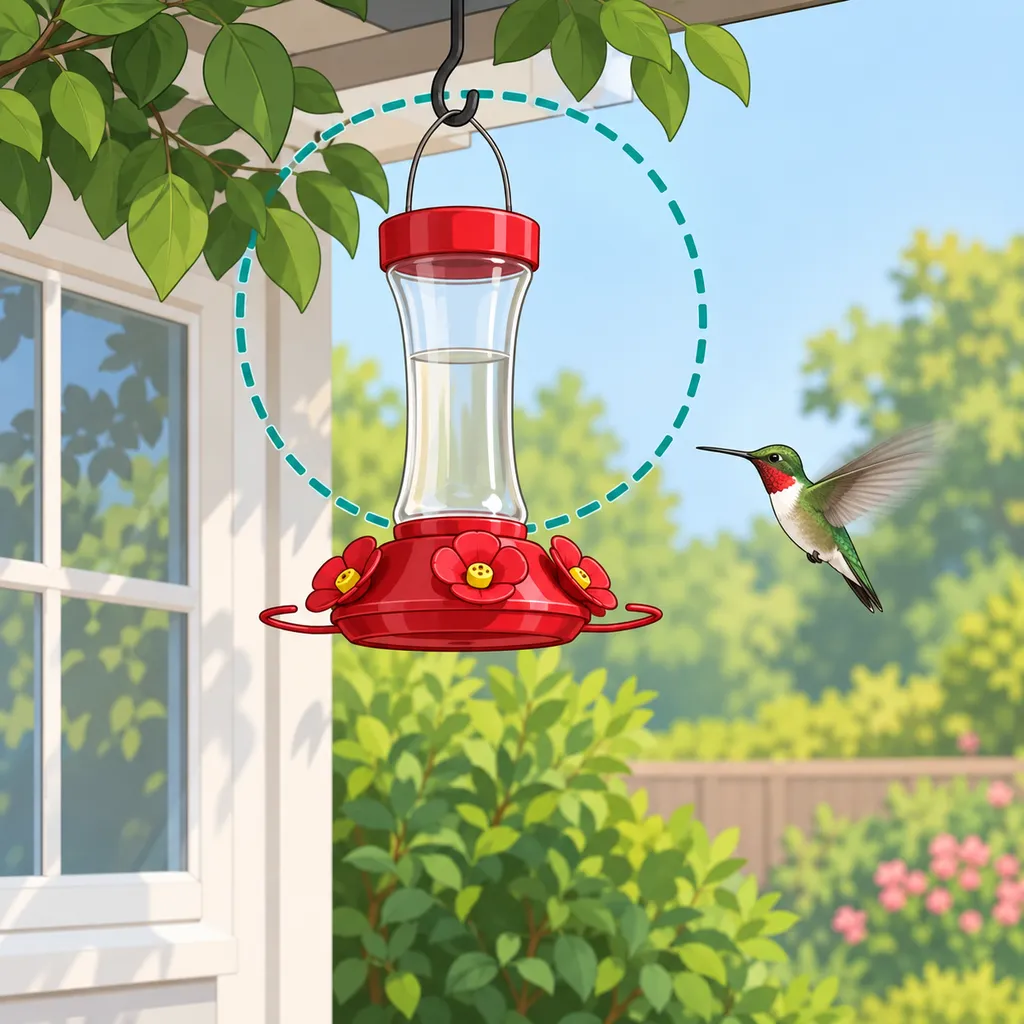
Good hummingbird feeder placement is a balance of visibility, safety, shade, and convenience. The right spot helps hummingbirds find the feeder while making it easier for you to refill and clean it often. Use these steps to choose a practical place before you hang the feeder.
Choose a spot you can reach every few days
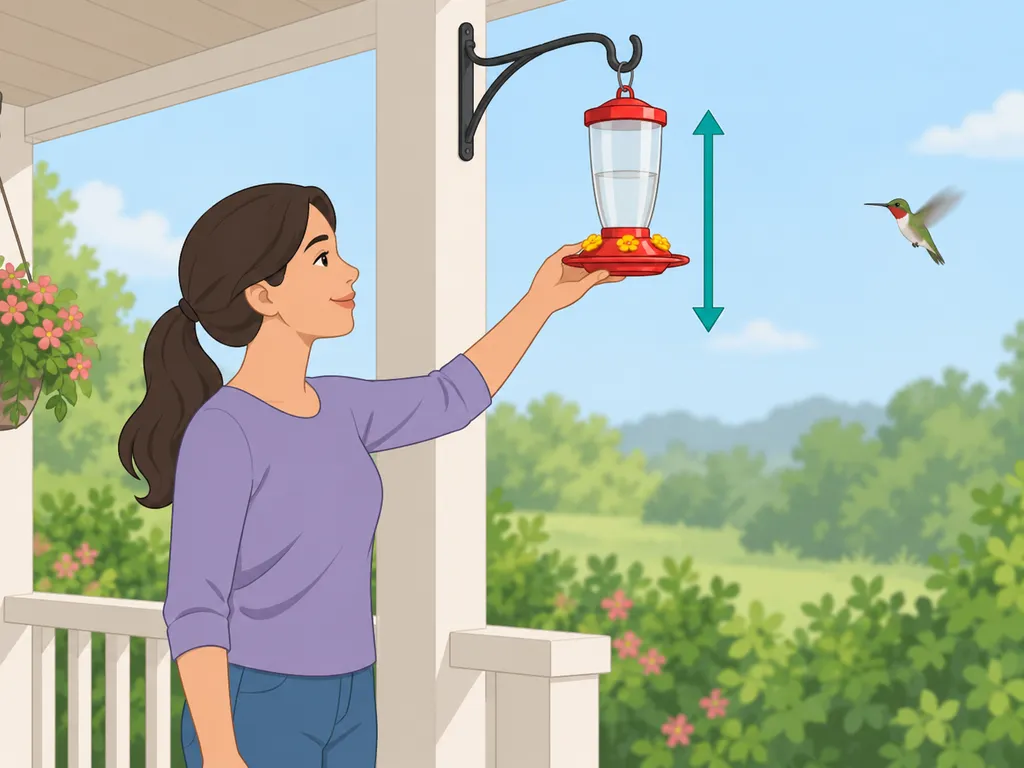
Pick a location where you can remove, refill, and rehang the feeder without stretching over railings or stepping into a risky spot. Project FeederWatch recommends placing feeders where they are convenient to refill and easy to see, which matters because hummingbird feeders need regular attention.
Place the feeder within a safe window distance
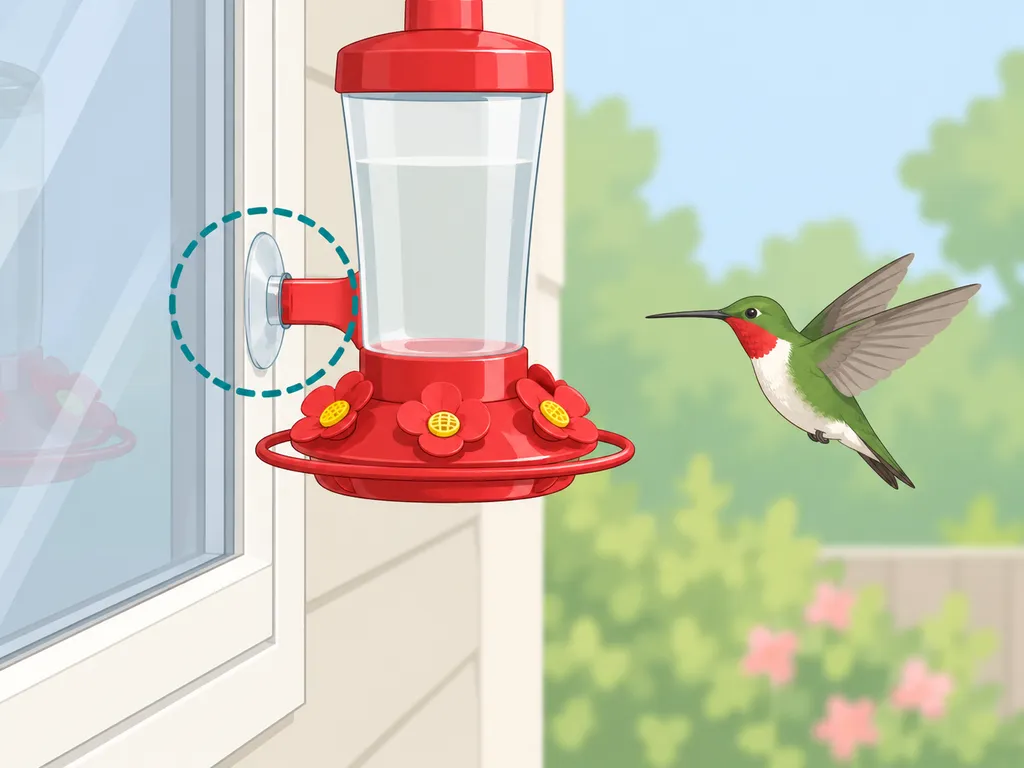
If the feeder is near glass, mount it directly on the window or keep it within 3 feet of the window; otherwise, place it more than 30 feet away. The U.S. Fish and Wildlife Service recommends keeping feeders within 3 feet of windows, and Audubon also lists the within-3-feet or over-30-feet rule to reduce window-collision risk.
Use partial shade instead of full afternoon sun
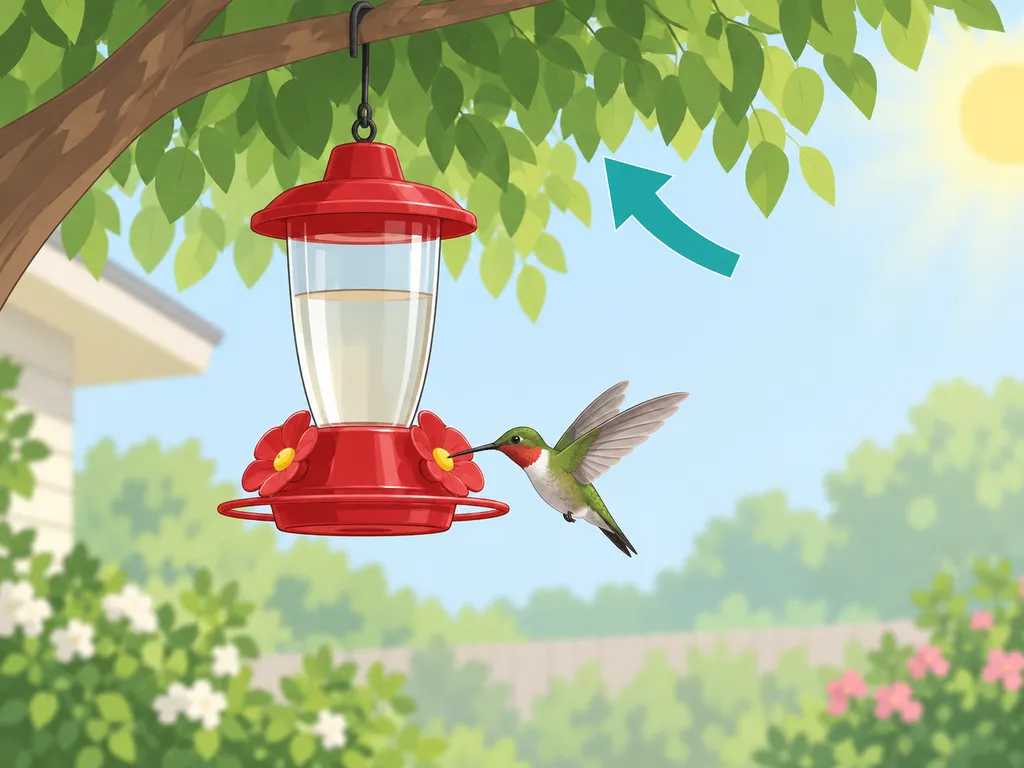
Hang the feeder where it gets some light but is not baking in direct sun all day. The Cornell Lab says hummingbird feeders do best mostly shaded because sugar solution spoils faster in sun, and a shaded spot also makes the feeder more comfortable to maintain.
Keep the feeder protected from strong wind
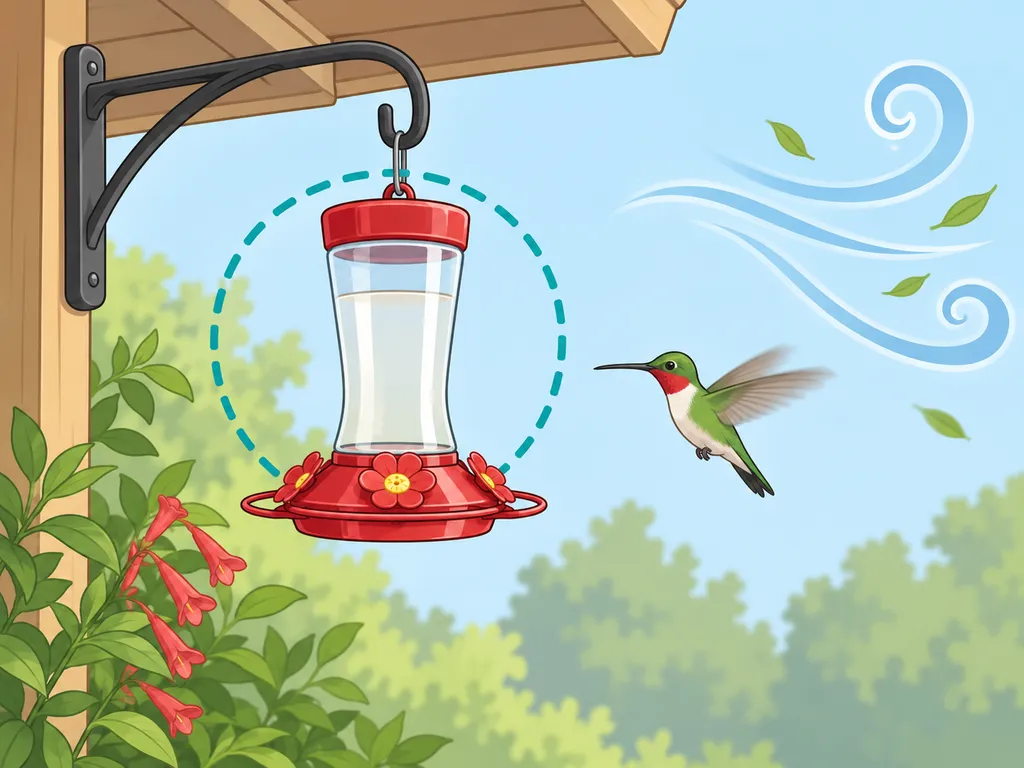
Choose a hook, branch, pole, or bracket that keeps the feeder level and steady. A feeder that swings in wind can spill clear nectar, and the Cornell Lab recommends placing hummingbird feeders where they are protected from wind.
Set it near cover, but leave open flying space
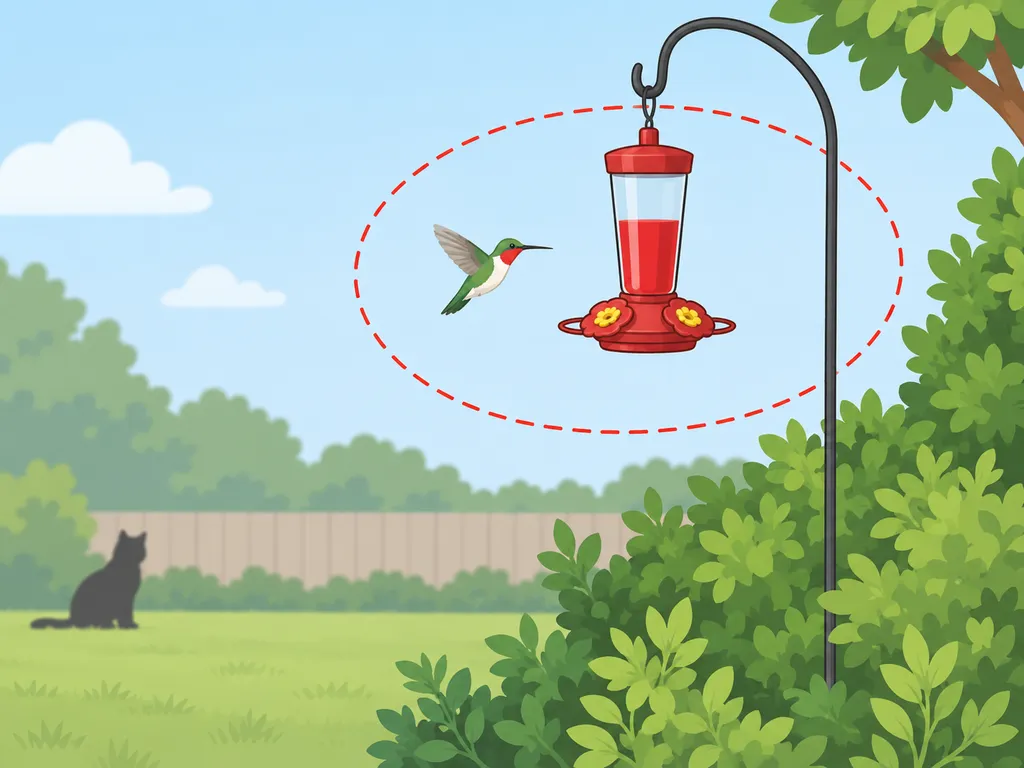
Put the feeder near trees, shrubs, or other shelter so hummingbirds have places to perch and retreat between visits. Keep some open air around the feeder, since Project FeederWatch notes that natural cover is useful but dense branches too close to a feeder can create hiding spots for cats and other threats.
Make the feeder easy for hummingbirds to notice
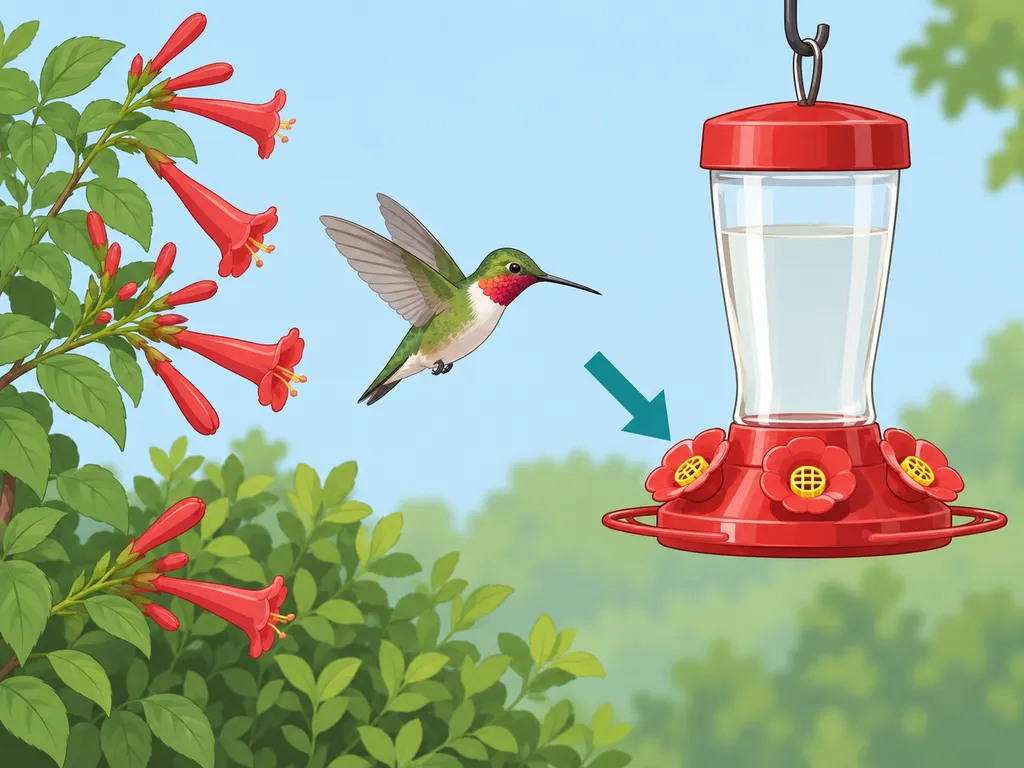
Hang the feeder where it is visible from several directions rather than tucked deep inside foliage. If you have a hummingbird garden or containers, place the feeder near native tubular flowers, since Audubon recommends native flowering plants and shaded feeders as part of a hummingbird-friendly yard.
Space multiple feeders out of sight from each other
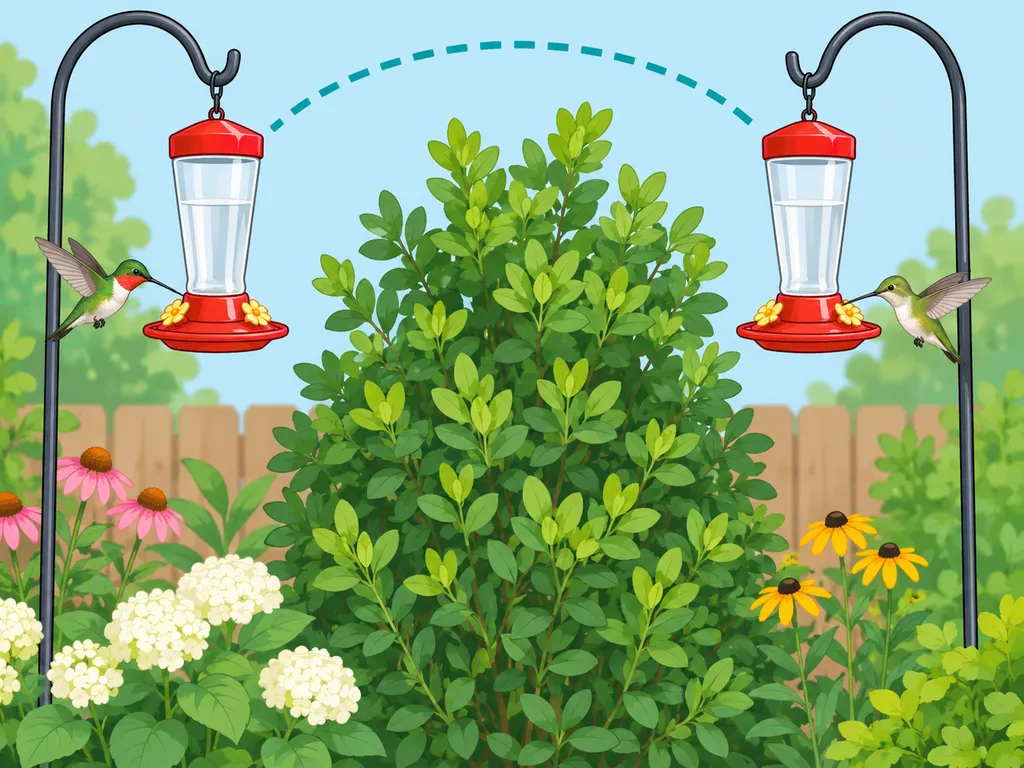
If one hummingbird guards the feeder, add another small feeder around a corner, on the other side of the porch, or beyond a shrub so one bird cannot watch both at once. The Cornell Lab explains that several small feeders often work better than one large feeder because hummingbirds can be territorial around feeding sites.
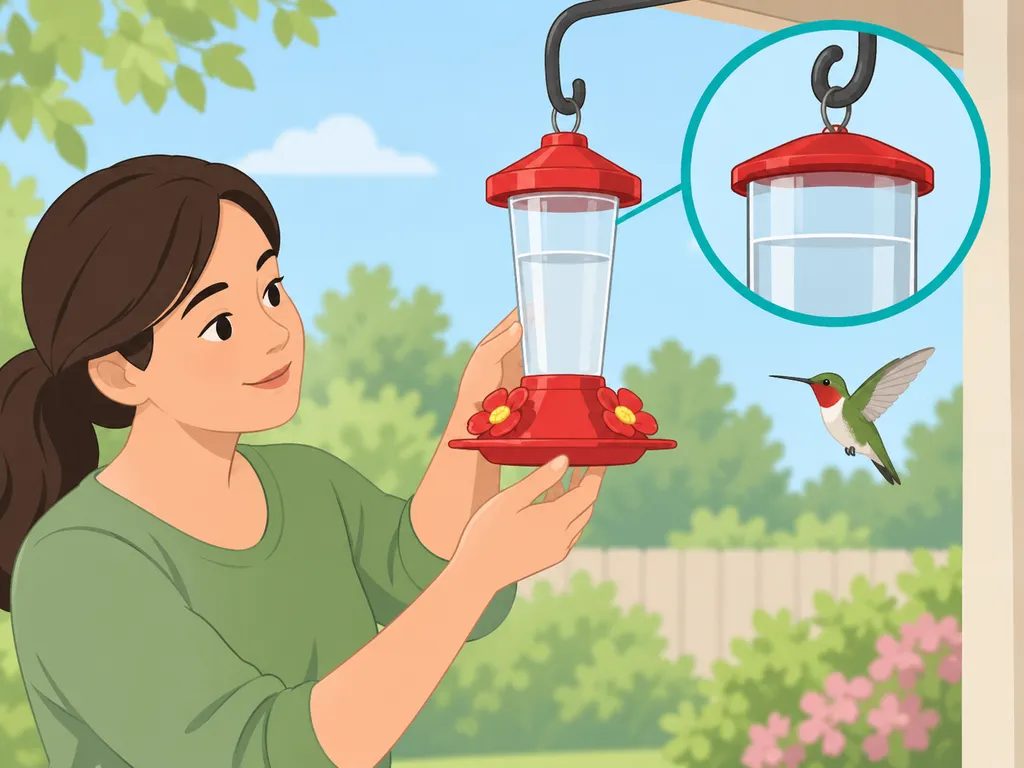
Check the spot after the first few refills
After you fill the feeder with fresh clear 4:1 nectar, watch for leaking, overheating, window reflections, guarding, and whether you can clean it easily. Project FeederWatch advises cleaning hummingbird feeders very often, ideally every time you refill them, so the right placement should make that routine simple.
The Bottom Line
The bottom line: the best hummingbird feeder spot is easy for you to maintain, easy for hummingbirds to notice, shaded from harsh sun, protected from strong wind, and placed with window safety in mind. If one bird guards it, add another feeder out of sight instead of simply buying a larger one.
Frequently Asked Questions
What is the best place to hang a hummingbird feeder?
Choose a spot you can reach easily, with partial shade, some nearby shrubs or trees, and enough open space for hummingbirds to hover. Cornell's Project FeederWatch recommends placing feeders where they are easy to see and refill, with natural cover nearby but not so close that predators can hide beside the feeder.
Should a hummingbird feeder be in the sun or shade?
Partial shade is best, especially during hot afternoon hours. The Cornell Lab notes that direct sun can make sugar water spoil faster, so bright morning light with afternoon shade is usually a better balance.
How close can a hummingbird feeder be to a window?
For window safety, use a window-mounted feeder or place the feeder within 3 feet of the glass, or put it more than 30 feet away. Audubon explains that the middle zone can give startled birds enough distance to hit glass with more speed.
Can I hang a hummingbird feeder near flowers?
Yes. Native tubular flowers can help draw hummingbirds into the area, and Audubon recommends planting or placing nectar-rich flowers where possible. Keep the feeder visible, though, so leaves and blooms do not block the ports.
Why is one hummingbird guarding my feeder?
Hummingbirds can be territorial at feeding spots. The Cornell Lab recommends using more small feeders rather than one large feeder, and Audubon suggests hanging several feeders far enough apart that one bird cannot see and guard all of them.
Is a balcony a good place for a hummingbird feeder?
A balcony can work if rules allow it and you can keep the feeder clean and secure. Use a stable hook or window-mounted feeder, keep clear nectar in the feeder, and avoid placing it where dripping could bother neighbors below.
Sources
This guide was researched using these sources.
- https://www.allaboutbirds.org/news/where-to-put-your-bird-feeder
- https://feederwatch.org/learn/feeding-birds/feeder-placement
- https://www.fws.gov/library/collections/bird-friendly-home-toolkit
- https://www.audubon.org/news/this-spring-help-birds-make-it-safely-their-summer-breeding-grounds
- https://www.audubon.org/community-science/hummingbirds/how-create-hummingbird-friendly-yard
- https://www.allaboutbirds.org/news/feeding-hummingbirds
- https://feederwatch.org/learn/feeding-birds