
 Pin it
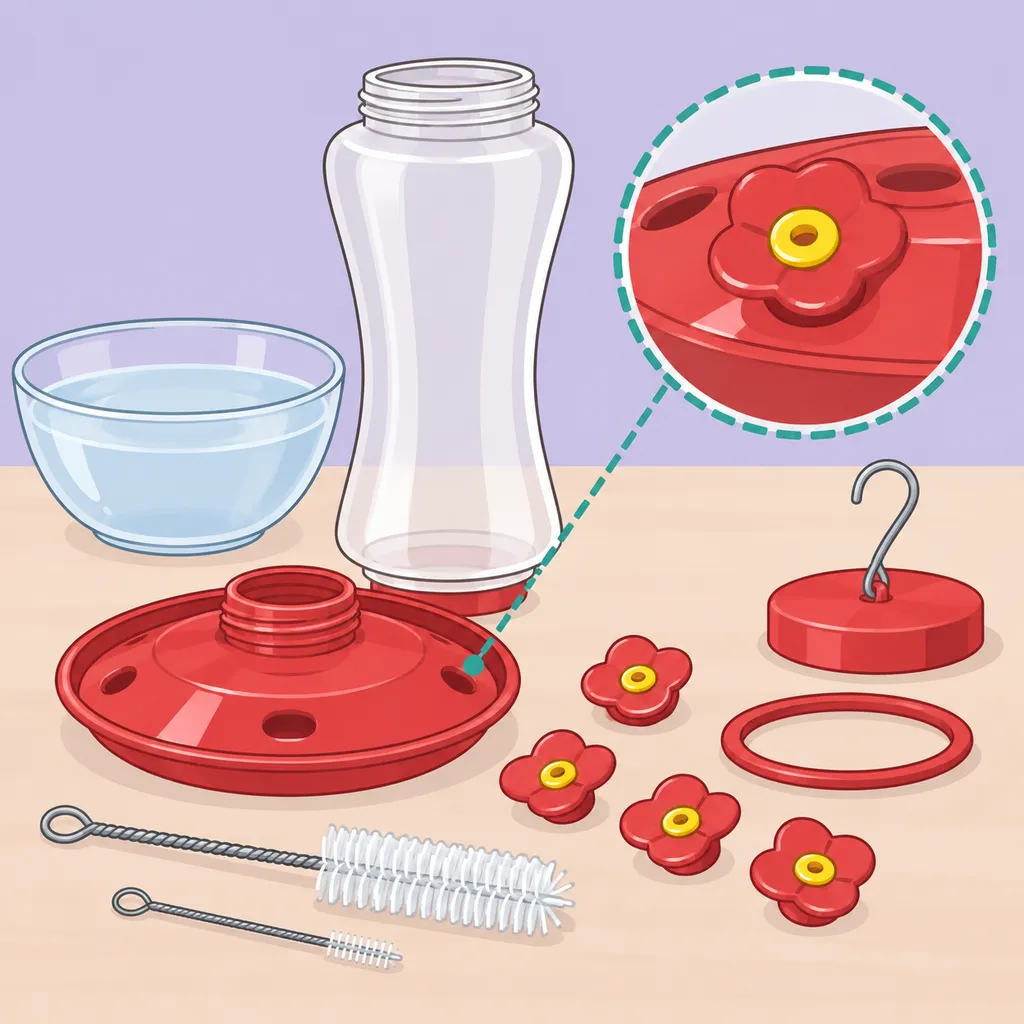
Hummingbird feeders need more frequent cleaning than seed feeders because sugar water can ferment and grow mold quickly, especially in warm weather. This guide shows how to clean the reservoir, base, ports, and small parts without leaving residue behind. It also explains when to use vinegar or bleach for deeper cleaning and how often to repeat the routine.
Empty the feeder before you wash it
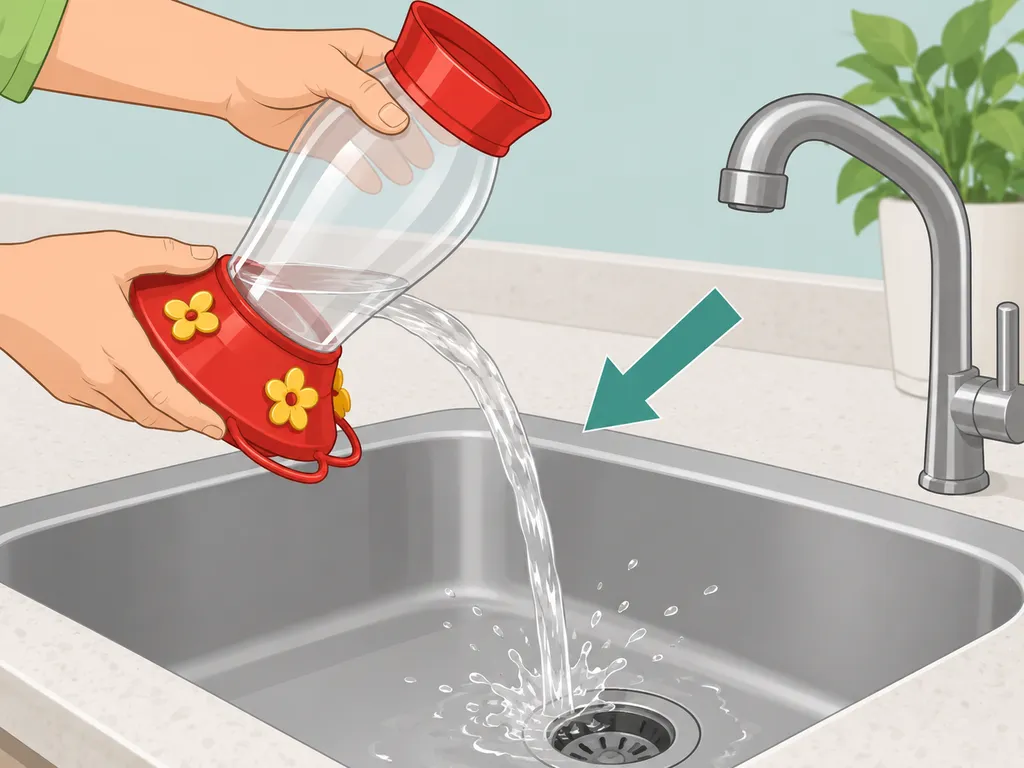
Pour out all old nectar instead of topping it off. If the liquid is cloudy, stringy, sour-smelling, or has black specks, clean immediately; Project FeederWatch says cloudy water or black mold means the solution should be discarded and the feeder cleaned right away.
Take the feeder completely apart
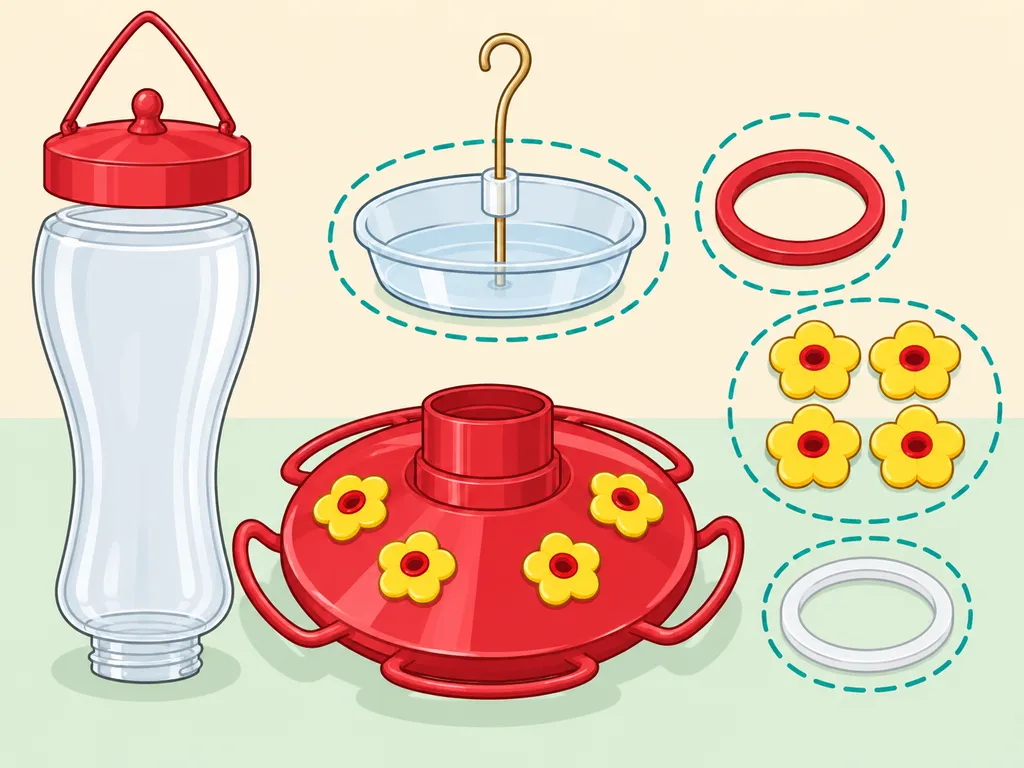
Remove the reservoir, base, ports, flower covers, bee guards, ant moat, gasket, and any other detachable parts. Taking feeders apart before washing helps expose the sticky seams where mold and residue collect.
Scrub the reservoir and base with hot water
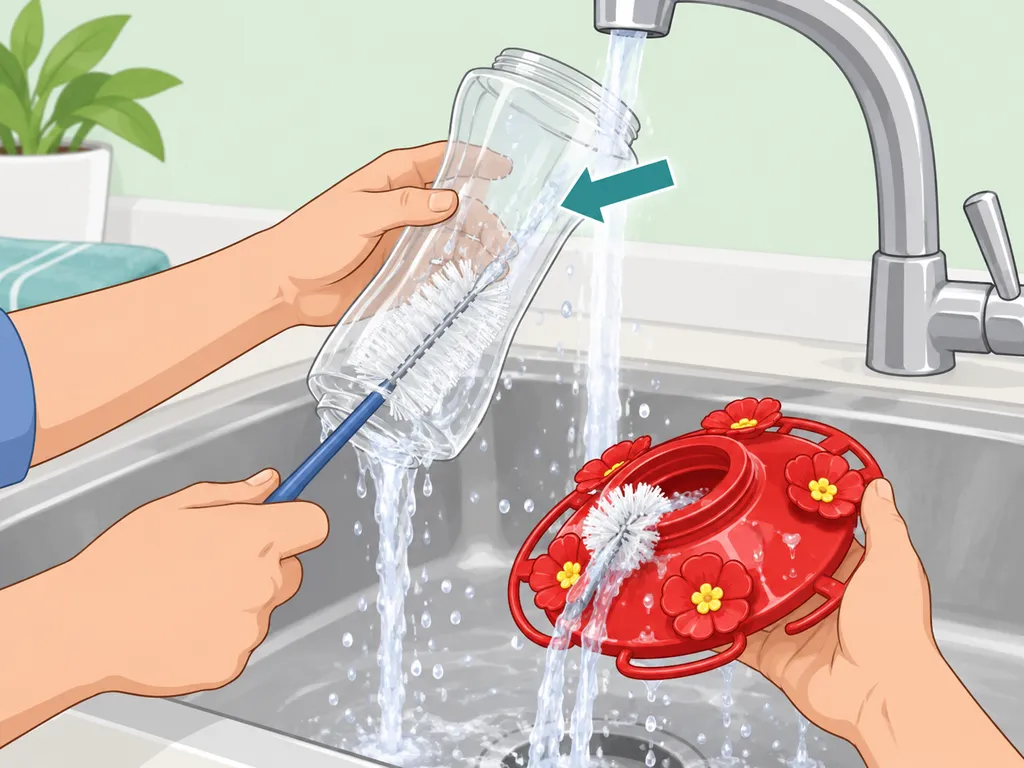
Use hot water and a bottle brush to scrub the inside of the reservoir, then scrub the base where nectar sits. Cornell's All About Birds recommends hot water and a bottle brush for hummingbird feeder cleaning, with more frequent cleaning in hot weather.
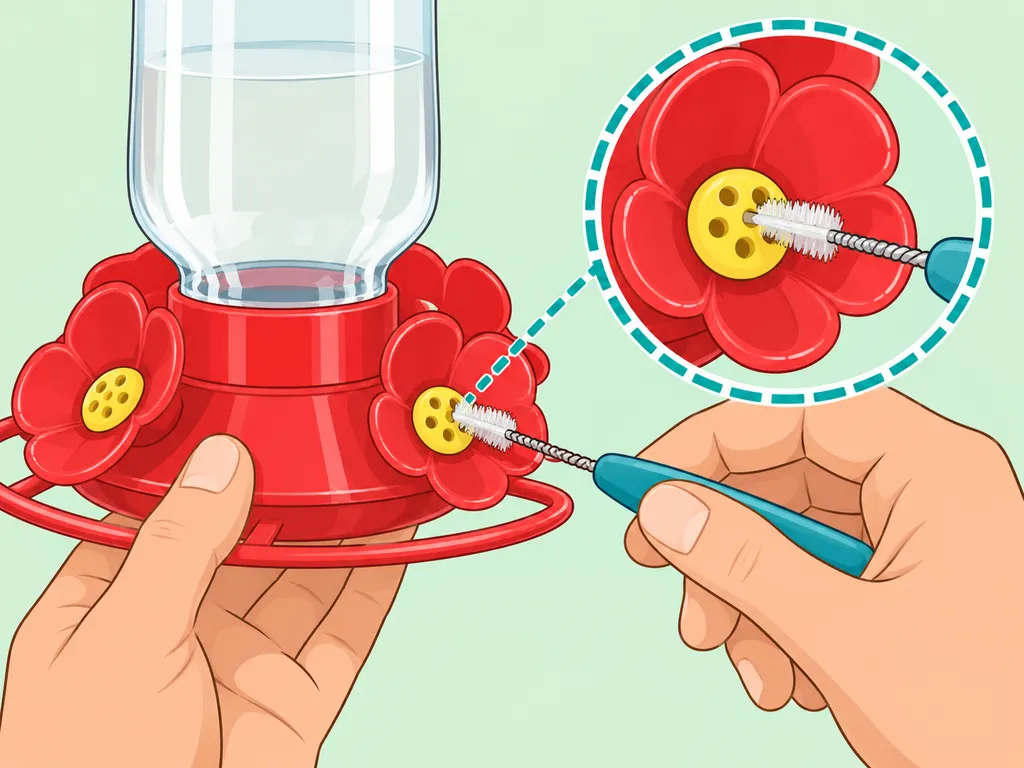
Brush every feeding port and crevice
Use a small port brush, straw brush, or clean pipe cleaner to reach the feeding holes, flower centers, screw threads, and gasket channels. Hummingbird feeders are easier to keep safe when every crevice can be scrubbed, and Cornell notes that easy-to-clean feeders make regular maintenance more likely.
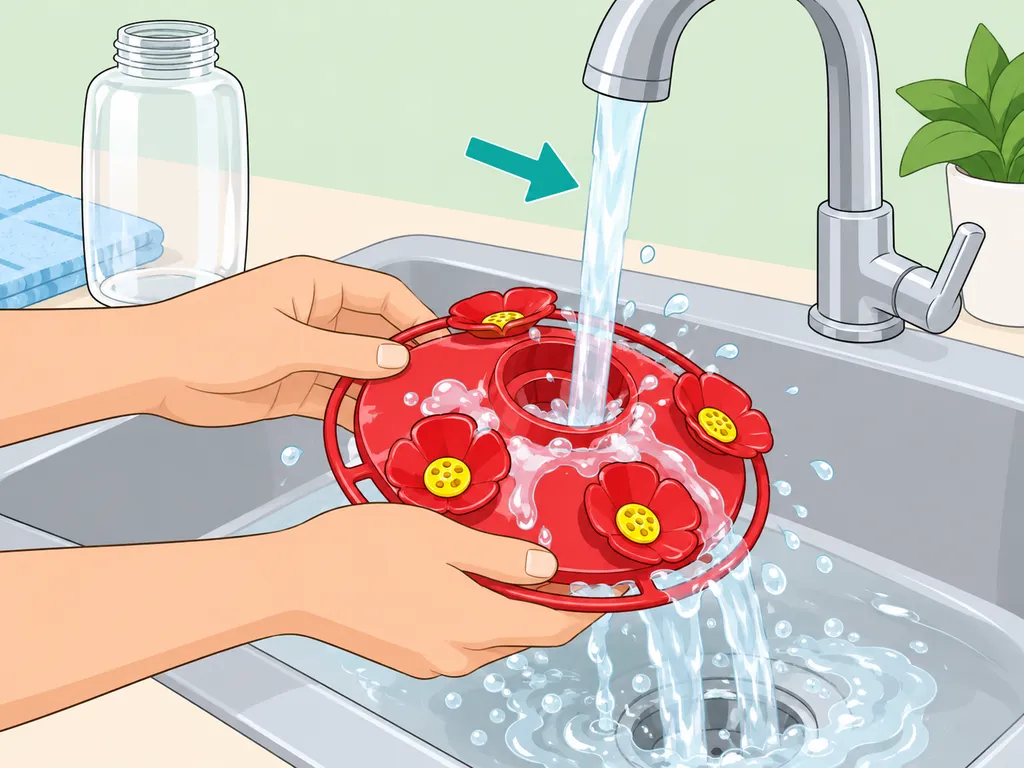
Rinse away any soap or film
If you use a drop of mild dish soap for greasy or sticky buildup, rinse until there is no scent, slipperiness, or foam left. Guidance differs: Project FeederWatch allows warm water and dish soap with thorough rinsing, while All About Birds advises avoiding soap or detergent for hummingbird feeders, so hot water and brushes are the best default for routine cleaning.
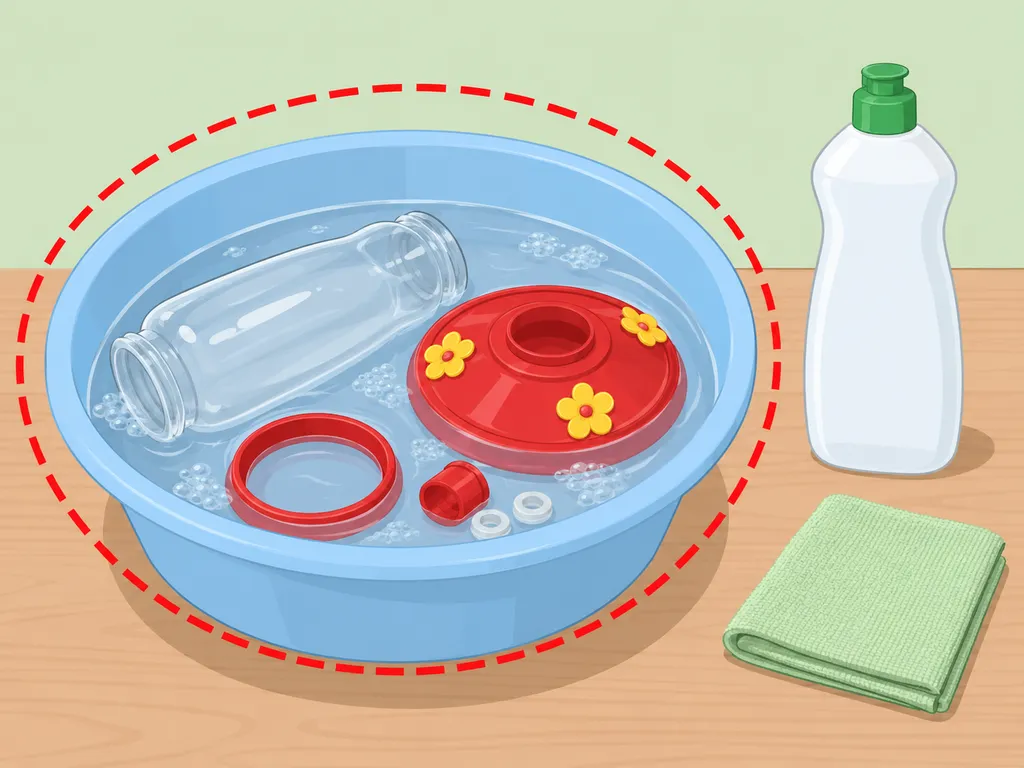
Deep-clean moldy or heavily used feeders
For a deeper clean, soak already-scrubbed parts in diluted white vinegar or a weak unscented bleach solution, about 1/4 cup bleach per gallon of water, then scrub again. For stronger disinfection during disease concerns, Project FeederWatch describes a 10-minute soak in 1 part bleach to 9 parts water. Use vinegar and bleach separately, never together.
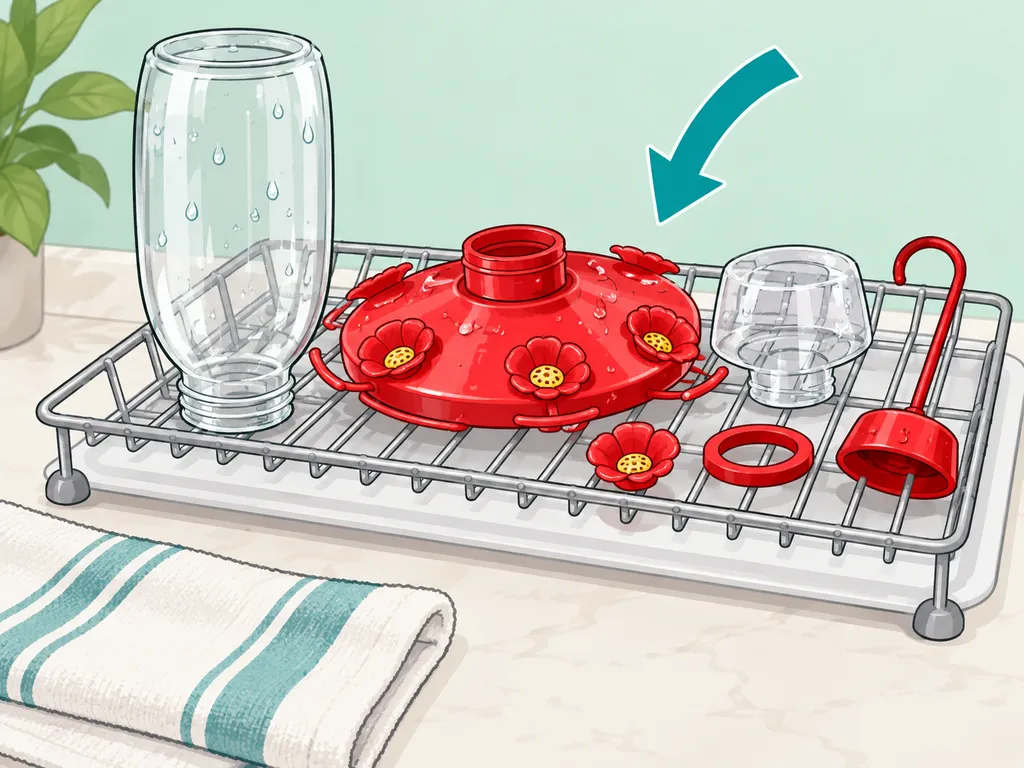
Rinse and air-dry every part
Rinse the reservoir, base, ports, and small parts several times under clean running water. Let everything air-dry completely before reassembly, since Project FeederWatch recommends thorough rinsing and complete drying after washing or disinfecting feeders.
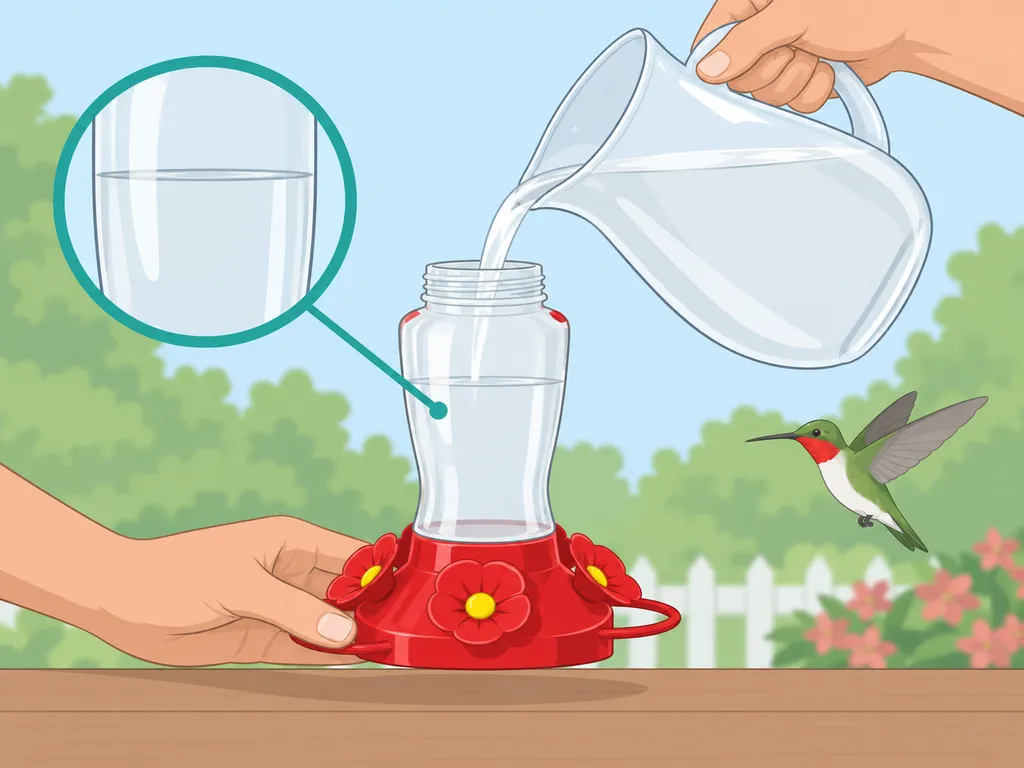
Refill with fresh clear 4:1 nectar
Reassemble the dry feeder and fill it with fresh, clear nectar made with the 4:1 ratio of plain white table sugar to water. Smithsonian's hummingbird nectar guidance says to use refined white sugar, skip red dye, and thoroughly clean feeders each time they are changed.
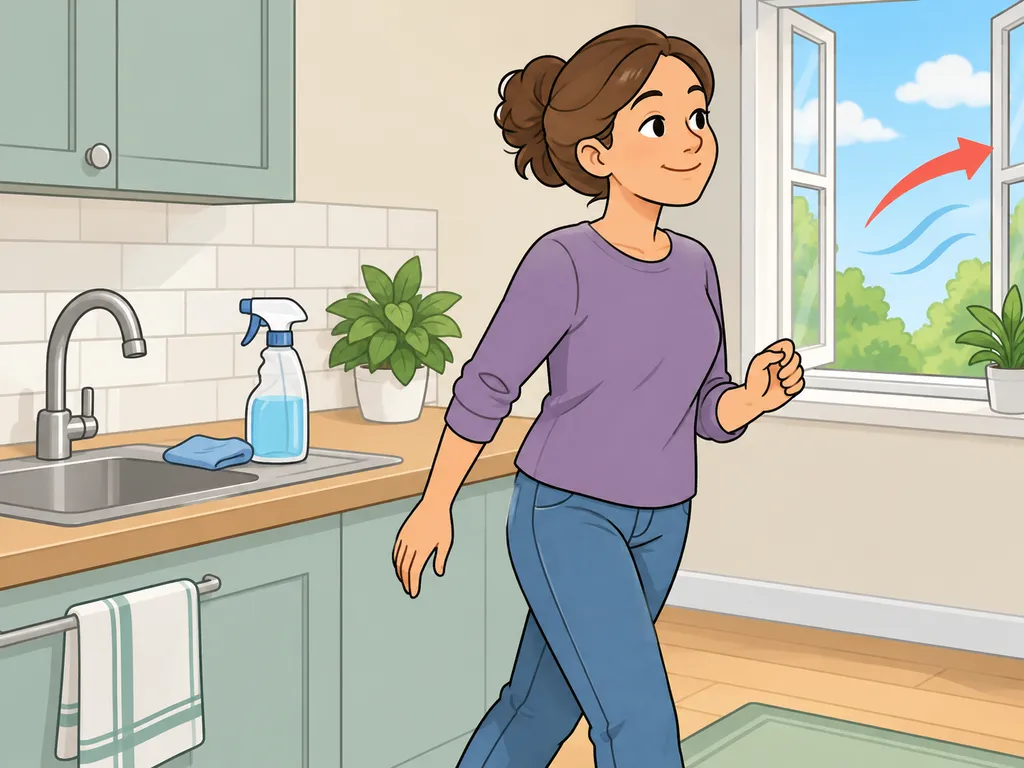
Seek medical help after a cleaner exposure
If bleach and another cleaner are accidentally mixed, leave the area for fresh air and do not keep working over the fumes. CDC warns that household bleach can release chlorine gas when mixed with certain cleaners; get medical help promptly for breathing trouble, eye burning, skin pain, vomiting, or any symptoms that worry you.
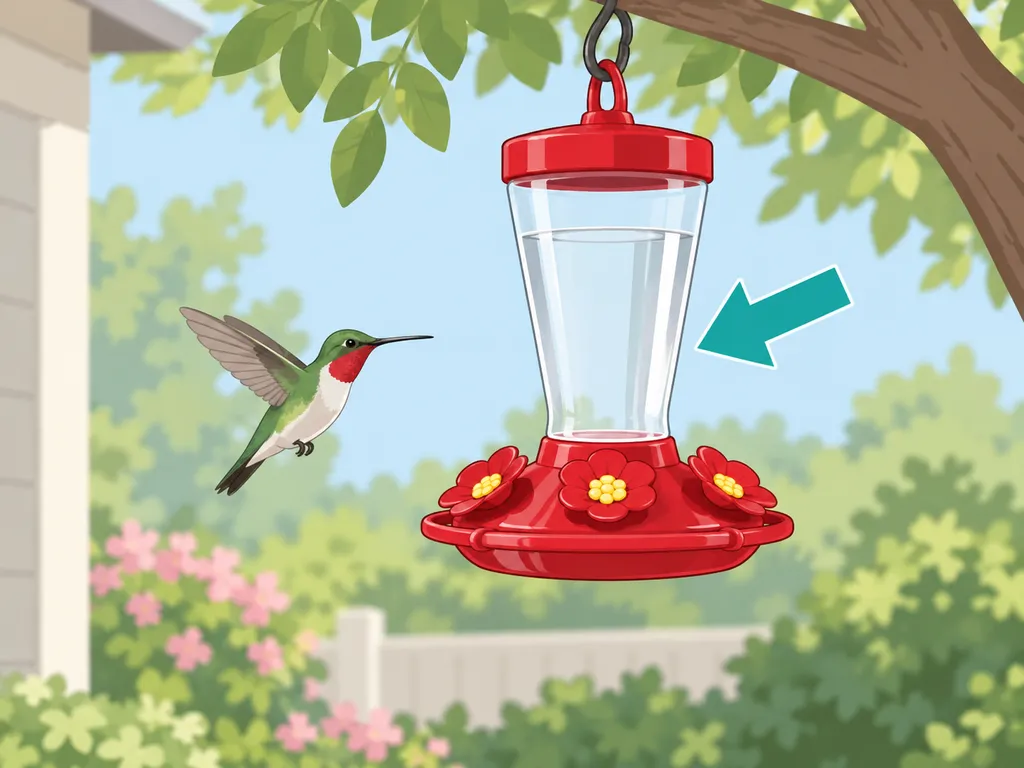
Set a refill and cleaning schedule
Clean whenever you refill: about every 1-2 days above 90 F, every 2-3 days in the 80s F, and every 4-6 days in cooler weather. Smithsonian recommends changing feeders every other day and cleaning each time, while Cornell notes that sugar water should be changed more often in very hot weather.
The Bottom Line
The bottom line: empty the feeder, take it apart, scrub every surface and port, rinse until it is residue-free, and let it dry before adding fresh clear 4:1 nectar. Clean at every refill, and deep-clean right away if you see cloudy nectar, black specks, or mold.
Frequently Asked Questions
How often should I clean a hummingbird feeder?
Clean it every time you refill it. As a practical schedule, refill and clean about every 1-2 days above 90 F, every 2-3 days in the 80s F, and every 4-6 days in cooler weather. Clean immediately if the nectar looks cloudy, stringy, sour-smelling, or moldy.
Can I use dish soap on a hummingbird feeder?
Yes, a drop of mild dish soap can be used if you rinse extremely well afterward. Some authorities prefer hot water and brushes without soap for hummingbird feeders, so hot water is the safest default if you are worried about residue.
What should I use for black mold in a hummingbird feeder?
Discard the nectar, take the feeder apart, scrub all surfaces and ports, then deep-clean the parts with diluted white vinegar or a weak unscented bleach solution. Rinse repeatedly and let every piece air-dry before refilling.
Can I put a hummingbird feeder in the dishwasher?
Only if the feeder maker says the parts are dishwasher-safe. Project FeederWatch notes that dishwashers can work well for some feeders, but many hummingbird feeder bases, flowers, gaskets, and plastic pieces need hand washing.
Is bleach safe for hummingbird feeder cleaning?
Bleach can be used for occasional deep cleaning if it is diluted, used separately from other cleaners, rinsed very thoroughly, and allowed to air-dry. Never mix bleach with vinegar, ammonia, dish soap, or other cleaning products.
Should I add red dye after cleaning and refilling?
No. Use clear nectar made with the 4:1 ratio of plain white table sugar to water. Smithsonian guidance says not to add red dye; the red parts of the feeder are enough to attract hummingbirds.
Sources
This guide was researched using these sources.
- https://www.allaboutbirds.org/news/how-to-clean-your-bird-feeder
- https://feederwatch.org/learn/feeding-birds/how-to-clean-your-feeders
- https://www.nationalzoo.si.edu/migratory-birds/hummingbird-nectar-recipe
- https://www.allaboutbirds.org/news/feeding-hummingbirds/?pid=1181
- https://www.cdc.gov/hygiene/about/cleaning-and-disinfecting-with-bleach.html?CDC_AA_refVal=https%3A%2F%2Fwww.cdc.gov%2Fhealthywater%2Fhygiene%2Fdisinfecting-bleach.html
- https://www.cdc.gov/chemical-emergencies/chemical-fact-sheets/chlorine.html