
 Pin it
Ants usually reach hummingbird feeders by following a hanger, pole, branch, or drip of sugar water. The best solution is to block that route before the ants reach the nectar, then remove the leaks and spills that drew them in. This guide shows bird-safe ways to keep ants off the feeder without using oils, sticky products, or insecticides.
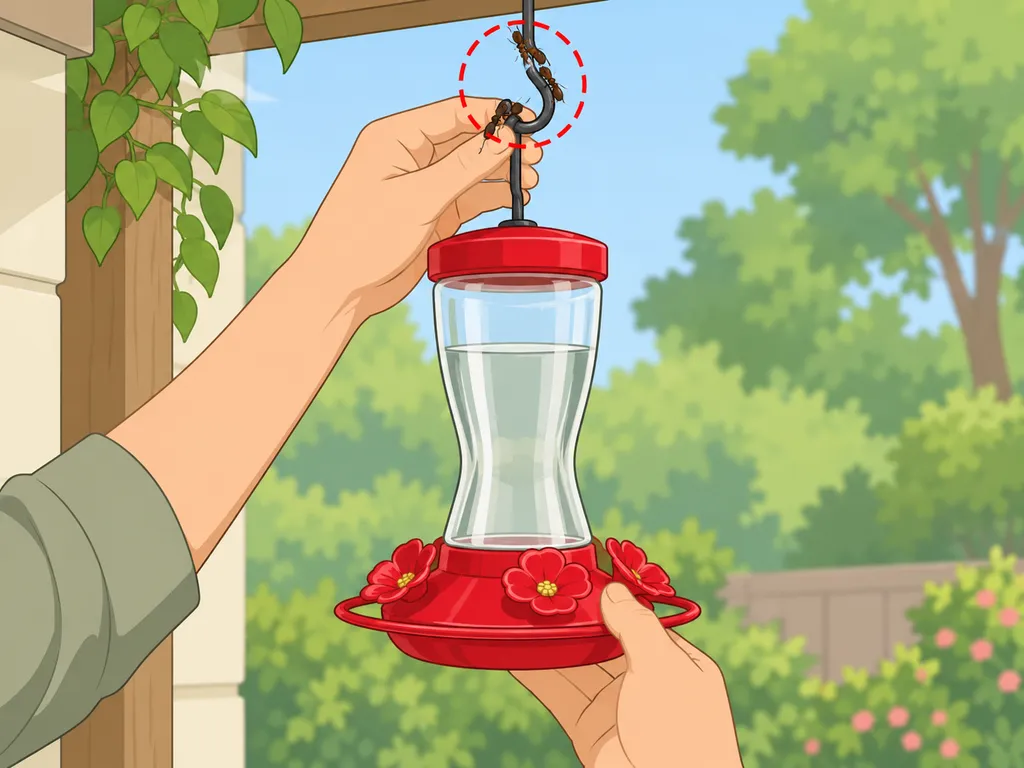
Take the feeder down as soon as you see ants
Remove the feeder before ants build a larger trail into the nectar. Ants, bees, and wasps are drawn to the sugar solution in hummingbird feeders, and Cornell Lab notes that they can consume or contaminate the food and discourage hummingbirds from visiting when they reach the feeder.
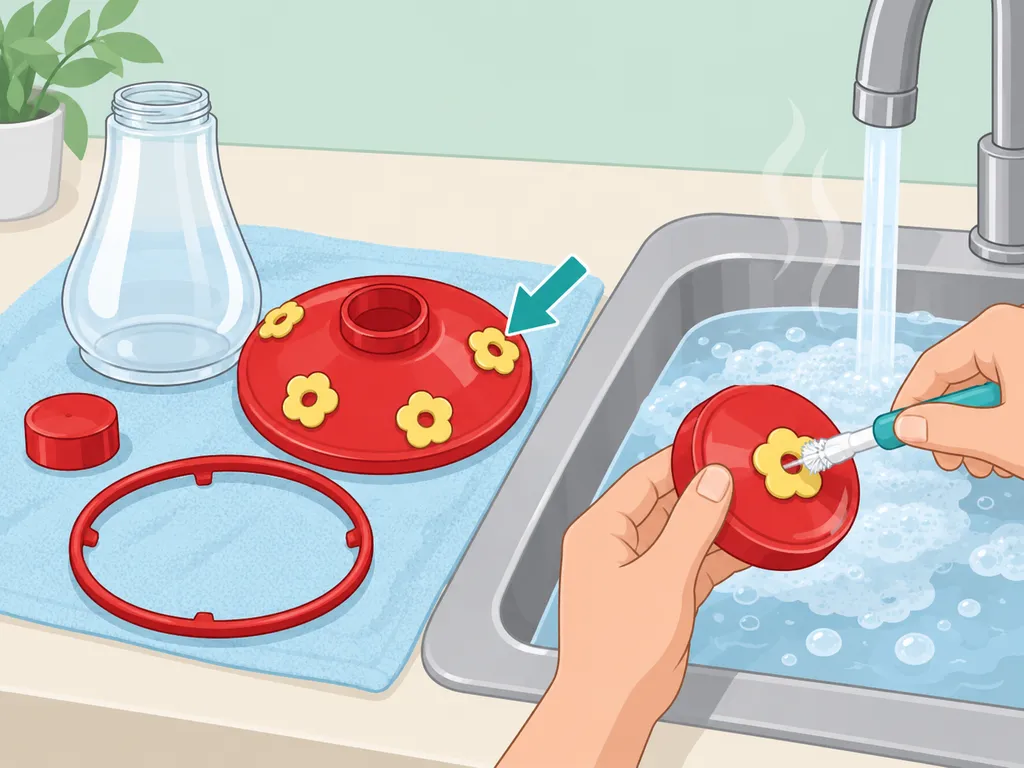
Empty the nectar and wash away every sticky spot
Discard nectar that has ants in it, then wash the feeder, ports, hanger, and outside surfaces with hot water. Audubon recommends wiping spills and keeping feeders tidy because sugar-water drips give insects easy access to the feeder once the outside is sticky.
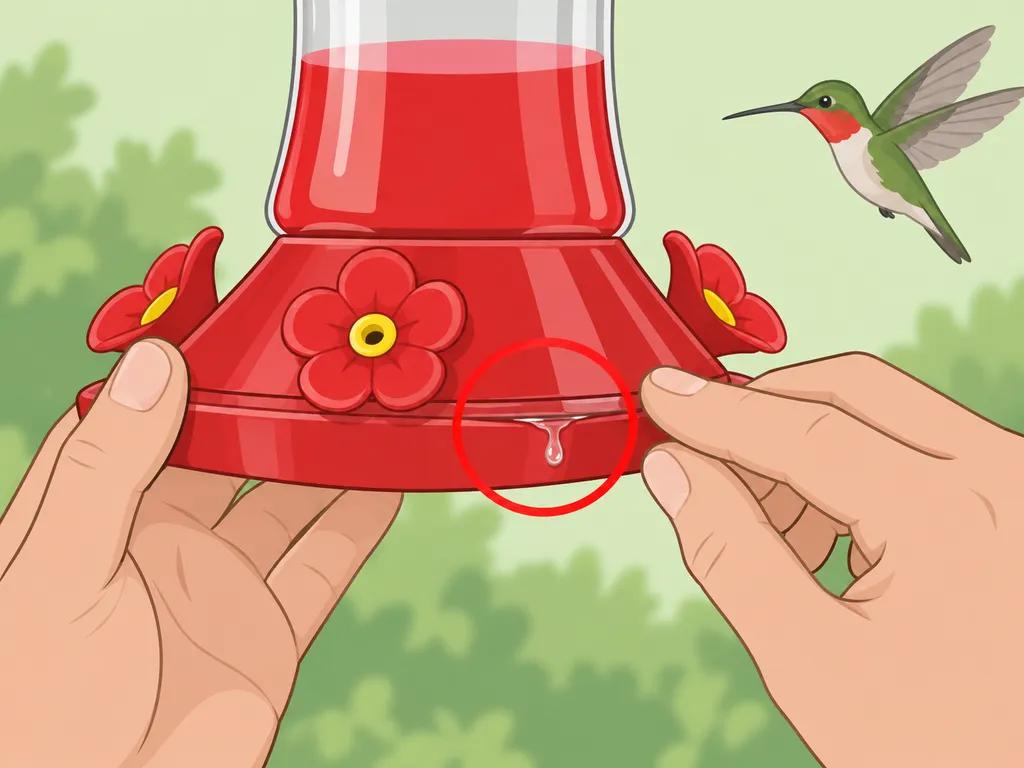
Check the feeder for leaks before refilling
Reassemble the feeder tightly and look for cracks, warped seals, loose ports, or wind-tipped parts that let clear nectar drip. Cornell Lab explains that bottle-style feeders may leak in direct sun as warm air expands, while saucer-style feeders are generally less likely to drip and attract ants.
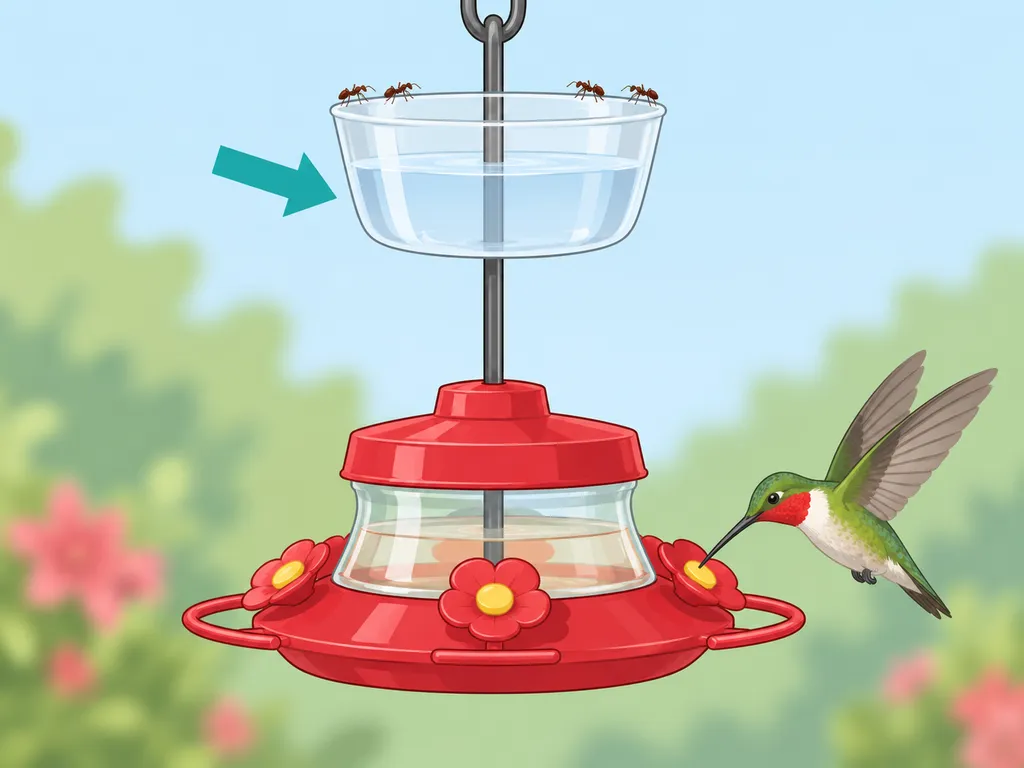
Install a plain-water ant moat above the feeder
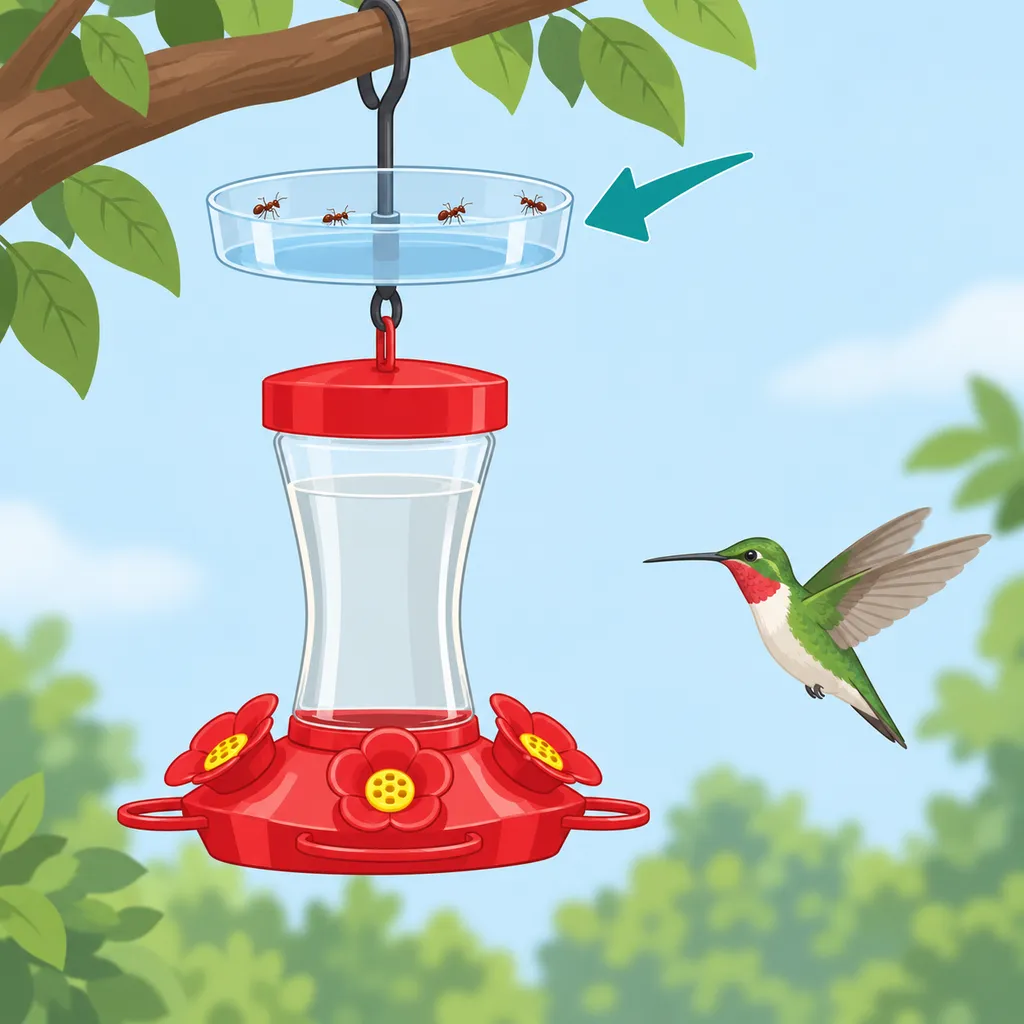
Hang a cup-style ant moat between the hook and the feeder, or use the built-in moat if your feeder has one. Fill it with plain water; Cornell Lab says many saucer feeders use a separate water moat that keeps ants from reaching the sugar water inside the feeder.
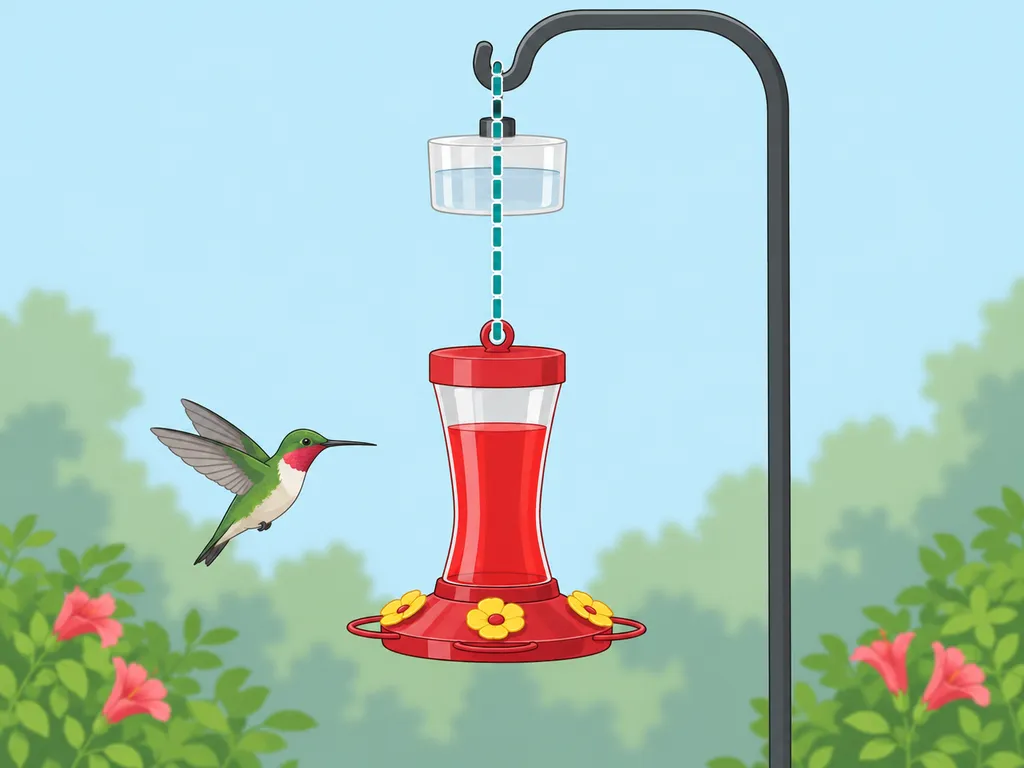
Hang the feeder from a simple hook or rod
Give ants only one route to the feeder, then block that route with the moat. Cornell Lab recommends a simple rod or hanger rather than a setup with extra strings or contact points, because a water trap works best when ants must pass through it on the way down.
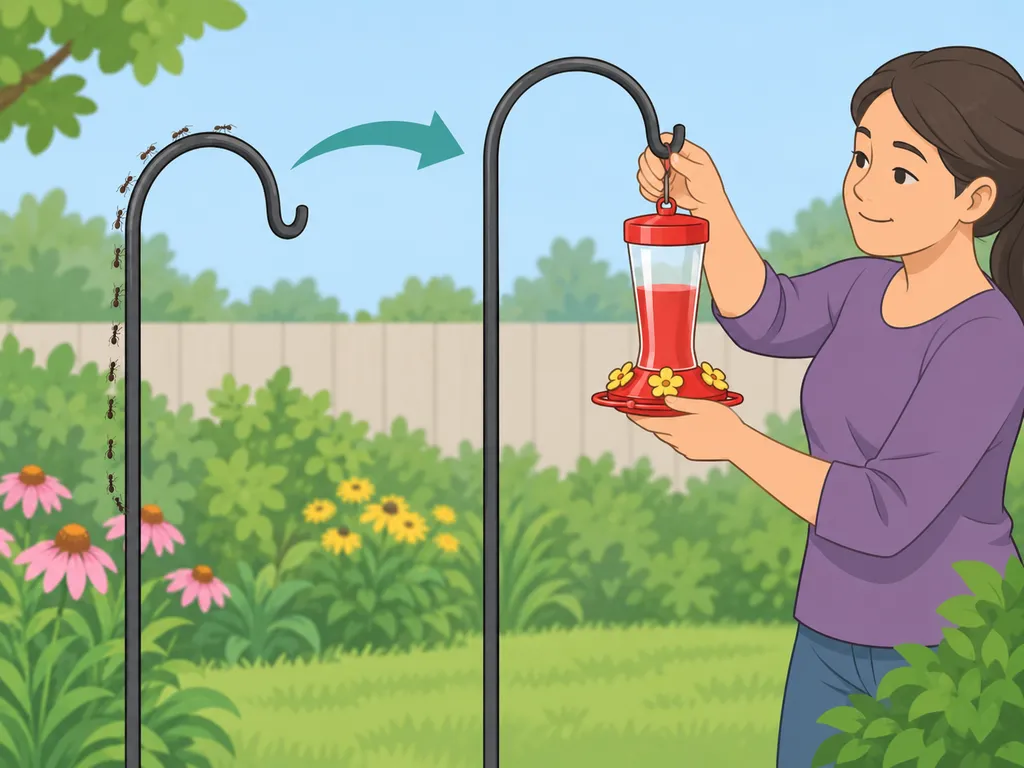
Move the feeder if ants have already found it
Shift the feeder to a new hook, pole, or nearby location after cleaning it. Cornell Lab lists moving the feeder as a useful response when bees, wasps, or ants become a problem, since it can interrupt the route insects have learned to reach the feeder.
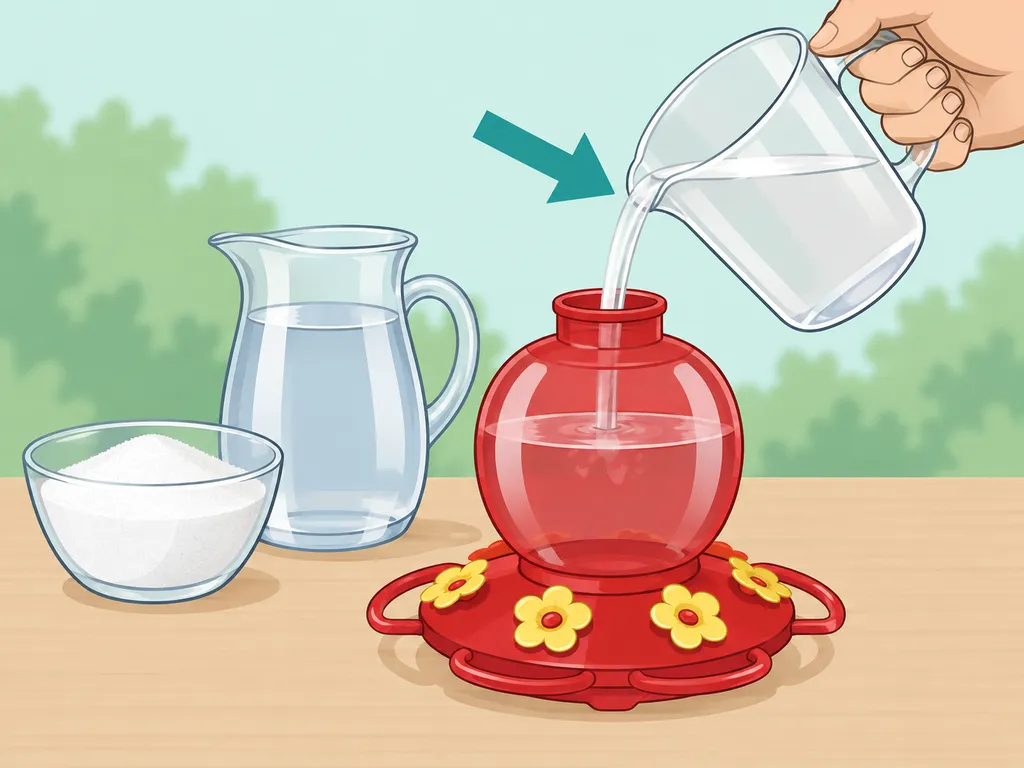
Refill with fresh clear 4:1 nectar only
Use fresh clear nectar made with the 4:1 ratio: 1 part plain white table sugar to 4 parts water. Audubon gives the same white-sugar-and-water formula and notes that natural nectar is clear, so red coloring is unnecessary for hummingbird feeders.
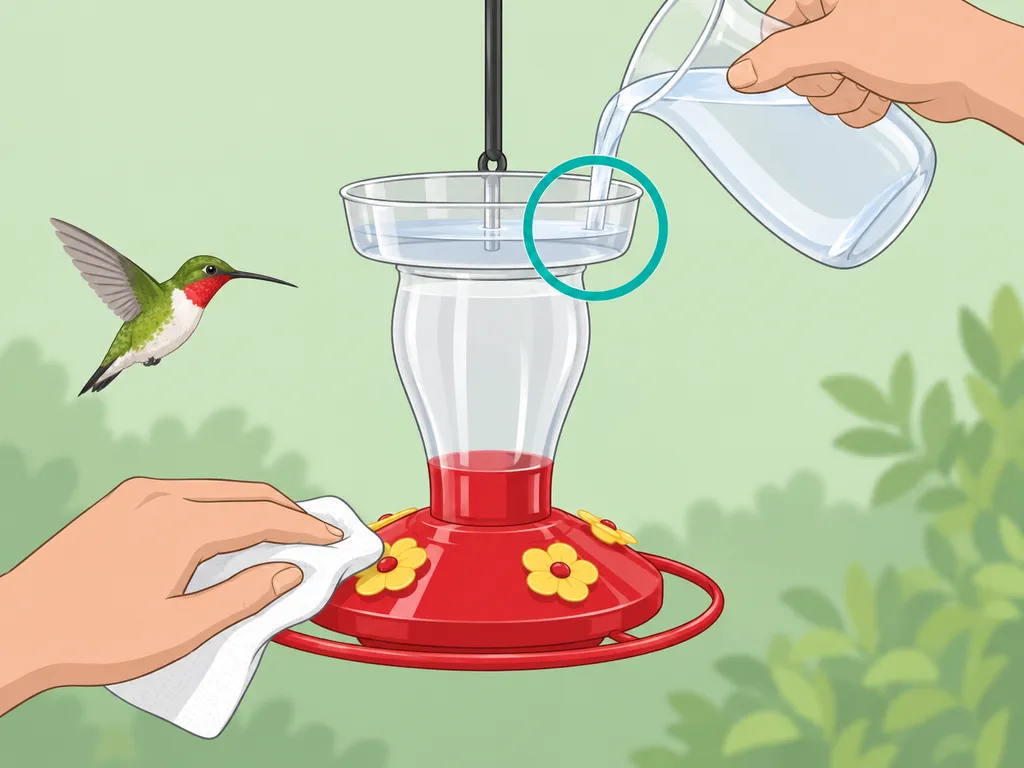
Keep the moat full and the feeder clean
Check the moat daily in hot or dry weather because it cannot stop ants after it evaporates. Clean and refill the feeder on a regular schedule, and clean right away if you see insects, mold, cloudiness, or sticky buildup; Audubon recommends more frequent cleaning in warm weather and whenever insects appear.
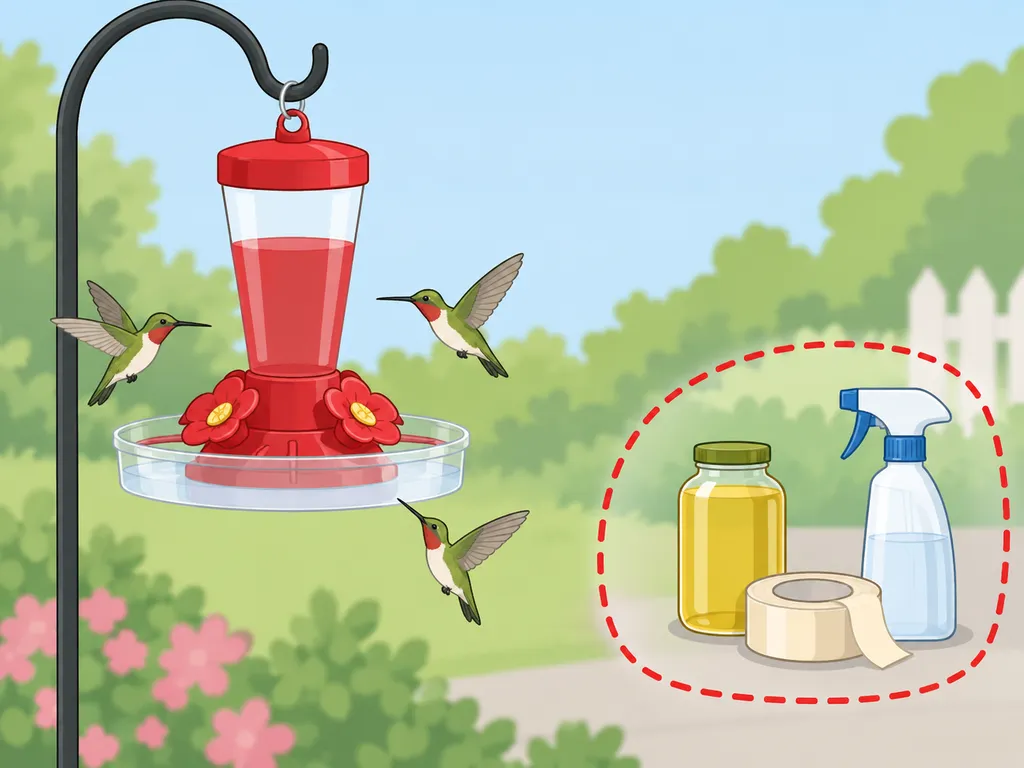
Skip oils, sticky barriers, and insecticides
Do not put petroleum jelly, cooking oil, grease, sticky tape, or insecticide on the feeder, hanger, ports, or pole. Cornell Lab warns that oil and sticky substances can contaminate nectar or soil feathers, and University of Maine Extension says pesticides should not be used at hummingbird feeders because they can harm hummingbirds and other wildlife.
The Bottom Line
The bottom line: use a plain-water ant moat, keep the feeder from leaking, wipe away spills, and move the feeder if ants have already mapped a route. A clean, drip-free setup solves most ant problems without putting hummingbirds at risk.
Frequently Asked Questions
Why are ants getting into my hummingbird feeder?
Ants are attracted to sugar water, especially when the feeder drips or the outside is sticky. Once they find a path down the hanger or pole, they can keep returning unless you block that route with water or move the feeder.
What is the best ant guard for a hummingbird feeder?
A plain-water ant moat is the best first choice. It hangs above the feeder or is built into the feeder, creating a small water barrier ants cannot cross.
Can I put oil in an ant moat?
No. Fill ant moats with plain water only. Cornell Lab warns against vegetable oil, petroleum jelly, and sticky substances because they can soil hummingbird feathers or contaminate the feeder.
Will moving the feeder really help?
Yes. If ants have already found the feeder, moving it even a short distance can break their trail. Clean the feeder first so ants are not drawn by leftover sugar water.
Are saucer feeders better for ant problems?
Often, yes. Saucer feeders are less likely to drip than inverted bottle feeders, and many include a built-in ant moat, which makes them easier to defend from ants.
Should I use insecticide around the feeder?
No. University extension guidance says not to use pesticides around hummingbird feeders because they can harm hummingbirds, and insects are also part of the food web birds rely on.
Sources
This guide was researched using these sources.
- https://www.allaboutbirds.org/news/how-do-i-keep-ants-out-of-my-hummingbird-feeder
- https://www.allaboutbirds.org/news/how-to-deal-with-unwanted-yard-visitors-squirrels-cats-rats-insects-hawks-starlings-and-more/?pid=1185
- https://www.audubon.org/magazine/how-keep-your-hummingbird-feeder-free-pests
- https://extension.umaine.edu/gardening/2021/07/26/insects-hummingbird-feeder
- https://www.allaboutbirds.org/news/youre-seeing-fewer-hummingbirds-at-your-feeder-should-you-worry
- https://www.audubon.org/magazine/hummingbird-feeding-faqs