
 Pin it
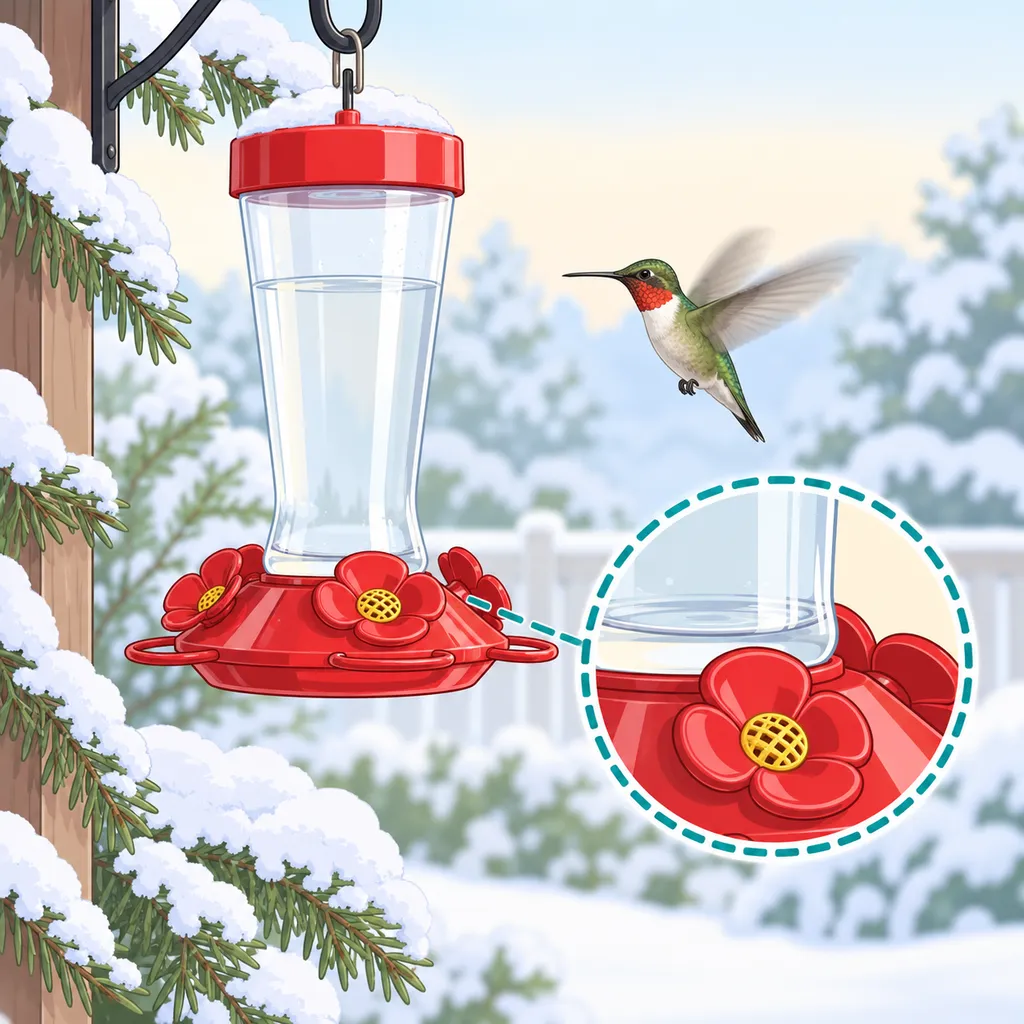
Freezing nectar is a winter feeder problem, not a reason to change the nectar recipe. If hummingbirds are present in your area during cold weather, the goal is to keep a clean feeder liquid and reachable, especially early in the morning. This guide covers practical, feeder-focused ways to prevent ice without using unsafe additives or a stronger routine mix.
Keep the nectar at the standard 4:1 ratio
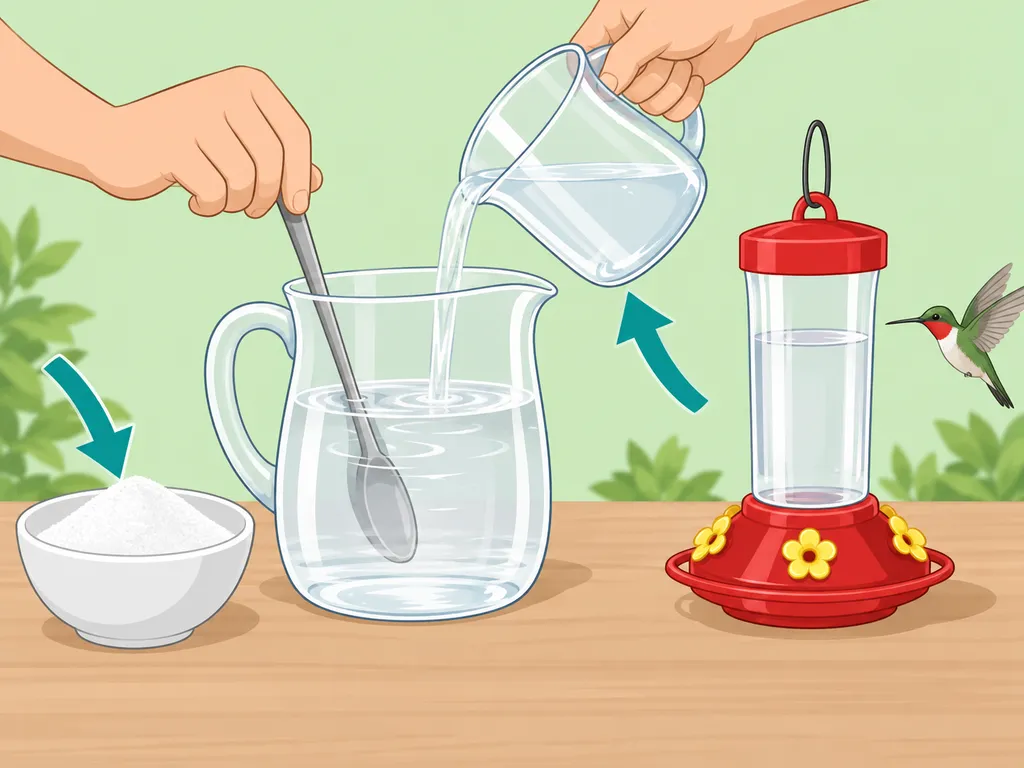
Use clear nectar made with 4 parts water to 1 part plain white table sugar, the 4:1 ratio. Smithsonian's National Zoo lists refined white sugar and water as the safe ingredients, and the U.S. Fish and Wildlife Service says not to use honey, brown sugar, artificial sweeteners, red dye, or other additives. A stronger routine winter mix is not the right fix for freezing; solve the ice problem with feeder placement, rotation, or safe warmth.
Bring the feeder in overnight before a freeze
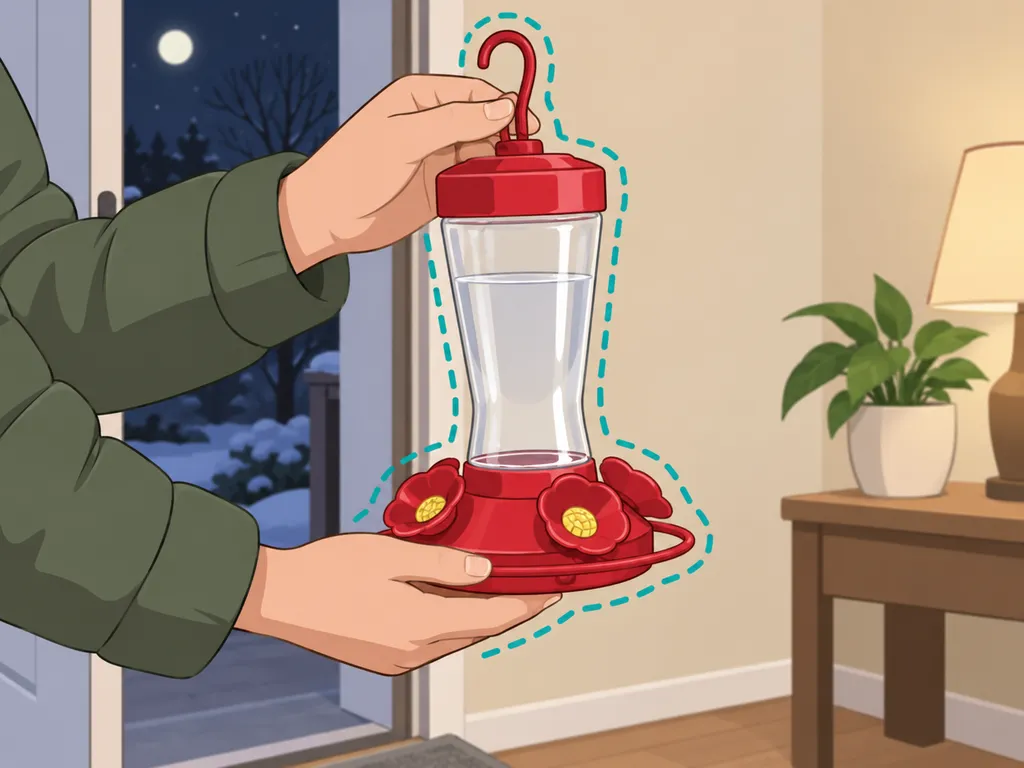
When a hard overnight freeze is expected, take the feeder down after dark, once hummingbirds have stopped feeding, and keep it indoors. Audubon advises bringing a feeder indoors overnight and putting it back outside first thing in the morning when cold nights would freeze the nectar. Keep the feeder upright so clear nectar does not spill into ports or seams.
Rehang the feeder at first light
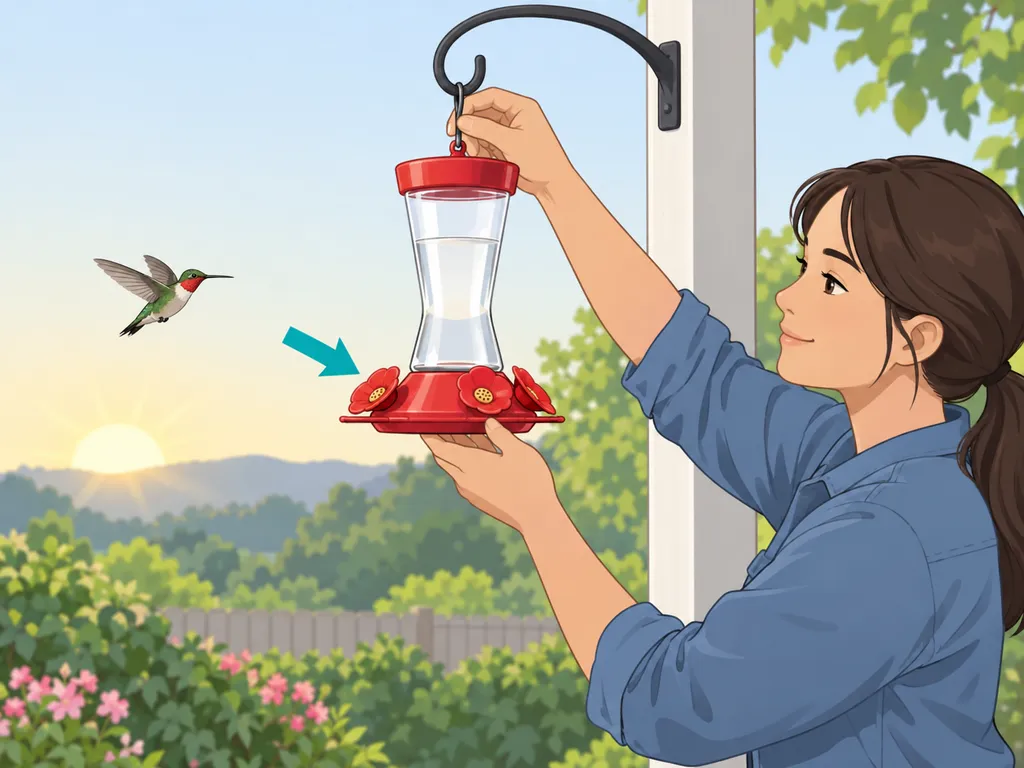
Put the thawed feeder back outside as early as you can, because hummingbirds may feed very early in cold weather to maintain energy. Check that every port is liquid and open before you walk away. If a port has iced over, thaw the feeder indoors or with warm water on the outside of the feeder, then dry the outside before rehanging it.
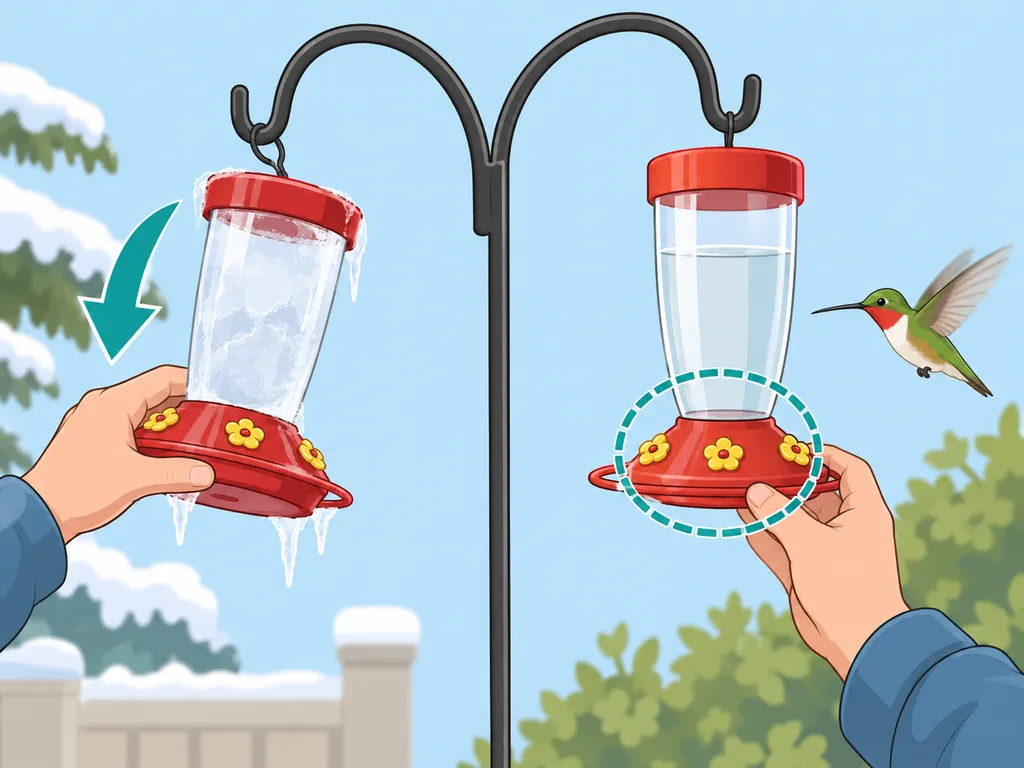
Rotate a spare feeder during daytime freezes
Keep a second clean feeder ready indoors so you can swap it in when the outdoor feeder starts to ice up. This is often easier than trying to thaw a feeder in place, and it gives birds access to liquid nectar during long cold snaps. If the returned feeder is cloudy, dirty, or partly frozen into slush, discard the nectar and clean it before refilling.
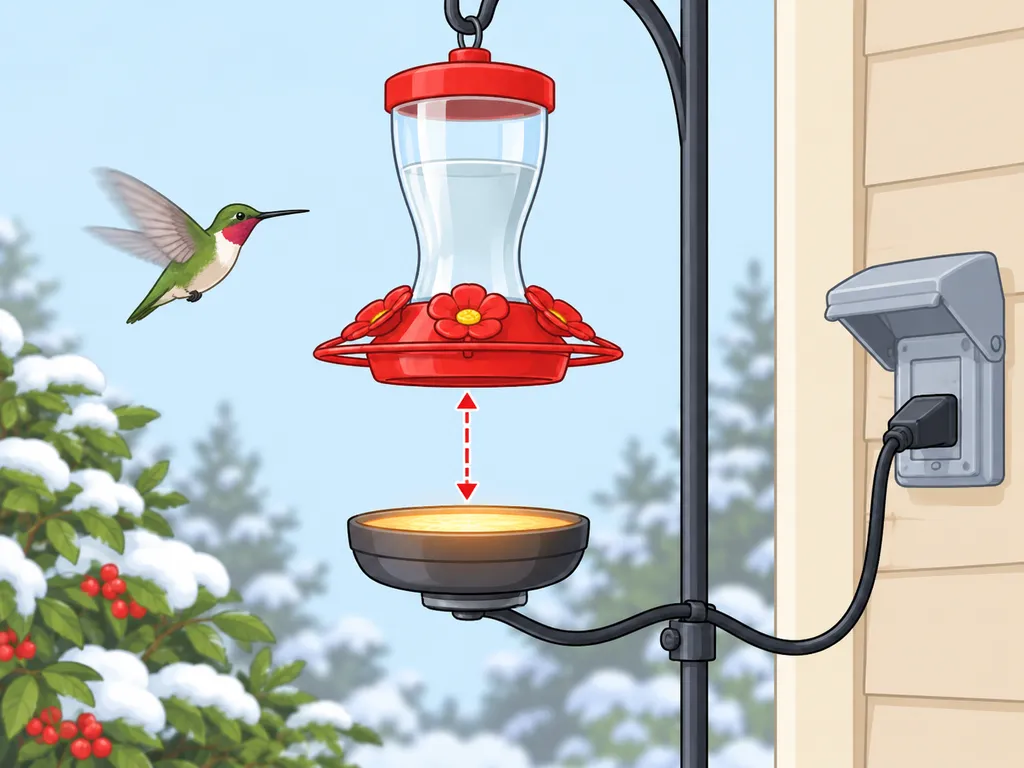
Use gentle outdoor-safe heat for repeated freezes
If freezing happens often, add gentle heat near the feeder instead of changing the nectar. Audubon and the U.S. Fish and Wildlife Service both mention an incandescent bulb near the feeder as a warming option; a purpose-made outdoor feeder heater can serve the same role when used as directed. Keep any heat source from touching plastic parts, nectar, or perches.
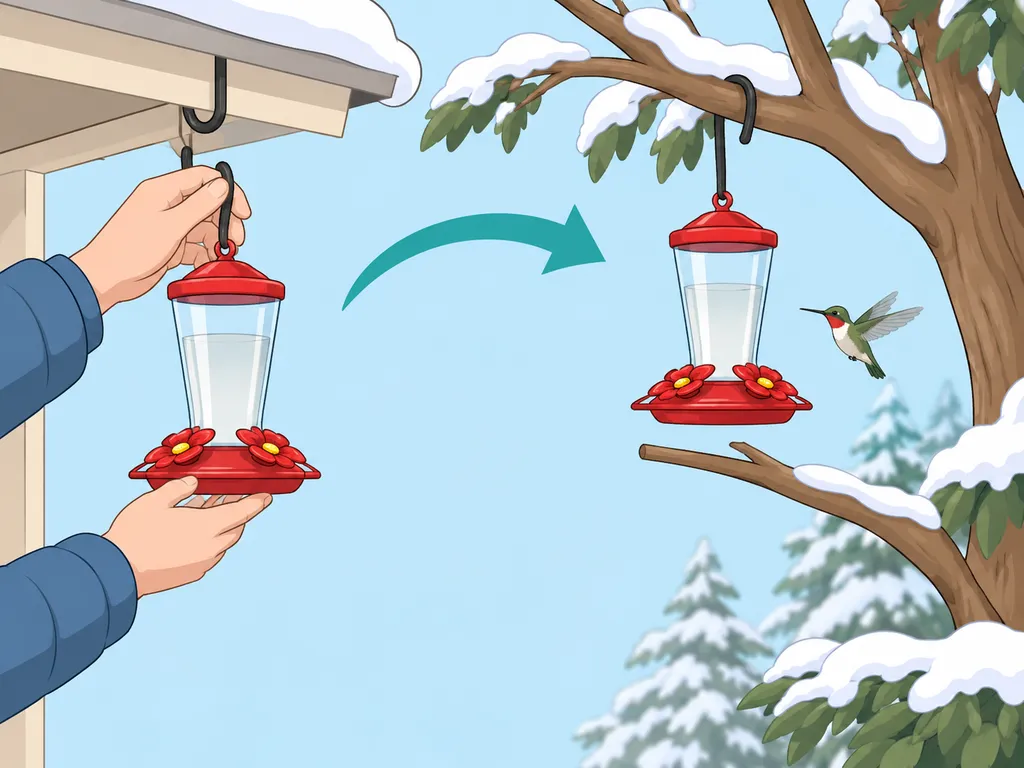
Move the feeder to a calmer winter spot
Hang the feeder where you can inspect it easily and where snow, wind, and ice are less likely to block the ports. A spot near natural cover can help hummingbirds find perches between visits, while Smithsonian's National Zoo recommends placing feeders near trees and away from busy areas. Avoid a location where dripping ice, pets, or frequent foot traffic make the feeder hard to maintain.
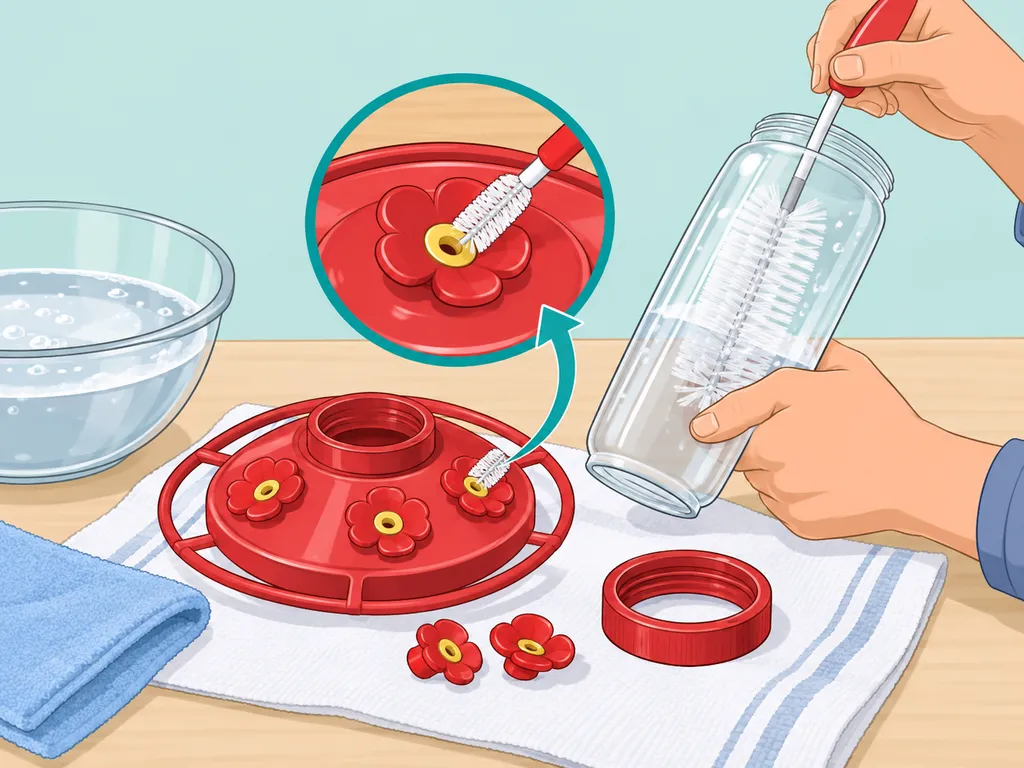
Refresh and clean it even in cold weather
Cold weather slows spoilage, but it does not make old nectar maintenance-free. Smithsonian recommends changing feeders every other day and cleaning each time to prevent mold, while Audubon says cooler weather still calls for cleaning about twice per week. Scrub the reservoir and ports thoroughly, then refill with fresh clear 4:1 nectar.
The Bottom Line
The bottom line: keep the clear 4:1 nectar recipe, warm the feeder by rotation or safe outdoor heat, and clean it on schedule even in cold weather. A liquid, well-maintained feeder is far more useful than a frozen or neglected one.
Frequently Asked Questions
Will hummingbird nectar freeze if it has sugar in it?
It can. Sugar water freezes a little lower than plain water, but Audubon notes that feeders still need help when temperatures stay below freezing.
Should I make nectar stronger in winter?
No. Keep the standard clear nectar at 4 parts water to 1 part plain white table sugar, the 4:1 ratio. Smithsonian's National Zoo gives that mix and says not to add red dye.
Can I leave a hummingbird feeder outside overnight?
Yes, if it stays liquid. If it freezes overnight, bring it in after dark and put it back out at first light, which is one of the winter options Audubon recommends.
Is an incandescent bulb safe near a hummingbird feeder?
It can work if it is set up carefully and kept away from plastic, rain, and nectar spills. Use outdoor-rated equipment, a GFCI-protected outlet, and dry connections; the Consumer Product Safety Commission advises outdoor-rated cords and GFCI protection for outdoor electrical use.
Do hummingbirds really stay in cold places during winter?
Some do. The Cornell Lab says wintering hummingbirds can tolerate cold weather when food is available, and Anna's Hummingbirds regularly winter in parts of the Pacific Coast region.
Will leaving a feeder up stop migration?
No. Smithsonian's National Zoo explains that hummingbird migration timing is tied to changing day length, so a clean feeder can help stragglers without making birds stay too late.
Sources
This guide was researched using these sources.
- https://www.nationalzoo.si.edu/migratory-birds/hummingbird-nectar-recipe
- https://www.audubon.org/birding/faq
- https://www.audubon.org/magazine/hummingbird-feeding-faqs
- https://www.fws.gov/story/quiz-how-can-you-help-hummingbird
- https://www.allaboutbirds.org/news/theres-a-hummingbird-at-my-feeder-in-the-dead-of-winter-will-he-be-okay
- https://www.cpsc.gov/s3fs-public/513.pdf