
 Pin it
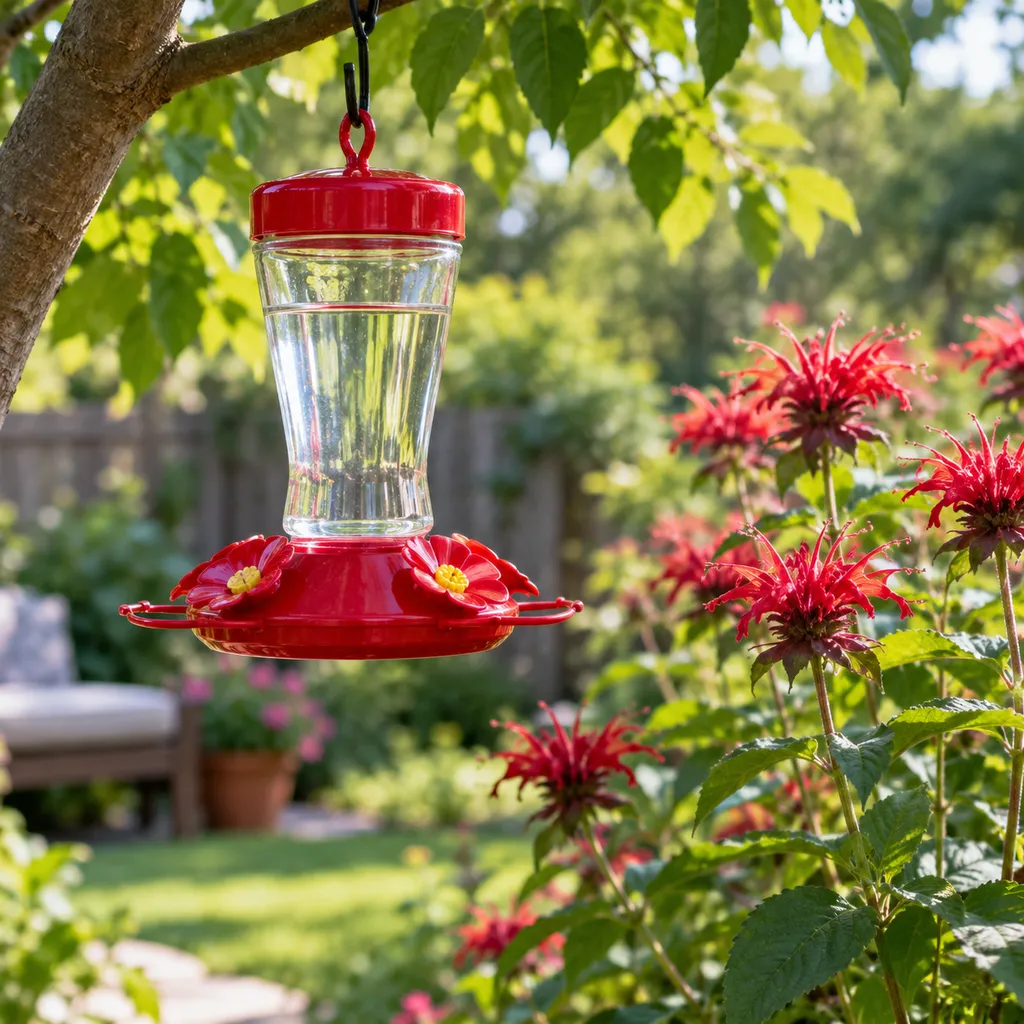
If hummingbirds are not coming to your feeder, start with the simple explanations: they may not have arrived in your area yet, they may not have found the feeder, the feeder may be too exposed or hidden, the nectar may be stale, insects may be blocking the ports, or one territorial bird may be chasing others away. A quiet feeder does not automatically mean you did something wrong. It usually means one part of timing, placement, maintenance, or yard habitat needs adjustment.
Use this as a troubleshooting hub. Work through the checks in order, give changes a few days when birds are in season, and keep the feeder clean and filled even during slow periods if you are choosing to feed. Cornell Lab notes that new feeders can take patience because local birds first have to discover the source, and that hummingbird feeders should be shaded and protected from wind when possible https://www.allaboutbirds.org/news/where-to-put-your-bird-feeder/.
Quick checklist: the usual reasons a feeder stays quiet
Before changing everything at once, run through the most common reasons. A single fix, such as moving the feeder out of full sun or replacing old nectar, can make the feeder easier for hummingbirds to use. The Cornell Lab’s feeding guidance emphasizes fresh sugar water, easy-to-clean feeders, shade, and multiple small feeders for territorial birds https://www.allaboutbirds.org/news/feeding-hummingbirds/?pid=1181.
- Wrong season: migrants may not be in your area yet, or local birds may have moved on.
- Hard-to-find placement: the feeder may be too hidden, too windy, too close to busy activity, or in harsh sun.
- Stale nectar: old, cloudy, fermented, or moldy nectar can turn birds away and should be replaced immediately.
- Dirty ports: tiny feeding ports can clog even when the reservoir looks clean.
- Too much competition: ants, bees, wasps, orioles, woodpeckers, or one dominant hummingbird can change feeder use.
- Not enough habitat: a feeder works best near cover, perches, flowers, and insect-rich plantings, not as the only attraction.
First, ask whether hummingbirds are actually in your area yet
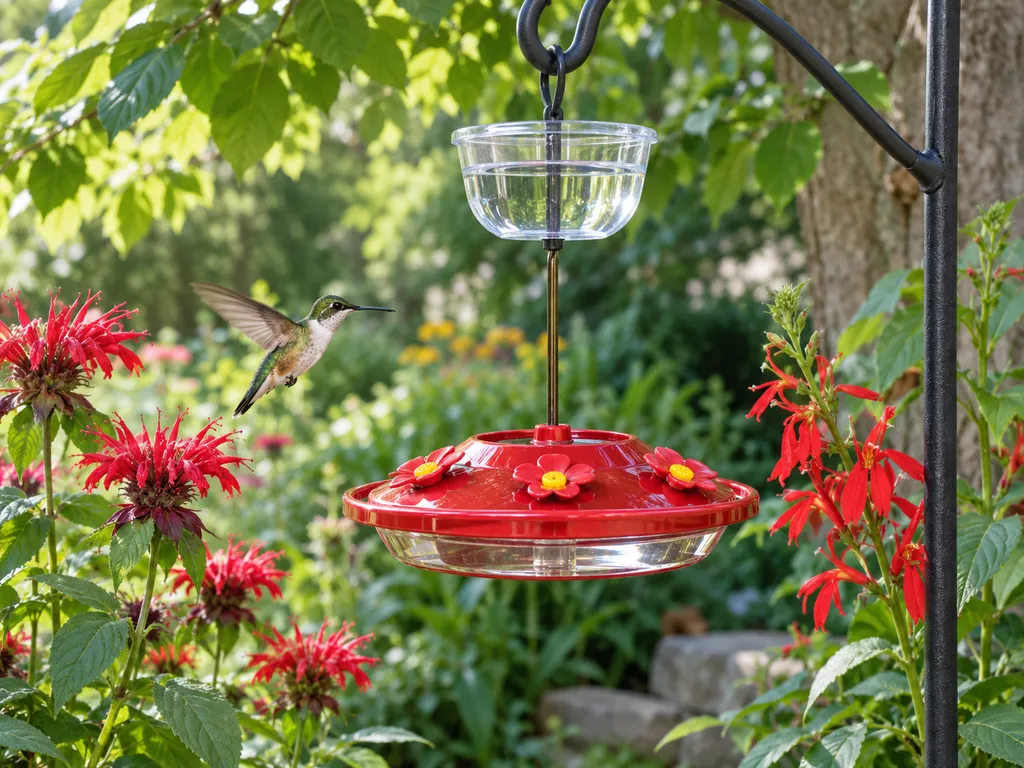
Seasonal timing is the biggest reason a new feeder seems ignored. In the eastern two-thirds of North America, Ruby-throated Hummingbirds are the main regular species, and Audubon describes spring arrival as a wave that reaches the Gulf Coast first and northern states and southern Canada later in spring https://www.audubon.org/magazine/when-expect-hummingbirds-your-feeders-and-flowers-spring. In the West, different species and mountain elevations can shift the window. A feeder hung too early may sit untouched for days or weeks simply because no hummingbirds are nearby.
Do not take a quiet fall feeder as proof that feeding caused migration
In late summer and fall, hummingbirds may vanish quickly from a feeder they used all season. That is normal. Cornell Lab explains that keeping feeders up does not make birds stay; migration is driven by several cues, with day length especially important, and feeders can help late migrants refuel https://www.allaboutbirds.org/news/should-i-stop-feeding-birds-in-fall-so-they-can-start-their-migration/. A common practical approach is to keep a clean feeder available for about two weeks after your last sighting, then take it down if no more birds appear.
Make the feeder easy to notice without making it risky
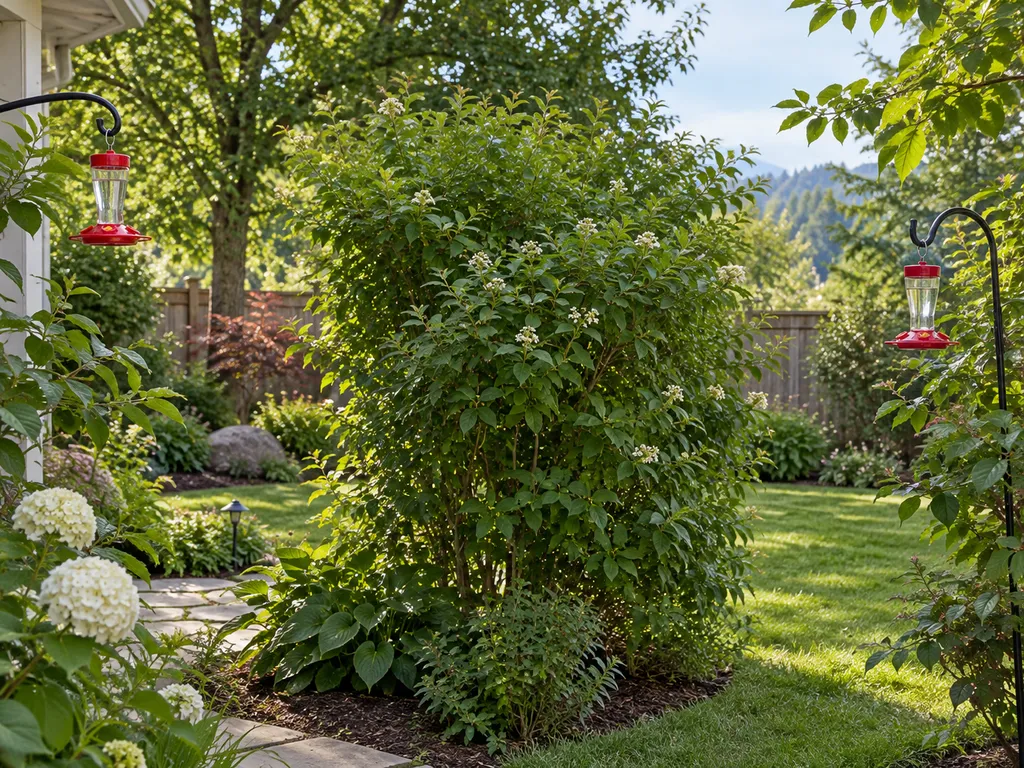
Hummingbirds are attracted to red feeder parts, but they still have to discover the spot. Place the feeder where birds can approach from shrubs, small trees, or perches, yet where the feeder is not buried so deeply in foliage that it is invisible from normal flight paths. Partial shade helps slow spoilage, and shelter from strong wind reduces swinging and dripping. If your feeder is brand new, leave it in one sensible location long enough for birds to find it rather than moving it every day.
Check window distance before choosing the prettiest viewing spot
A kitchen-window view is wonderful, but glass needs a safety check. Cornell Lab’s feeder placement advice says feeders are safest very close to windows, such as within 3 feet, because birds cannot build up much speed before impact https://www.allaboutbirds.org/news/where-to-put-your-bird-feeder/. In a Cornell Bird Academy discussion on glass collisions, experts describe the common 3-or-30-foot rule: place feeders within about 3 feet of glass or farther than about 30 feet away, and use visible exterior window treatments where needed https://academy.allaboutbirds.org/live-event/its-clear-glass-kills-how-to-prevent-bird-collisions-at-your-home/.
Refresh the nectar before blaming the feeder design
Fill the feeder with fresh, clear 4:1 nectar made from plain white table sugar and water. Do not add red dye, honey, brown sugar, raw sugar, powdered sugar, syrups, fruit juice, sports drinks, artificial sweeteners, vitamins, or protein additives. Cornell Lab says natural flower nectar is clear and that feeder parts, not colored liquid, provide the visual attraction https://www.allaboutbirds.org/news/feeding-hummingbirds/?pid=1181. Keep the 4:1 ratio in every season; changing the strength as a routine fix is not supported by the practical feeder guidance used by this site.
Change nectar often enough for the weather
Warm nectar spoils faster, especially in direct sun. As a practical schedule, change nectar about every 1 to 2 days above 90°F, every 2 to 3 days in the 80s°F, and every 4 to 6 days in cooler weather. Replace it immediately if it is cloudy, stringy, sour-smelling, or shows mold or black specks. Cornell Lab advises changing hummingbird water daily in very hot weather and never leaving it out more than two or three days in ordinary conditions https://www.allaboutbirds.org/news/feeding-hummingbirds/?pid=1181, while Audubon also advises immediate cleaning whenever nectar appears cloudy https://www.audubon.org/community-science/hummingbirds/how-create-hummingbird-friendly-yard.
Clean the feeder even when it still looks mostly clear
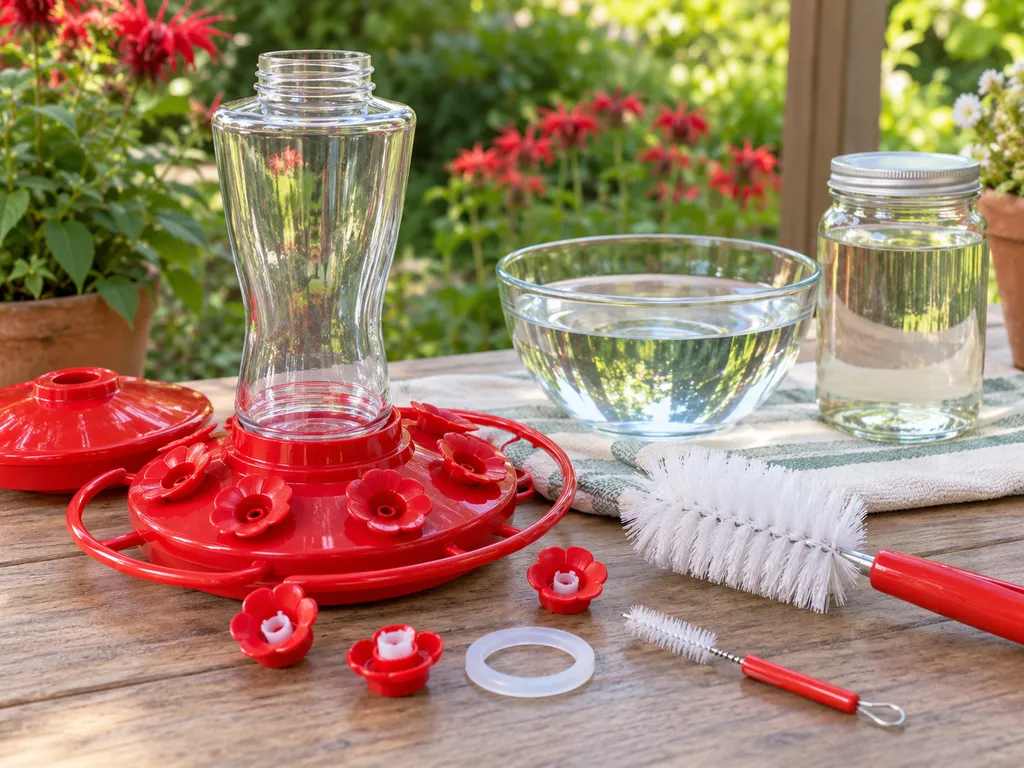
Hummingbirds feed through small ports, so a feeder can look acceptable from a distance while residue collects where birds actually drink. Clean the feeder at every refill with hot water and a bottle brush, and scrub the ports with a small brush or pipe cleaner. For a deeper cleaning, Audubon recommends a white-vinegar-and-water soak, followed by a thorough rinse https://www.audubon.org/community-science/hummingbirds/how-create-hummingbird-friendly-yard. Choose feeders that come apart fully; if you cannot reach the reservoir, ports, seams, and underside of the lid, it is harder to keep the feeder inviting.
Look for leaks, ants, bees, and wasps
Pests can make an otherwise good feeder unattractive. Drips draw insects, and insects can block access to ports. Audubon’s pest guidance points to tidy feeders, less-breezy locations, tight assembly, ant moats, and bee guards as practical controls https://www.audubon.org/magazine/how-keep-your-hummingbird-feeder-free-pests. Use an ant moat filled with plain water above the feeder. Consider a saucer-style feeder or a feeder with bee guards if bees and wasps dominate the ports. Never use oil, petroleum jelly, grease, sticky barriers, or insecticides on or near feeders or hangers; Cornell Lab warns that sticky substances can contaminate nectar or soil feathers https://www.allaboutbirds.org/news/youre-seeing-fewer-hummingbirds-at-your-feeder-should-you-worry/.
One hummingbird may be keeping the feeder empty when you look
Sometimes the problem is not that no hummingbirds found the feeder; it is that one bird found it first. Hummingbirds can be highly territorial at feeding sites. Cornell Lab recommends several smaller feeders spread around the yard instead of one large feeder, because one dominant bird may guard a single station even when there are many ports https://www.allaboutbirds.org/news/feeding-hummingbirds/?pid=1181. If possible, place two or more small feeders out of sight of one another, such as around a corner, on opposite sides of a shrub, or at different edges of the patio. The goal is to make it difficult for one bird to watch every port at once.
Improve the yard around the feeder
A feeder works best as one part of a hummingbird-friendly yard. Audubon recommends native flowering plants, especially red or orange tubular flowers, grouped so blooms continue through the season, plus perches, water features such as a fine mist, and reduced pesticide use https://www.audubon.org/community-science/hummingbirds/how-create-hummingbird-friendly-yard. Bee balm, trumpet honeysuckle, hummingbird sage, cardinal flower, salvia, penstemon, columbine, coral honeysuckle, fuchsia, and similar tubular flowers can help birds notice that your yard is worth checking. Hummingbirds also catch small insects and spiders for protein, especially when feeding young, so a sterile yard with no insect life is less useful than a diverse planting area.
If the feeder changed suddenly, compare what changed
If hummingbirds used to visit and then stopped, think like a detective. Did you move the feeder into deeper shade, full sun, or a windier spot? Did a port insert fall out or a gasket start leaking? Did nearby flowers bloom heavily, giving birds a natural food source for a while? Did a neighbor hang a feeder, or did a territorial bird begin guarding yours? Did the weather turn unusually hot, cold, smoky, rainy, or windy? A sudden drop often has a local explanation, and Cornell Lab notes that a decline at one feeder does not necessarily reflect the status of hummingbird populations overall https://www.allaboutbirds.org/news/youre-seeing-fewer-hummingbirds-at-your-feeder-should-you-worry/.
Give each fix enough time, but do not ignore maintenance
When birds are in season, try one or two changes at a time so you can tell what helped. Move a feeder from full sun to bright shade, add an ant moat, split one large feeder into two smaller ones, or place one feeder near tubular flowers. Then watch for several days while still changing nectar on schedule. Do not leave old nectar out as an experiment. A clean, fresh, stable feeder gives hummingbirds the best chance to learn the spot and return.
A practical reset plan for an ignored feeder
If you want the shortest route, reset the whole setup in one afternoon. Take the feeder apart, scrub the reservoir and ports, rinse thoroughly, and refill with fresh clear 4:1 nectar. Hang it in partial shade, sheltered from wind, either within about 3 feet of a window or well away from glass. Add an ant moat with plain water if ants are present. Remove sticky or oily pest barriers if any were used. If a single bird guards the feeder, add one or two small feeders out of sight from the first. Keep notes for a week: date, weather, nectar changes, sightings, pests, and any territorial chases. Patterns usually appear quickly.
The Bottom Line
A quiet hummingbird feeder is usually a fixable situation, not a verdict on your yard. Check regional timing first, then focus on the parts hummingbirds notice and use: a visible but sheltered location, partial shade, safe window spacing, fresh clear 4:1 nectar, clean ports, no red dye, no sticky pest barriers, and enough feeder spacing that one bird cannot guard everything. Add native tubular flowers and perches around the feeder, keep the routine steady, and give local birds time to discover the spot.
Frequently Asked Questions
How long does it take hummingbirds to find a new feeder?
It can take a few days or longer, especially if the feeder is new, hidden, or hung before hummingbirds are common in your area. Keep it clean, filled with fresh clear 4:1 nectar, and in one sensible spot long enough for local birds to discover it.
Should I move my feeder if no hummingbirds visit?
Move it only after checking timing and maintenance first. If birds are in season and the feeder is clean, try a brighter, more visible spot in partial shade, sheltered from wind, near flowers or perches, and with safe window spacing.
Can one hummingbird really keep others away?
Yes. Hummingbirds can be territorial around feeders. Several small feeders placed out of sight of one another often work better than one large feeder because a single bird cannot easily guard every station.
Do hummingbirds avoid dirty feeders?
They may avoid feeders with cloudy nectar, residue, clogged ports, or insect activity. Clean the feeder at every refill with hot water and brushes, and replace nectar immediately if it looks cloudy, stringy, sour-smelling, or moldy.
Will leaving a feeder up in fall stop hummingbirds from migrating?
No. Cornell Lab explains that feeders do not control migration. Keeping a clean feeder up for several weeks after the last sighting can help late migrants, as long as you keep replacing nectar and cleaning the feeder.
Do I need red nectar to attract hummingbirds?
No. Use clear 4:1 nectar only. Red feeder parts and nearby tubular flowers are enough visual attraction, and red dye is unnecessary.
Sources
This guide was researched using these sources.
- https://www.allaboutbirds.org/news/feeding-hummingbirds/?pid=1181
- https://www.allaboutbirds.org/news/youre-seeing-fewer-hummingbirds-at-your-feeder-should-you-worry
- https://www.allaboutbirds.org/news/where-to-put-your-bird-feeder
- https://www.audubon.org/community-science/hummingbirds/how-create-hummingbird-friendly-yard
- https://www.audubon.org/magazine/how-keep-your-hummingbird-feeder-free-pests
- https://www.allaboutbirds.org/news/should-i-stop-feeding-birds-in-fall-so-they-can-start-their-migration
- https://www.audubon.org/magazine/when-expect-hummingbirds-your-feeders-and-flowers-spring
- https://academy.allaboutbirds.org/live-event/its-clear-glass-kills-how-to-prevent-bird-collisions-at-your-home