
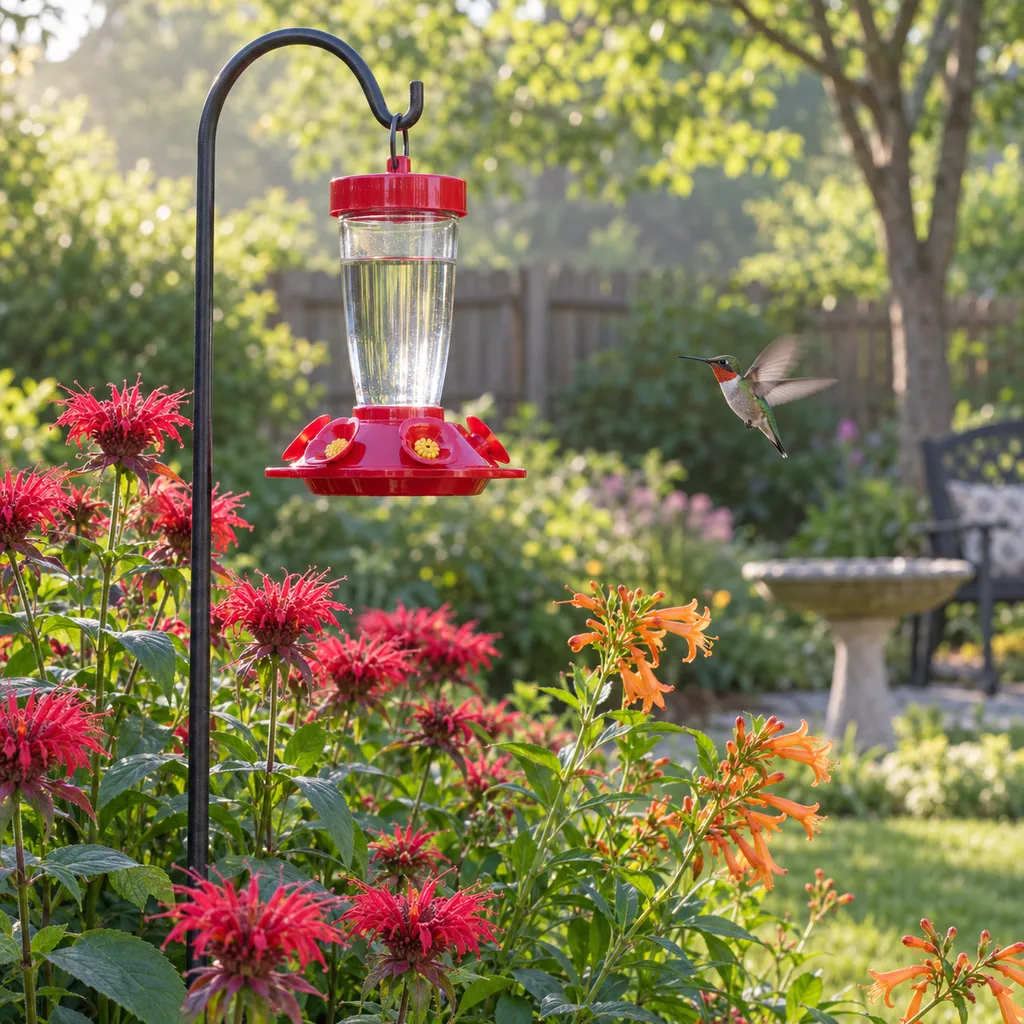
 Pin it
The best time to put out hummingbird feeders is before the birds need them: about one to two weeks before your local spring arrivals usually begin. That means there is no single U.S. date. Gulf Coast and far southern yards may start in late winter, much of the East and South can start in March or early April, northern states often start in mid-April to early May, and many Pacific Coast yards can keep feeders available all year. The key is to match your region, keep the feeder clean, and avoid taking it down too early in fall.
The Short Answer: Hang the Feeder Before the First Wave Arrives
If you want a simple rule, hang your feeder when the first reliable spring flowers are beginning in your area or about one to two weeks before hummingbirds are commonly reported nearby. Early feeders matter most during spring cold snaps, wet spells, or late freezes, when natural flowers may be uneven. Audubon describes spring hummingbird visits to flowering plants and nectar feeders as beginning in March in parts of the East and continuing through May farther north (Audubon). A feeder that is ready early is not a promise that birds will appear immediately, but it prevents the common problem of seeing the first hummingbird at the window and then scrambling to clean, fill, and hang a feeder after it has already moved on.
Use these broad ranges as a starting point, then adjust with local sightings, elevation, and weather:
- Gulf Coast, Florida, coastal Texas, coastal Louisiana, and mild southern areas: late February through March, or year-round where hummingbirds remain in winter.
- Southeast and lower South: early to mid-March is a good starting window for many yards.
- Mid-Atlantic, Ohio Valley, lower Midwest, and southern Plains: late March through mid-April is usually more realistic than a very early date.
- Northeast, upper Midwest, interior Northwest, and northern Rockies: mid-April through early May is the usual preparation window.
- Pacific Coast and parts of the Southwest: keep a feeder available year-round where Anna's Hummingbirds or other wintering hummingbirds are regular.
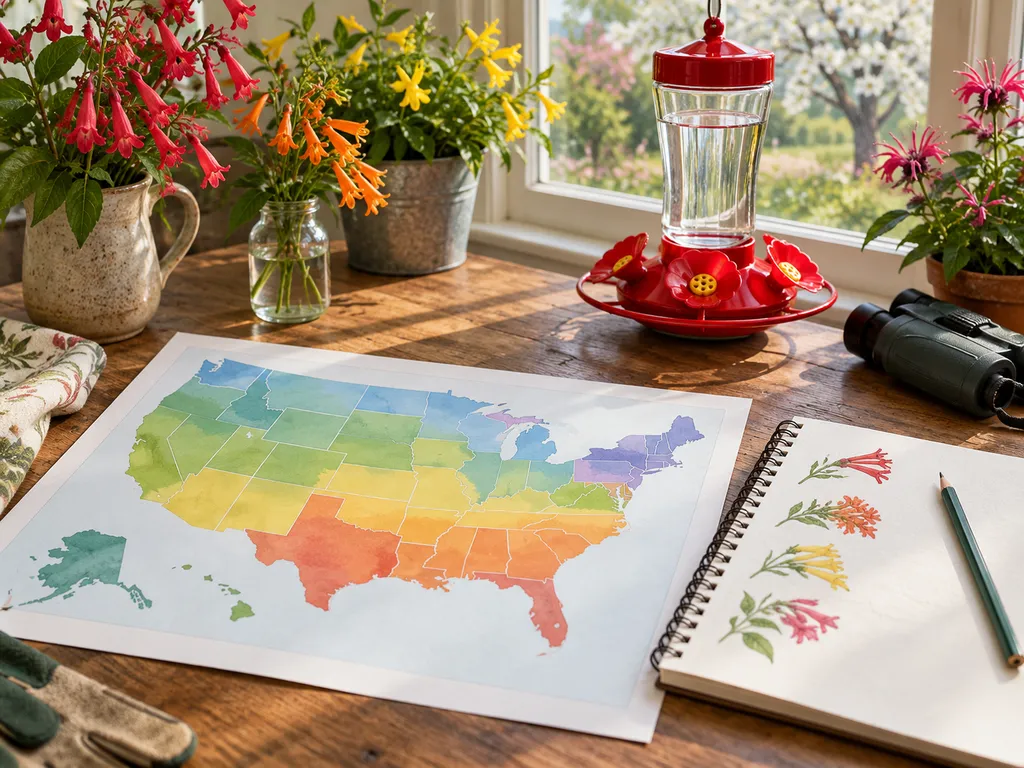
Why Feeder Timing Is a Range, Not a Calendar Appointment
Hummingbirds are responding to season, weather, daylight, flowering, and geography, not to a human calendar. A warm coastal yard and a cold mountain yard in the same state can be weeks apart. Elevation can matter as much as latitude in the West, where species such as Rufous Hummingbirds move north along the Pacific Coast in late winter and spring and reach Washington and British Columbia by May (Cornell Lab). In the East, Ruby-throated Hummingbirds are the main summer species across a huge breeding area, and Cornell describes them as bound for Central America by early fall after spending the warm months in gardens, woodland edges, and feeders (Cornell Lab).
Region-by-Region Timing Guide
Eastern U.S. In much of the eastern half of the country, Ruby-throated Hummingbirds are the bird most people are timing for. Put feeders out in March across the far South, late March to mid-April through the middle of the region, and late April or early May in colder northern areas. Audubon's eastern guidance puts nectar out by early March in the Southeast and by late April in the Northeast, which is a helpful wide frame rather than a fixed date (Audubon).
Mountain West and interior West. Think in elevation bands. Lower, warmer valleys may see birds earlier, while high mountain areas may lag until flowers open and nights moderate. Audubon notes that in the Mountain West, Broad-tailed, Black-chinned, Calliope, and Rufous Hummingbirds arrive as first flowers bloom, with appearances near the Mexican border starting in early March and northern Rockies timing stretching into early or mid-May (Audubon). A feeder can be useful during that transition, especially when a late storm follows warm weather.
Southwest, West Coast, and mild coastal areas. These regions are different because some hummingbirds may be present outside the classic spring-through-fall pattern. Anna's Hummingbirds, for example, often remain where feeding conditions allow; Cornell says Anna's Hummingbirds do not migrate much and may visit feeders all year (Cornell Lab). If hummingbirds are already in your area in January or February, the question is less when to start and more whether you can keep the feeder maintained consistently.
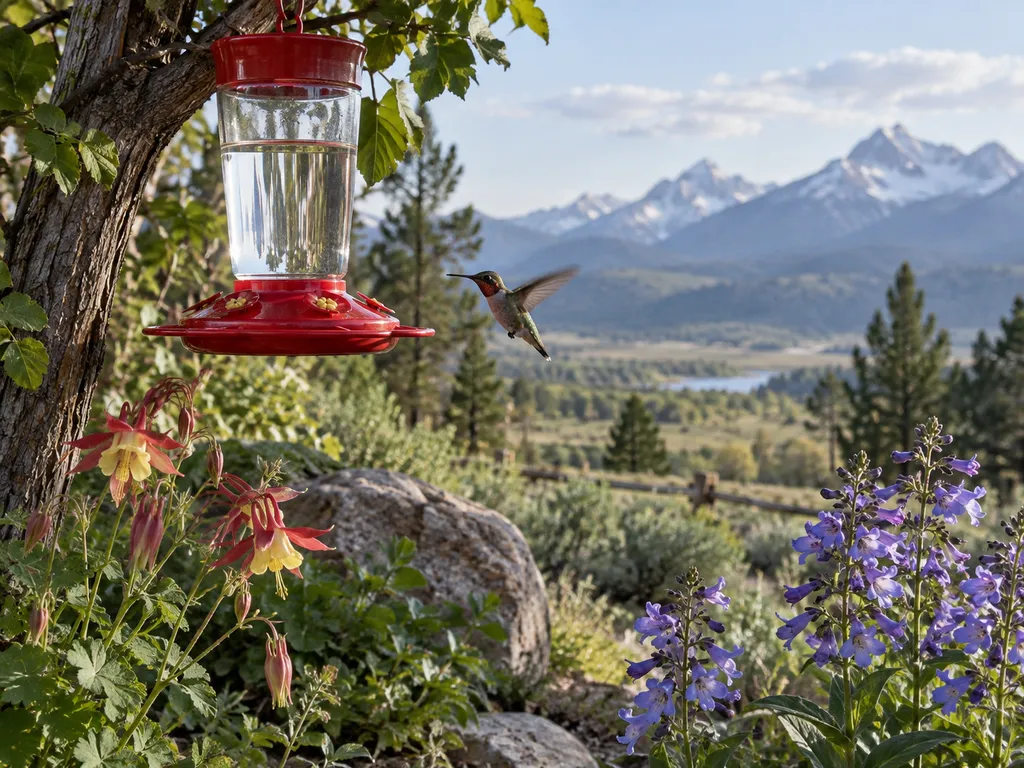
How Early Is Too Early?
Putting a feeder out a little early is usually a small inconvenience, not a problem for the birds. The main downside is maintenance: clear nectar still needs to be replaced before it spoils, even if no hummingbird has found it. If you hang a feeder six weeks before any realistic local arrival, you are mostly creating extra refills for yourself. If you hang it one to two weeks before your normal window, it may catch scouts, early migrants, or birds delayed by rough weather. Fill with fresh 4:1 nectar and keep the liquid clear; the feeder's red parts are enough to catch attention, and red coloring is unnecessary according to Cornell's feeder guidance (Cornell Lab).
When to Take Hummingbird Feeders Down in Fall
Do not rush to take feeders down as soon as the regular summer birds disappear. Cornell notes that male hummingbirds may leave first, followed later by females and young, and that migrants from farther north may stop at feeders in late summer and fall (Cornell Lab). A practical rule is to leave the feeder up until about two weeks after your last confirmed hummingbird sighting. If you are in a year-round or wintering area, switch from a migration schedule to a maintenance schedule: keep the feeder clean, prevent freezing when needed, and avoid gaps if birds are depending on a regular stop.
Feeders Do Not Stop Hummingbirds From Migrating
One of the most persistent feeder myths is that a full feeder will make hummingbirds stay too late. Cornell explains that shortening day length is the strongest migration trigger, and Audubon makes the same point: flowers and feeders do not override the instinct to migrate (Cornell Lab, Audubon). Leaving a feeder up in fall is more likely to help late travelers than to hold them back. If a western species turns up far outside its usual winter range, a maintained feeder may help that individual through a difficult spell, but the feeder did not cause the navigation error.
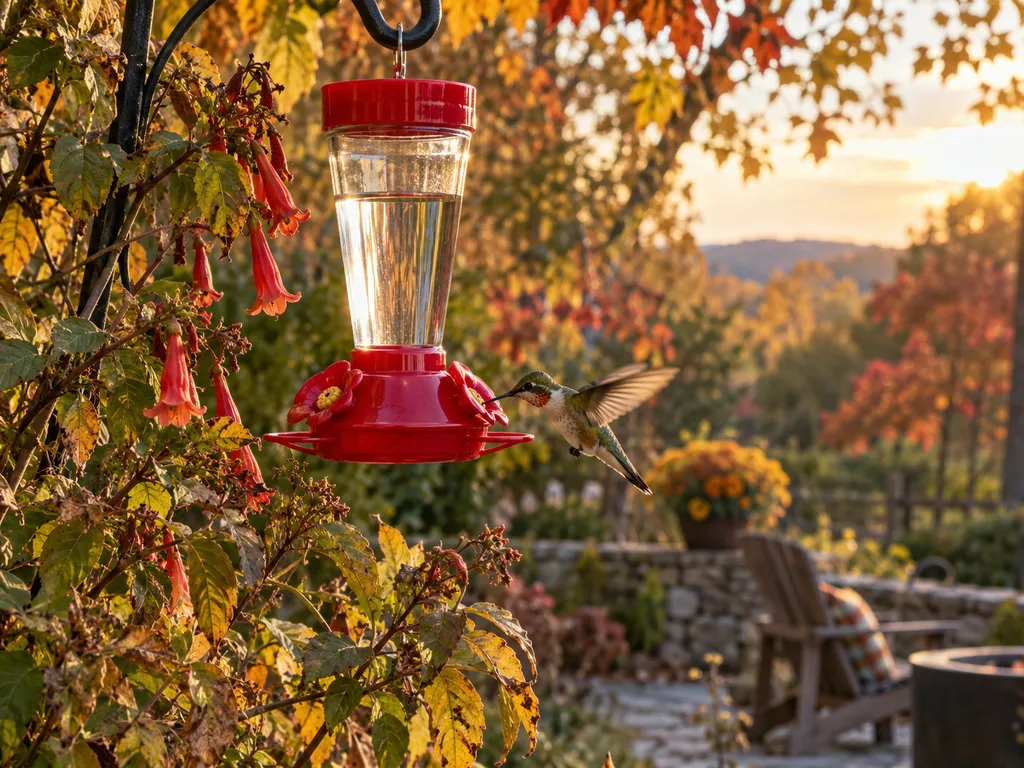
What to Do Before the First Bird Arrives
The right date matters less if the feeder is dirty, leaking, hard to find, or placed where one bird can guard every port. Before your regional window opens, take the feeder apart, scrub the reservoir and ports with hot water and the right brushes, rinse thoroughly, and make sure the hanger, gasket, base, and ports are sound. Choose a spot with morning visibility, some afternoon shade, and nearby cover, but keep window collision risk in mind. A feeder mounted directly on a window or placed within about 3 feet of glass is easier for a bird to recognize as part of the window area; otherwise, place it well away from large panes.
A quick pre-season checklist keeps the first refill simple:
- Wash and rinse the feeder before the first fill, even if it looked clean in storage.
- Use a size the birds can empty within a few days, because large unused reservoirs spoil faster than many people expect.
- Check that nectar stays clear and replace it sooner in hot weather.
- Use a saucer-style feeder or an ant moat with plain water if pests were a problem last year.
- Hang more than one small feeder out of sight from the others if one territorial bird dominates the yard.
- Add native tubular flowers near the feeding area so the yard offers more than one kind of nectar source.
Keep the Feeder Useful After It Goes Up
Once the feeder is out, treat it as a small commitment. Cornell advises that sugar water should not sit for more than two or three days in warm conditions and should be changed daily in very hot weather; the same source also emphasizes choosing feeders that come apart easily for cleaning (Cornell Lab). In practical backyard terms, that means a half-empty feeder with cloudy liquid is not a successful feeder. Smaller, cleaner, fresher is better than larger and neglected. In spring, when nights are cool and traffic is light, you may not need much capacity at all.
What If You See No Hummingbirds After Hanging It?
No visits in the first week do not mean you chose the wrong date. Early migrants may pass through quickly, and local territories may not settle until later. Also, a bird can find a feeder without you seeing it. If two or three weeks pass inside your normal regional window, check the basics: is the feeder visible, fresh, shaded from harsh afternoon sun, and away from a spot dominated by ants, bees, or a single aggressive hummingbird? Cornell notes that hummingbird numbers at feeders naturally fluctuate through the season and that territorial males can keep other birds away from a feeder (Cornell Lab).
A Note About Nests, Chicks, and Grounded Birds
Feeder timing should never lead to handling birds, moving nests, or trying to raise a young bird. In the United States, most bird nests are protected under the Migratory Bird Treaty Act when they contain eggs or chicks, and the U.S. Fish and Wildlife Service explains that it is illegal to destroy an active nest without the proper permit (U.S. Fish and Wildlife Service). If a bird is grounded or a nest situation looks urgent, contact a licensed wildlife rehabilitator or your state wildlife agency for instructions. A feeder is for visiting birds, not for hand-feeding or nest intervention.
The Best Local Signal Is Still Local Sightings
National timing maps are useful, but your own area will teach you more over time. Keep a simple note on the first date you see a hummingbird each spring, the first week feeder visits become regular, and the last confirmed fall sighting. After two or three seasons, your own notes will be more useful than a broad state-by-state chart. Local bird clubs, state wildlife agencies, and eBird reports can also help you avoid putting a feeder out far too early or taking it down too soon. The goal is not to hit a perfect date; it is to make sure a clean, fresh feeder is available when hummingbirds are most likely to pass through your yard.
The Bottom Line
Put hummingbird feeders out before your regional arrival window, not after the first bird surprises you. For many southern yards, that means March or even late February; for many northern yards, it means mid-April to early May; and for parts of the Pacific Coast, Southwest, Florida, and the Gulf Coast, it may mean year-round feeding if hummingbirds are present. In fall, leave feeders up for late migrants and take them down about two weeks after your last sighting unless wintering birds remain. A clean, fresh, well-placed feeder is more important than a perfect date, and leaving it up will not stop migration.
Frequently Asked Questions
What month should I put out hummingbird feeders?
It depends on your region. Many southern yards can start in March, Gulf Coast and far southern yards may start in late February or early March, and colder northern areas often wait until mid-April or early May. In mild western and coastal areas with resident hummingbirds, feeders may stay up year-round.
Should I put my feeder out before I see hummingbirds?
Yes. Put it out about one to two weeks before your usual local arrival window. That gives early migrants a ready stop and gives you time to fix leaks, clean thoroughly, or move the feeder if ants or other pests find it first.
Will leaving a feeder up in fall stop hummingbirds from migrating?
No. Cornell Lab and Audubon both explain that feeders do not stop normal migration. Day length and seasonal instinct are stronger signals than a backyard feeder. Leaving a feeder up can help late migrants refuel.
When should I take hummingbird feeders down?
A practical rule is to take them down about two weeks after your last confirmed sighting. If you live where hummingbirds overwinter, keep the feeder up only if you can maintain it reliably with fresh nectar and regular cleaning.
Is it okay to put feeders out too early?
A little early is fine, but very early feeders create extra maintenance. If no birds are present yet, the nectar still needs to be replaced before it turns cloudy or stale. One to two weeks before local arrivals is a better target than months ahead.
Why did hummingbirds disappear after visiting my feeder?
Seasonal movement, nesting behavior, natural flowers, nearby feeders, and territorial birds can all change feeder traffic. Keep the feeder clean and fresh, consider adding a second feeder out of sight from the first, and judge patterns over weeks rather than a single quiet day.
Sources
This guide was researched using these sources.
- https://www.audubon.org/magazine/when-expect-hummingbirds-your-feeders-and-flowers-spring
- https://www.allaboutbirds.org/news/youre-seeing-fewer-hummingbirds-at-your-feeder-should-you-worry
- https://www.audubon.org/magazine/ask-kenn-kaufman-will-my-feeder-keep-birds-migrating
- https://www.allaboutbirds.org/news/feeding-hummingbirds
- https://www.allaboutbirds.org/guide/ruby-throated_hummingbird
- https://www.allaboutbirds.org/guide/Rufous_Hummingbird/overview
- https://www.allaboutbirds.org/guide/Annas_Hummingbird/overview
- https://www.fws.gov/story/bird-nests