
 Pin it
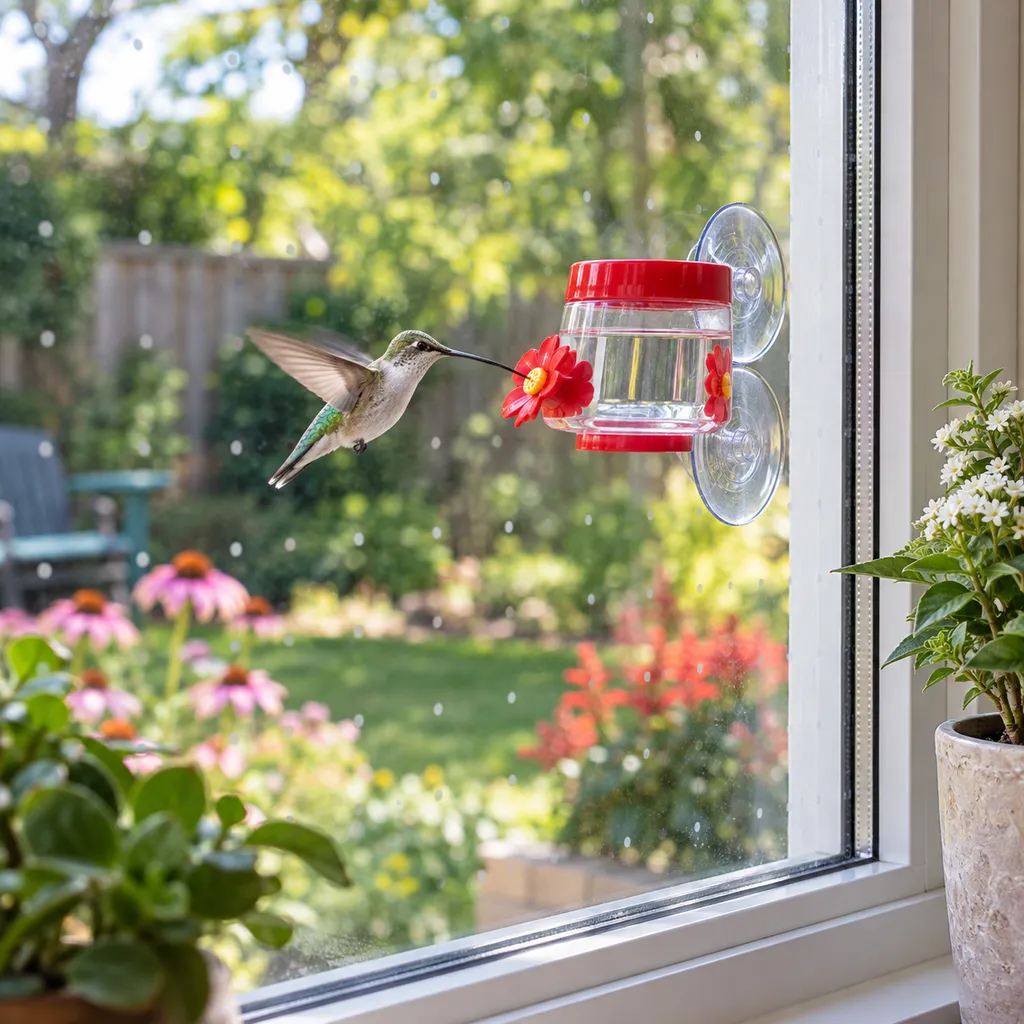
Yes - window hummingbird feeders can be safe, and in many homes they are safer than a feeder hanging several feet out from a window. The key is placement: a feeder attached directly to the glass, or set within about 3 feet of it, reduces the speed a bird can build before a possible strike. The other safer distance is farther than about 30 feet from the window. Cornell Lab guidance says feeders closest to windows are often safest, but newer collision-prevention advice also stresses making risky glass visible to birds, especially where windows reflect trees, sky, or garden cover Cornell Lab of Ornithology.
The Short Answer: Safe When The Glass Is Managed
A window feeder is not automatically unsafe. The risk depends less on the word "window" and more on the exact setup: how close the feeder is to the glass, whether the glass reflects habitat, how firmly the feeder is mounted, and how well the feeder is cleaned. A suction-cup feeder stuck to the outside of a window gives hummingbirds a short approach path. If one leaves in a hurry, it has little room to reach high speed before reaching the glass. That is the reason the common feeder-placement rule favors feeders on the window, within about 3 feet, or well away from the window, roughly 30 feet or more.
That rule is useful, but it should not be the only safety step. Cornell's current window-collision advice says windows near feeders deserve special attention, and that outdoor markings, screens, cords, or films can help birds recognize glass as a barrier All About Birds. In plain terms: a window feeder can be a good choice, but the safest version is a clean, secure feeder on glass that has been made bird-friendly if reflections or past collisions are a concern.
Why Distance Matters So Much
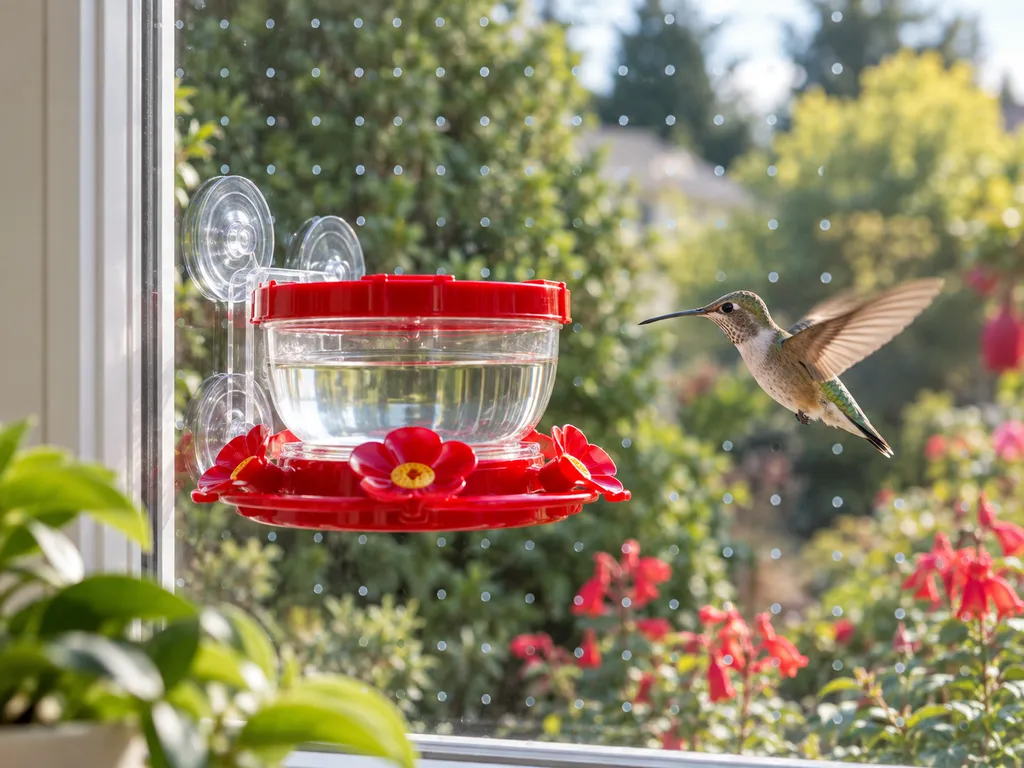
Birds collide with glass because they may see reflected sky, trees, shrubs, or open space rather than a hard surface. A hummingbird startled from a mid-distance feeder can launch toward that reflection. A feeder right on the glass shortens that launch. A feeder very far from the glass gives the bird more space to see and avoid the house. The awkward zone is the middle distance, where a feeder is close enough to draw birds toward a reflective window but far enough away for a fast flight.
The 3-or-30 idea is especially important for picture windows, patio doors, sunrooms, and corner windows where birds can see through to another bright opening. Cornell's Bird Academy discussion of glass collisions describes the 3-or-30-foot rule as a practical example, while also emphasizing that treated glass makes a major difference Cornell Bird Academy. For a window feeder, that means you should mount it flush to the glass rather than hanging it from a bracket that holds it several feet out.
Make The Window Itself Easier For Birds To See
If the window reflects greenery, sky, or nearby flowers, treat the glass. One or two decorative decals are usually not enough. Cornell recommends closely spaced markings across the outside surface, with small birds in mind, and notes that a 2-by-2-inch spacing pattern is the standard for flat markings All About Birds. American Bird Conservancy also recommends prioritizing windows that already have collisions, large glass areas, glass that reflects habitat, and windows across from feeders or bird baths American Bird Conservancy.
Good options include exterior insect screens, closely spaced dot or line patterns, tempera paint designs, vertical cords, or exterior films made for bird-safe glass. The outside surface matters because strong daytime reflections can hide inside-only markings. If you rent or live in an apartment, start with removable exterior-safe options allowed by your lease or building rules. If you cannot reach the outside of the glass, a window feeder may still work, but you should watch carefully for repeated strikes and move the feeder if the window remains risky.
Check The Mounting Before You Trust The Feeder
A safe window feeder also has to stay attached. Suction cups can hold well, but they need clean surfaces and routine checks. Wash the outside of the window where the cups will sit, clean the cups, press out trapped air, and tug gently before filling. Recheck after temperature swings, heavy rain, high wind, or direct sun that heats the glass. A feeder that slides, tilts, or leaks should be taken down until the mount is fixed.
- Choose a small feeder that you can empty and clean before nectar spoils.
- Mount it directly on the glass, not on a long arm several feet away.
- Use all included suction cups or brackets; do not rely on a partly attached mount.
- Keep the feeder level so clear nectar does not drip down the window.
- Place it where you can reach it easily for refilling and cleaning.
- Move it if pets, children, wind, or window operation can knock it loose.
A Clean Window Feeder Is A Safer Window Feeder
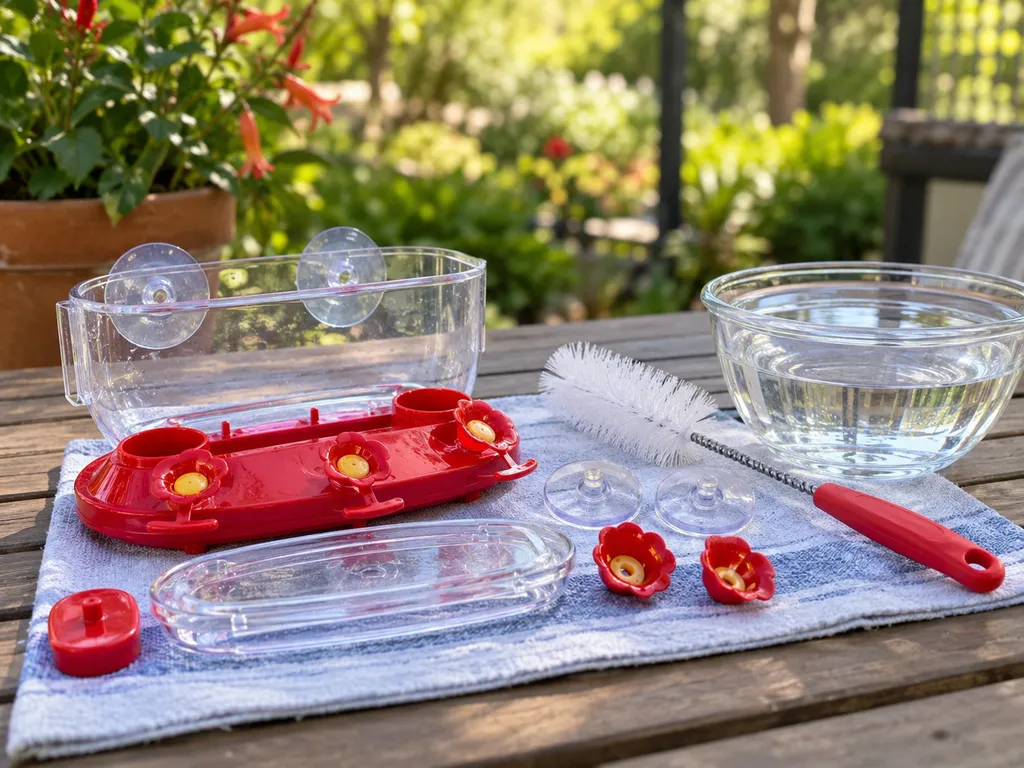
Window feeders are often small, which is an advantage: less nectar sits out unused. Fill with fresh 4:1 ratio nectar - four parts water to one part plain white table sugar - and do not add red dye. Smithsonian's National Zoo says to use refined white sugar and water, avoid red dye, store extra sugar water in the refrigerator for no more than a week, and change and clean feeders regularly Smithsonian National Zoo and Conservation Biology Institute. On this site, our full cleaning walkthrough is here: How to Clean a Hummingbird Feeder.
Because a window feeder is so visible from inside, readers sometimes notice every speck and worry that normal outdoor dust is a crisis. Focus on the signs that matter: cloudy nectar, stringy residue, black specks, sour smell, sticky ports, or ants around the feeder. When those appear, empty and clean the feeder at once. In hot weather, expect to change nectar much more often. A window location can help you remember, because the feeder is part of your daily view rather than something hidden at the back of the yard.
Choose A Design That Fits Window Use
The safest window feeder is usually simple: a small reservoir, a red base or red feeding ports, clear nectar visibility, and parts that come apart for scrubbing. Avoid oversized window feeders unless you have enough hummingbird visits to empty them quickly. A heavy feeder puts more stress on suction cups, and a complicated feeder gives residue more places to hide. If you are comparing styles, the broader design differences are covered in Types of Hummingbird Feeders Explained, but for window use the priorities are secure mounting, easy cleaning, and a size matched to actual visits.
Ports should be easy to brush. The reservoir should be clear enough to see the nectar level and any cloudiness. A perch is optional: hummingbirds can hover, and some will perch when one is available. Bee guards may help in some designs, but leaks are usually what make feeders attractive to insects. If ants become a problem, use a water-filled ant moat only where the design allows it safely; never put oil, grease, petroleum jelly, sticky barriers, or insecticides on or near a feeder.
Where To Put One On The Window
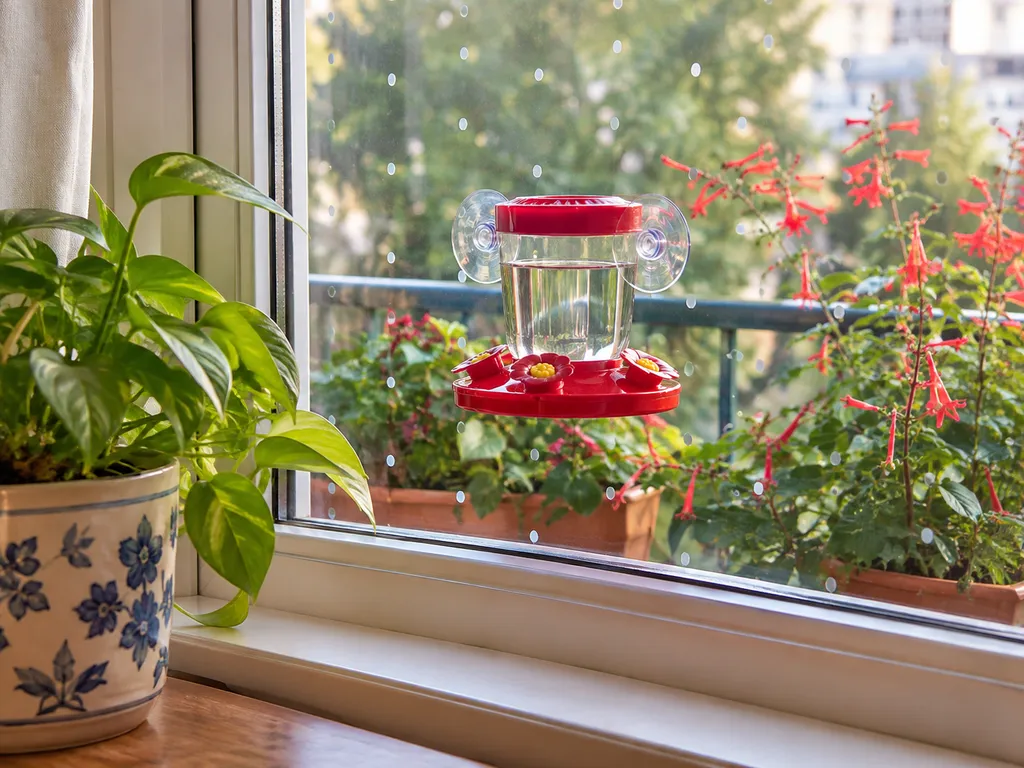
Pick a window that gives you access without making the birds feed in a busy doorway. A kitchen or living-room window can work well if it opens to shrubs, flowers, or open air and if the feeder is not above a walkway where drips would bother people. Partial shade is useful because sugar solution spoils faster in strong sun, and Cornell notes that hummingbird feeders should be protected from wind and mostly shaded when possible Cornell Lab of Ornithology.
Nearby natural cover can help hummingbirds rest between visits, but do not create a launch tunnel straight at reflective glass. If a shrub is pressed close to a big window, birds may see reflected leaves and fly toward them. If you can choose, combine the close feeder placement with visible glass treatment and keep dense cover a sensible distance from the pane. Also think about cats. Outdoor cats increase risk around any feeding station, and a window feeder should not become a predictable hunting spot from a sill, deck rail, or nearby ledge.
What To Do If A Bird Hits The Window
If a hummingbird or any wild bird hits the glass and does not quickly fly away, do not try to keep it, hand-feed it, or handle it for display. In the United States, federal migratory bird rehabilitation rules allow a person who finds a sick, hurt, or orphaned migratory bird to take possession only for immediate transport to a permitted rehabilitator U.S. Fish and Wildlife Service. Keep pets away, reduce noise, and contact a licensed wildlife rehabilitator or your state wildlife agency for instructions.
A strike is also a setup review. Move a mid-distance feeder either onto the glass or well away from the window. Add or improve exterior markings. Look from outside at different times of day and ask what the bird is seeing: sky, trees, indoor plants, or a see-through route across the house. If the feeder is attached to glass that continues to cause collisions after treatment, choose another window or a non-window location.
Apartment And Balcony Window Feeders
Window feeders can be especially useful for apartments because they do not require a yard. Cornell's apartment bird-feeding guidance specifically recommends suction-cup feeders set on the glass or within 3 feet of the window to reduce collision risk All About Birds. Before installing one, check building rules, because some apartments restrict anything attached outside a window or anything that could fall.
For upper floors, secure mounting matters even more. Use a small feeder, avoid overfilling, and take it down during severe wind if the mount is uncertain. Do not place a feeder where spilled nectar drips onto a neighbor's balcony or an air-conditioning unit. If the window opens outward or slides across the feeder area, choose another pane. The best apartment setup is modest, easy to reach, and cleaned so often that it never becomes sticky.
When A Window Feeder Is The Wrong Choice
A window feeder is not ideal for every window. Skip it if the glass is impossible to treat and has a history of collisions, if you cannot reach the feeder for frequent cleaning, if strong sun heats it all day, or if the window is exposed to hard wind that makes the feeder swing or leak. Also skip a window where indoor pets will repeatedly lunge at the glass. That stress may make your close-up view less enjoyable for everyone involved.
If hummingbirds are not visiting a safe setup, avoid rushing to bigger feeders or sweeter mixtures. Keep the 4:1 ratio, keep the feeder clean, and consider visibility, flowers, season, and territorial behavior instead. Our troubleshooting guide, Why Are There No Hummingbirds at My Feeder?, walks through those causes without changing the nectar formula.
Bottom Line
A window hummingbird feeder can be a safe, practical feeder type when it is mounted directly on the glass, kept clean, and paired with bird-friendly window awareness. The safest decision is not simply buying a "window" model. It is choosing the right pane, keeping the feeder out of the mid-distance danger zone, making reflective glass visible, and maintaining the feeder as carefully as any other hummingbird feeder. Done that way, a window feeder can give you a close view without adding unnecessary risk for the birds.
The Bottom Line
Window hummingbird feeders are safe enough for many homes when used with care. Mount the feeder on the window or within about 3 feet of it, or place other feeders about 30 feet or more from glass. Treat reflective windows with exterior-visible patterns, screens, cords, or film, especially if you have seen collisions. Use a small, sturdy, easy-clean feeder, fill it with clear 4:1 ratio nectar, avoid red dye, and check suction cups often.
Frequently Asked Questions
Are suction-cup hummingbird feeders safe for windows?
They can be safe when the glass and cups are clean, the feeder is small enough for the mount, and the feeder is attached directly to the window. Check the hold often, especially after heat, cold, wind, or rain. If the feeder slips or leaks, take it down and reset it before refilling.
Is it better to hang a hummingbird feeder on the window or several feet away?
On the window is usually better than several feet away. The safer distances are directly on the glass or within about 3 feet, or farther than about 30 feet from the window. The middle distance can let a startled bird gain speed toward reflective glass.
Do I still need window decals if the feeder is attached to the glass?
Use them if the window reflects trees, sky, shrubs, or if any bird has hit that window before. Close placement helps, but bird-friendly glass treatments add another layer of protection. Markings work best when placed on the outside and spaced closely enough for small birds to notice.
Can I put a window hummingbird feeder on an apartment window?
Often, yes, but check building rules first. Use a small feeder, mount it securely, keep it where you can reach it for cleaning, and avoid any spot where drips or a falling feeder could affect neighbors. If exterior glass treatments are not allowed, monitor the window closely and move the feeder if strikes occur.
What is the biggest safety mistake with window hummingbird feeders?
The biggest mistake is treating the suction cup as the only safety issue. Mounting matters, but so do collision risk, glass reflections, fresh nectar, frequent cleaning, shade, wind, and leaks. A secure feeder on untreated reflective glass can still be a problem.
Sources
This guide was researched using these sources.
- https://www.allaboutbirds.org/news/where-to-put-your-bird-feeder
- https://www.allaboutbirds.org/news/why-birds-hit-windows-and-how-you-can-help-prevent-it/?ac=ac&pid=1184
- https://academy.allaboutbirds.org/live-event/its-clear-glass-kills-how-to-prevent-bird-collisions-at-your-home
- https://abcbirds.org/strategies/solutions-for-homes
- https://www.nationalzoo.si.edu/migratory-birds/hummingbird-nectar-recipe
- https://www.fws.gov/service/3-200-10b-migratory-bird-rehabilitation
- https://www.allaboutbirds.org/news/i-live-in-a-high-rise-apartment-in-the-city-how-can-i-attract-birds