
 Pin it
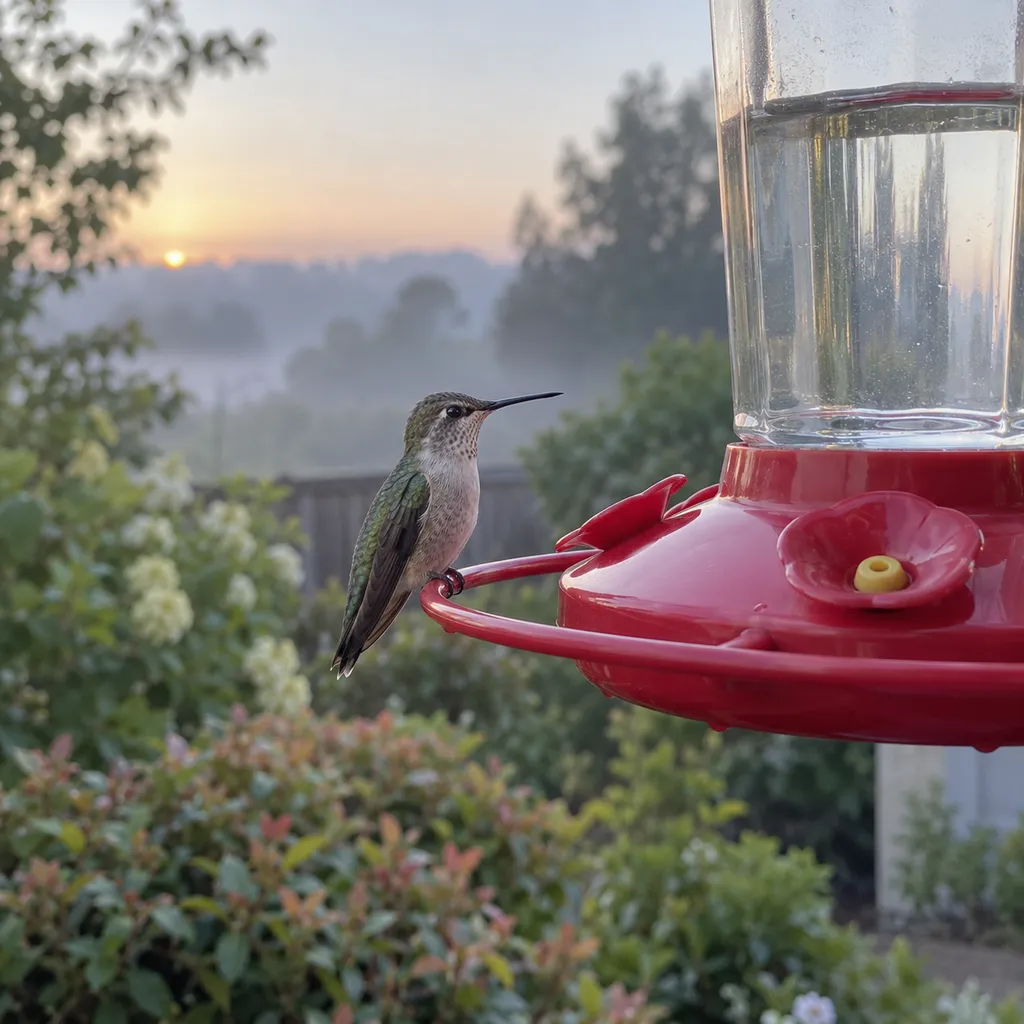
If a hummingbird is sitting on your feeder and not moving, the most likely explanation on a cold morning is torpor: a temporary state in which the bird lowers activity and body temperature to save energy. The safe first response is usually to leave the bird alone, watch from a respectful distance, keep cats and dogs away, and make sure the feeder has fresh clear 4:1 nectar available for when the bird becomes active. A torpid hummingbird can look alarming because it may be fluffed, hunched, still, and slow to respond, but disturbing it can waste the very energy it is trying to conserve.
First, Do Not Touch the Bird
A hummingbird on a feeder is close enough to tempt a rescue attempt, but handling is rarely the right first move. The National Park Service describes torpid hummingbirds as inactive, fluffed, and eyes closed, and adds plainly: do not disturb them https://www.nps.gov/articles/anna-s-hummingbird.htm. That advice matters because a bird coming out of torpor must spend energy to warm itself and restart normal activity. If you startle it, move it, or bring it indoors without a legal rehabilitation reason, you may create more stress than help.
Give the bird a quiet perimeter instead. Stand back far enough that it does not have to react to you. Bring pets indoors. If the feeder is in a busy walkway, ask people to use another door for a while. If the bird is gripping the perch, upright, and not trapped in a port, string, spiderweb, or sticky spill, observation is usually the safest action for the next stretch of time.
Why Hummingbirds Use Torpor
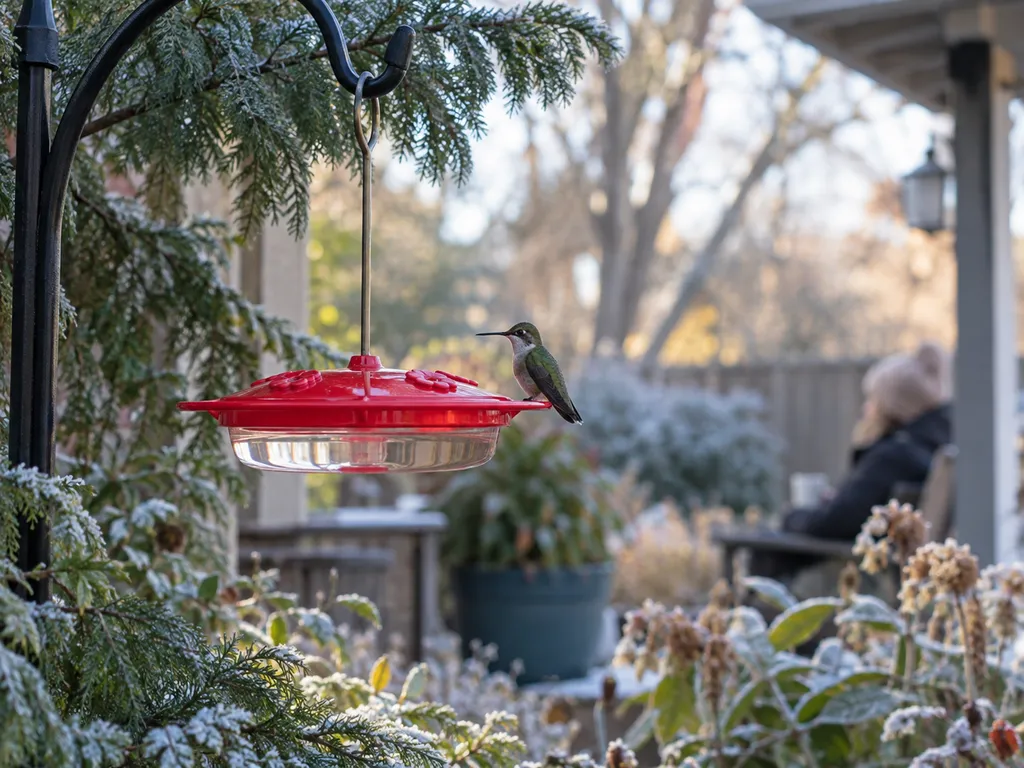
Hummingbirds live with an unusually high energy demand. The National Park Service notes that Anna's Hummingbirds have very high metabolisms, feed on nectar as well as small insects and spiders, and can use torpor during cold days and nights https://www.nps.gov/articles/anna-s-hummingbird.htm. In torpor, body processes slow dramatically. Cornell Lab experts explain that a hummingbird in torpor can be cold, not very responsive, and still able to grip a perch https://academy.allaboutbirds.org/live-event/how-high-energy-hummingbirds-survive-a-qa-with-the-experts/.
For feeder watchers, the important point is practical: torpor is not the same as ordinary daytime resting. A hummingbird may pause at a feeder for a minute, guard it, preen, or sit nearby between visits. Torpor looks deeper. It is most likely around dawn after a cold night, during a cold snap, or when the bird has reached the feeder before it has fully rewarmed. Cornell's Q&A also notes that warming from torpor can vary and may take many minutes, sometimes much longer, depending on conditions and the individual bird.
What Torpor Can Look Like at a Feeder
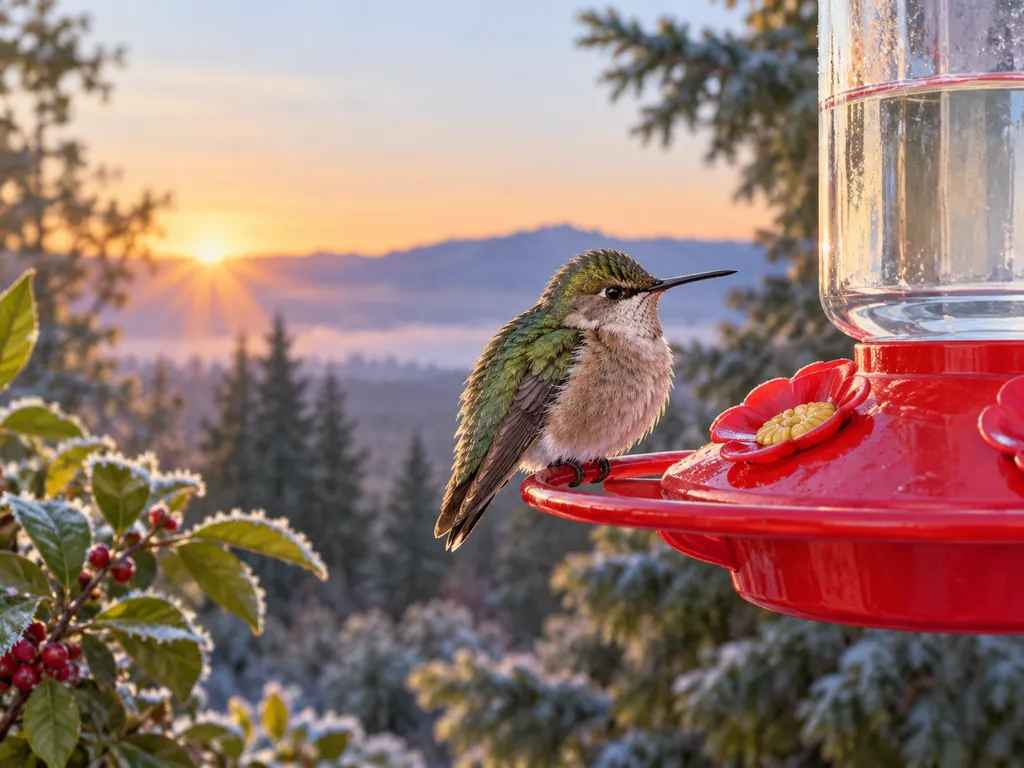
A torpid or just-waking hummingbird may sit in a hunched posture with feathers puffed out. The bill may point slightly upward. The eyes may be closed or only partly open. You may not see normal alert head turns, wing flicks, or quick departures. Cornell experts describe a not-moving morning bird at a feeder with closed eyes, a hunched posture, and slow metabolism as a likely torpor case https://academy.allaboutbirds.org/live-event/how-high-energy-hummingbirds-survive-a-qa-with-the-experts/.
As the bird wakes, it may shiver, make small head movements, smooth its feathers, or begin tiny drinking motions. That does not mean it needs to be grabbed. It means the bird may be doing the hard work of returning to normal activity. A useful reader rule is this: if the bird is upright, gripping, quiet, and the morning is still cold, protect the space and let the process continue.
A Calm Five-Step Check From a Distance
Use a short checklist before deciding there is a problem. The goal is to separate a normal torpor situation from a bird that is trapped, grounded, or in clear trouble.
- Check the time and weather. Cold dawn is the classic torpor scenario. A motionless bird at midday in warm weather deserves closer concern.
- Look at posture. Upright and gripping the perch is less urgent than lying sideways, hanging by a wing, or being on the ground.
- Look for entanglement. Do not pull the bird. If thread, hair, sticky residue, or a feeder part appears to be holding it, call a licensed wildlife rehabilitator for guidance.
- Check the feeder. Clear 4:1 nectar should be liquid, fresh, and reachable. If the feeder is frozen, swap in a thawed clean feeder without disturbing the bird.
- Control threats. Keep pets and people away, and reduce nearby noise or sudden motion until the bird leaves.
When It Is Probably Not Just Torpor
Some situations call for help rather than waiting. A hummingbird on the ground, one that cannot perch, one caught in a feeder part, or one that has struck a window may need a permitted rehabilitator. The U.S. Fish and Wildlife Service explains that migratory bird rehabilitation requires permits, and that a person who finds a sick, injured, or orphaned migratory bird may possess it only to transport it promptly to a permitted rehabilitator under the Good Samaritan provision https://www.fws.gov/service/3-200-10b-migratory-bird-rehabilitation.
That is why the safest escalation is not home care. Search your state wildlife agency's rehabilitator list or contact a local wildlife authority. If a permitted rehabilitator gives instructions, follow those instructions exactly. Until then, keep the area calm, dark, warm, and quiet only if the bird must be contained for transport. Do not offer drops from a syringe, do not force the bill open, and do not keep the bird as a pet or classroom visitor.
Keep the Feeder Helpful, Not Intrusive
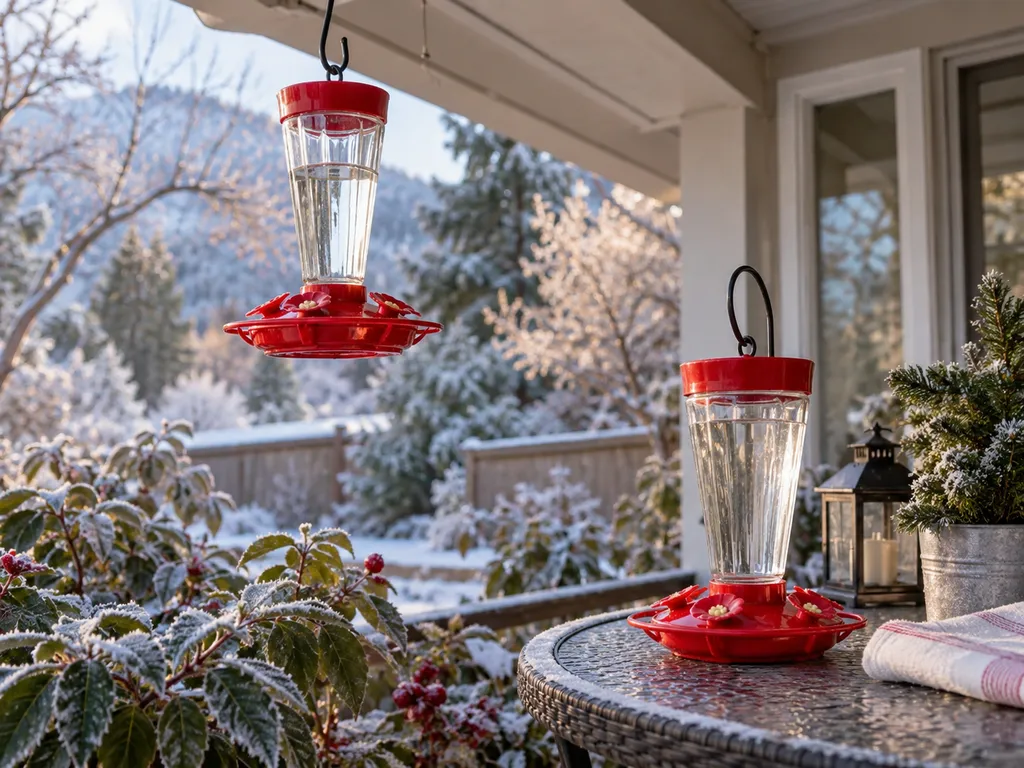
Once the bird is active, the best support is ordinary feeder care. Audubon recommends feeder nectar made with white sugar and water, warns against honey, artificial sweeteners, and red dye, and advises frequent cleaning and shade to slow spoilage https://www.audubon.org/community-science/hummingbirds/how-create-hummingbird-friendly-yard. For this feeder-focused situation, keep it simple: fill with fresh clear 4:1 nectar, keep the ports clean, and avoid additives. The red parts of a feeder are enough visual attraction; the liquid itself should remain clear.
In freezing weather, the job is to keep usable nectar available without making the bird depend on risky handling. Rotate two clean feeders so one can thaw indoors while the other is outside. Put the feeder where it is sheltered from wind but still visible and safe. If the site is near a window, remember the window-safety pattern used by bird-collision guidance: feeders placed directly on a window or very close to it reduce the chance that a bird can build up collision speed; otherwise, place feeders well away from glass.
What Not to Do When a Hummingbird Looks Frozen in Place
A still hummingbird can create panic, but several common reactions are poor choices. Do not blow warm air on the bird, drip liquid onto its bill, pry its feet from the perch, or bring the entire feeder indoors with the bird attached unless a rehabilitator tells you to. Do not use oils, grease, sprays, sticky barriers, or insecticides anywhere on the hanger or feeder. Those products can coat feathers or poison birds, and they do not solve a torpor problem.
Do not assume the feeder is keeping the bird from migrating, either. Cornell's All About Birds explains that keeping feeders up does not make birds start or stop migration; day length is a major migration cue, and late hummingbirds may benefit from extra energy during their journey https://www.allaboutbirds.org/news/should-i-stop-feeding-birds-in-fall-so-they-can-start-their-migration/. If a hummingbird appears on a chilly late-season morning, your clean feeder may be part of the support system, not the cause of the delay.
Legal Boundaries Matter
In the United States, hummingbirds are protected migratory birds. The U.S. Fish and Wildlife Service says the Migratory Bird Treaty Act prohibits taking, killing, capturing, selling, trading, or transporting protected migratory bird species without prior authorization https://www.fws.gov/law/migratory-bird-treaty-act-1918. That does not mean you must ignore a bird in immediate danger, but it does mean the next step should be a permitted rehabilitator, not improvised care.
If the bird flies off after warming, no further action is needed beyond cleaning and maintaining the feeder. If it remains at the feeder into a warm part of the day, repeatedly drops, appears trapped, or cannot fly, stop trying to diagnose the situation from the porch. Call a licensed wildlife rehabilitator or state wildlife agency. Give them the time, weather, what the bird is doing, whether it can perch, and whether there was a window strike or predator encounter.
The Bottom Line for a Still Bird on a Feeder
A hummingbird not moving on a feeder is often not a mystery to solve by touching the bird. It is commonly a cold-morning torpor situation, especially when the bird is upright, fluffed, and gripping the perch. Your role is to give it quiet, safety, and a clean feeder with fresh clear 4:1 nectar. Intervene only when there is a clear hazard, grounding, entanglement, or prolonged inability to fly, and then involve a licensed wildlife rehabilitator rather than attempting home treatment.
The Bottom Line
A still hummingbird on a feeder can be startling, but torpor is a normal energy-saving strategy for hummingbirds, especially after cold nights. Watch quietly, keep pets away, avoid touching or hand-feeding, and maintain a clean feeder with fresh clear 4:1 nectar. If the bird is grounded, trapped, visibly harmed, or unable to fly after conditions warm, contact a licensed wildlife rehabilitator or state wildlife agency for the next step.
Frequently Asked Questions
How long should I wait if a hummingbird is not moving on the feeder?
If it is early morning after a cold night and the bird is upright and gripping the perch, watch quietly from a distance while the day warms. Torpor recovery can take time. If the bird is still unable to fly during a warmer part of the day, or if it falls, appears trapped, or cannot perch, contact a licensed wildlife rehabilitator.
Should I bring the feeder inside if the hummingbird is attached to it?
No, not as a normal first response. Moving the feeder can startle the bird and force it to spend energy before it is ready. Keep the area quiet and protected. If the bird is entangled or in immediate danger, call a rehabilitator or wildlife agency before trying to move it.
Can I feed a still hummingbird by hand?
Do not try to hand-feed it or drip nectar into its bill. A torpid bird may not swallow normally, and a bird that needs care belongs with a permitted wildlife rehabilitator. The safer support is a clean feeder with fresh clear 4:1 nectar available when the bird becomes active.
Does leaving a feeder up make hummingbirds stay too late?
No. Cornell's All About Birds says feeders do not control whether birds migrate; day length is one major cue. Leaving a clean feeder up after the last sighting can help late migrants refuel, especially in fall or during unusual cold snaps.
What if the hummingbird is on the ground instead of perched?
A grounded hummingbird is more urgent than a perched, still bird. Keep pets away, reduce disturbance, and contact a licensed wildlife rehabilitator or state wildlife agency. In the United States, protected migratory birds may only be possessed for prompt transport to a permitted rehabilitator under limited circumstances.
Sources
This guide was researched using these sources.
- https://www.nps.gov/articles/anna-s-hummingbird.htm
- https://academy.allaboutbirds.org/live-event/how-high-energy-hummingbirds-survive-a-qa-with-the-experts
- https://www.fws.gov/service/3-200-10b-migratory-bird-rehabilitation
- https://www.audubon.org/community-science/hummingbirds/how-create-hummingbird-friendly-yard
- https://www.allaboutbirds.org/news/should-i-stop-feeding-birds-in-fall-so-they-can-start-their-migration
- https://www.fws.gov/law/migratory-bird-treaty-act-1918