
 Pin it
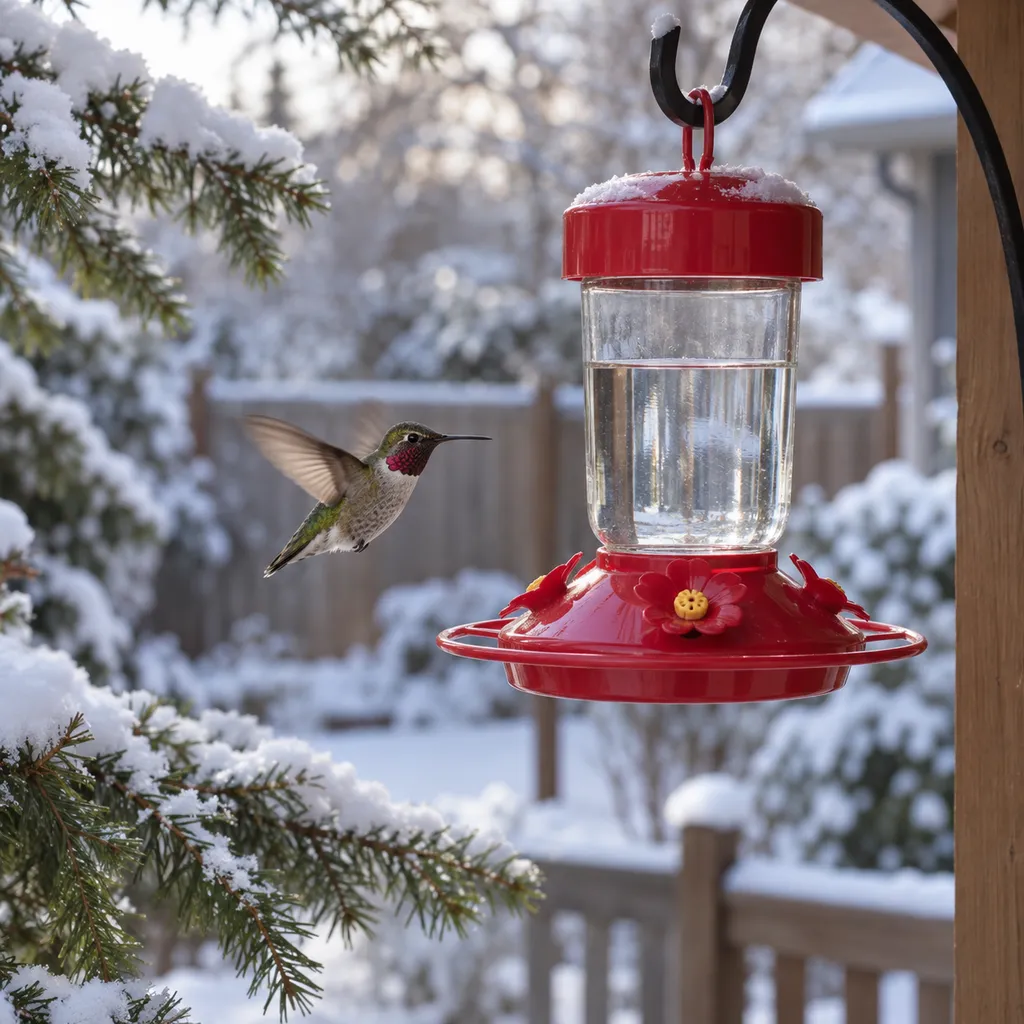
If hummingbirds are visiting in winter, keep feeding them with fresh, clear nectar at the standard 4:1 ratio and make preventing freeze-ups your main job. Feeders do not stop normal migration; day length is the main seasonal cue, and late or winter birds may benefit from a reliable feeder when flowers and insects are limited. The winter plan is simple: keep nectar liquid, keep the feeder clean, place it out of the worst wind, and never use red dye, honey, stronger mixes, or unsafe heater shortcuts.
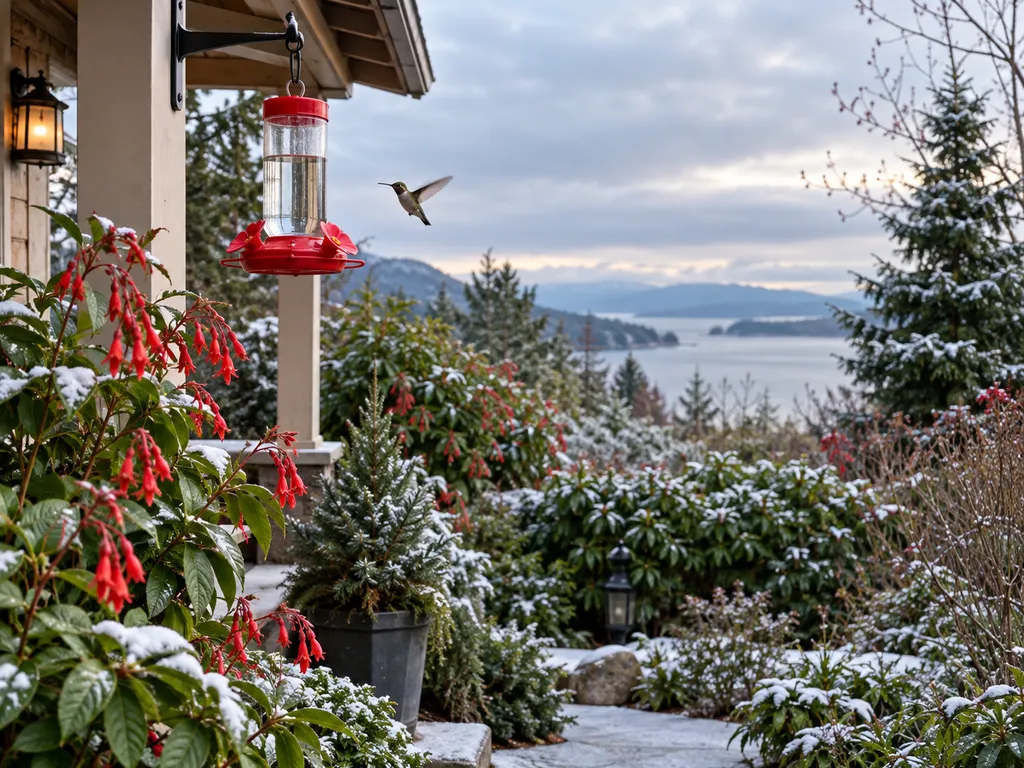
Winter feeding is most common along the Pacific Coast, parts of Arizona, the Gulf Coast, southern Florida, and scattered southeastern yards, but out-of-range hummingbirds can appear almost anywhere. Cornell Lab’s Project FeederWatch notes that year-round or winter reports include Anna’s Hummingbird in much of the West and winter reports of Rufous Hummingbird and other western species in the Southeast and Gulf states (Project FeederWatch). That does not mean every yard needs a December feeder. It means the right choice depends on whether hummingbirds are actually present, how cold your nights get, and whether you can maintain the feeder reliably.
What Winter Feeding Is Really For
Winter hummingbird feeding is not a trick for making birds stay. It is a support for birds that are already present, whether they are local residents, late migrants, or uncommon winter visitors. Audubon explains that people can leave feeders up as long as hummingbirds are around, and that feeders do not make hummingbirds remain too late because seasonal movement is tied mainly to day length and the sun’s seasonal angle (Audubon hummingbird feeding FAQs). If you live where hummingbirds vanish each fall, you can follow the usual guide of taking feeders down about two weeks after your last sighting, then put them out before spring arrivals; the regional timing article at When to Put Out Hummingbird Feeders covers that seasonal schedule.
The winter version of feeding is more demanding than summer feeding because an empty, icy, or dirty feeder is not helpful. If you cannot keep up with maintenance during a cold snap, it is better to make a clear plan than to improvise every morning. The useful question is not “Should everyone feed all winter?” but “Is there a hummingbird using this feeder, and can I keep this feeder clean and liquid?” In mild areas, that may mean ordinary refills. In freezing areas, it may mean rotating feeders, moving one to a sheltered place, or using a purpose-built heater with care.
Where Winter Hummingbirds Are Most Likely
Winter hummingbirds are not distributed evenly across North America. Project FeederWatch describes regular winter reports from the Pacific Coast through Arizona and from Texas, Louisiana, Alabama, Mississippi, and Florida, while Ruby-throated Hummingbird winter sightings away from extreme southern Florida are unusual (Project FeederWatch). Cornell’s All About Birds also notes that Anna’s Hummingbirds are common along the Pacific Coast and do not migrate much, so a feeder can be part of a year-round backyard setup in that range (All About Birds: Anna’s Hummingbird). In the Southeast, a winter bird at a feeder may not be the Ruby-throated Hummingbird people expect; some winter visitors are western species, especially Rufous Hummingbird.
Use the Same Nectar in Cold Weather
Do not make winter nectar stronger as your default plan. Oregon State University Extension specifically advises people seeing hummingbirds in freezing weather not to deviate from the formula of four parts water and one part sugar (OSU Extension). On this site, that is the 4:1 ratio: 1 part plain white table sugar to 4 parts water. Boiling is optional for dissolving sugar, but the nectar must cool before the feeder is filled. The nectar should be clear like water. Red feeder parts are enough to catch a hummingbird’s attention; red dye and food coloring do not belong in the feeder.
Keep the ingredient list plain and boring, because boring is best for hummingbirds. Use white table sugar and water only. Do not use honey, brown sugar, raw sugar, turbinado sugar, powdered sugar, molasses, maple syrup, agave, fruit juice, sports drinks, artificial sweeteners, vitamin drops, or “protein” additives. Audubon’s feeding guidance also warns against honey, artificial sweeteners, red dye, brown sugar, and molasses, and it describes natural nectar as clear (Audubon hummingbird feeding FAQs). Extra nectar can be kept in a clean, covered container in the refrigerator for up to about a week, then brought back toward outdoor-use temperature before filling.
A Practical Cold-Snap Plan
The goal in a freeze is not to warm the whole feeder like a space heater. It is to keep the feeding ports usable long enough for birds to feed after they become active. Choose the simplest method that fits your weather and your schedule:
- Rotate two feeders. Keep one feeder outdoors and one indoors, then swap them before the outdoor feeder freezes solid.
- Use a sheltered location. A spot protected from wind, sleet, and heavy shade can slow freezing, especially near a wall or under an overhang.
- Use a purpose-built heater when needed. Pick a product meant for outdoor feeder use and follow its instructions exactly.
- Insulate without blocking ports. A weather baffle or wrap around the reservoir may help, but ports must stay open and easy to clean.
- Check early and late. Birds often need a feeder most after a cold night and before roosting.
If you use any powered heater, treat the electrical side as seriously as the bird side. The U.S. Fire Administration advises replacing worn or damaged cords, avoiding overloaded power strips, and keeping cords away from places where they can be pinched or damaged (U.S. Fire Administration). For a winter feeder, that means using outdoor-rated equipment, keeping connections dry, avoiding improvised lamp-and-plastic arrangements, and retiring any heater or cord that looks cracked, loose, or unreliable. A feeder that depends on risky wiring is not a good winter plan.
Placement Matters More in Winter
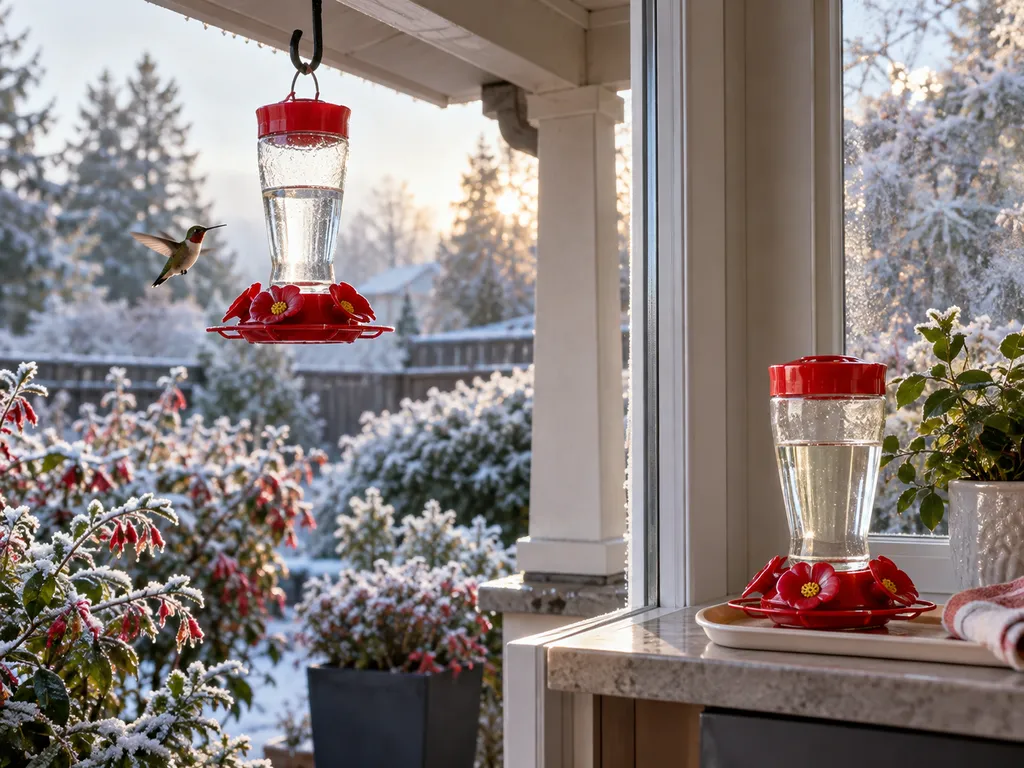
A good winter feeder spot balances visibility, shelter, and collision risk. Cornell’s All About Birds recommends hummingbird feeders in places protected from wind and mostly shaded because swaying can spill sugar solution and sun speeds spoilage (All About Birds: feeder placement). In winter, also look for a place you can reach during icy mornings. If a feeder is hard to reach, it is less likely to be swapped, cleaned, or checked when weather turns rough.
Window placement needs extra thought. Cornell explains that feeders are safest close to windows, ideally within about 3 feet, because a startled bird has less space to build speed before contact with glass; placement farther away can also reduce problems when paired with broader window-safety measures (All About Birds: feeder placement). Keep the feeder near perches or shrubs if possible, but not so buried that cats can hide under it or that branches let squirrels reach it easily. For feeder designs that are easy to service in cold weather, see Types of Hummingbird Feeders Explained.
Which Feeder Style Works Best in Cold Weather
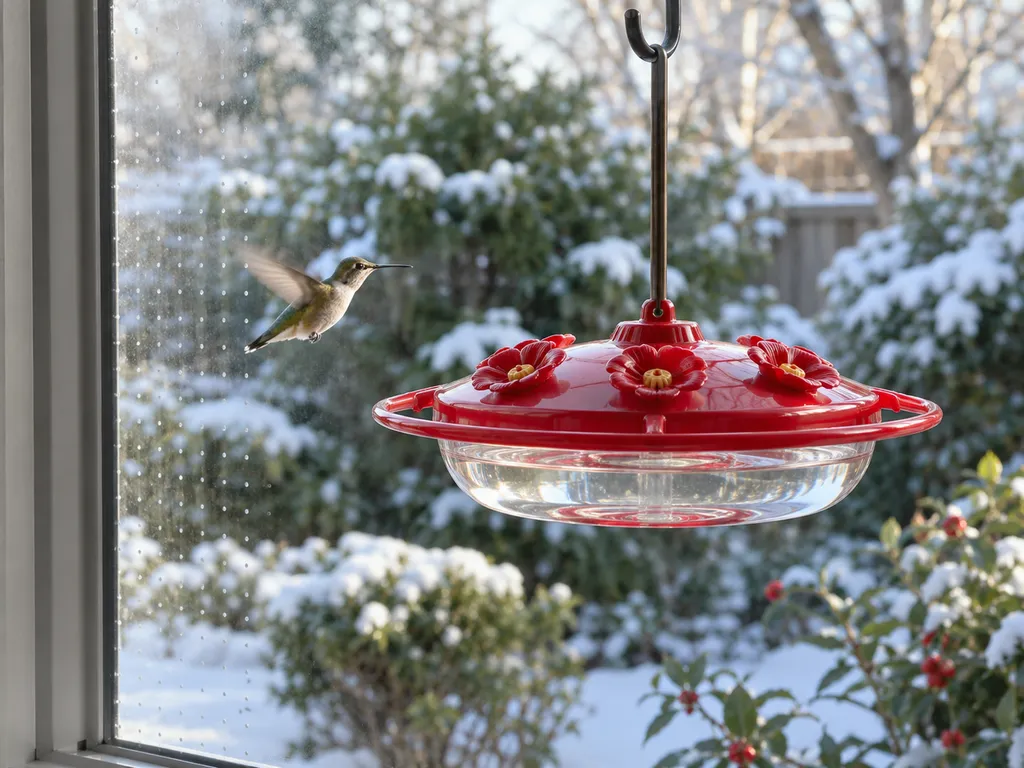
The best winter feeder is small enough to empty and clean often, simple enough to scrub thoroughly, and shaped so the ports can be kept liquid. Saucer-style feeders are often easier to clean and less prone to leaking than large inverted bottles, though any feeder can work if it comes apart completely. A smaller capacity can be an advantage in winter because you are changing nectar for cleanliness and freeze control, not because a flock is draining gallons. Large reservoirs may stay outdoors longer before freezing, but they also invite waste if only one bird is visiting.
Choose a feeder with red parts rather than adding color to the nectar. The reservoir should stay clear enough for you to see cloudiness, black specks, or residue. Ports should be wide enough for a small brush or pipe cleaner. If you are using a heater, make sure the heater fits the feeder securely without covering ports, trapping moisture against electrical parts, or making the feeder difficult to wash. When one territorial bird guards a feeder, a second feeder placed out of sight can give another bird a chance, but both feeders still need the same cleaning and freeze plan.
Cleaning Still Counts When It Is Cold
Cold weather slows some spoilage, but it does not make a feeder self-cleaning. Clean the feeder at every refill with hot water and a bottle brush, and clean the ports with a small brush or pipe cleaner. Audubon recommends frequent emptying and cleaning, immediately cleaning if nectar is cloudy, and using hot water with careful rinsing or a weak vinegar solution rather than relying on soap residue (Audubon hummingbird feeding FAQs). In practical terms, winter cleaning often means bringing the feeder indoors, taking it apart fully, scrubbing every groove, rinsing thoroughly, and refilling only after the feeder is visibly clean.
Do not top off old nectar. Dump it, clean the feeder, and refill with fresh 4:1 nectar. Replace nectar at once if it looks cloudy or stringy, smells sour, or shows mold or black specks. In cold weather you may not need the summer heat schedule, but the feeder still needs regular attention and immediate replacement after contamination. For a detailed cleaning walkthrough, use How to Clean a Hummingbird Feeder.
When a Hummingbird Seems Still on the Feeder
A hummingbird sitting still on or near a feeder in cold weather may be conserving energy, not necessarily in trouble. Anna’s Hummingbirds and other hummingbirds can enter torpor, a low-energy state used during cold periods; Cornell notes that their breathing and heart rate slow and they can become active again when temperatures warm (All About Birds: Anna’s Hummingbird). Watch from a distance first. Do not pick up a bird on a perch because it looks quiet. Keep the feeder liquid and the area calm, and let the bird become active on its own.
If a hummingbird is grounded, trapped, or unable to leave a hazardous spot, contact a licensed wildlife rehabilitator or your state wildlife agency for direction. In the United States, hummingbirds are protected migratory birds, and the U.S. Fish and Wildlife Service explains that the Migratory Bird Treaty Act prohibits capture, possession, transport, and related actions involving protected migratory birds without authorization (U.S. Fish and Wildlife Service). That is why winter feeding should focus on maintaining the feeder and habitat, not handling birds, nests, or eggs.
How Long to Keep Feeding
Keep feeding as long as hummingbirds are using the feeder and you can maintain it. If you have not seen a bird for about two weeks after the fall migration period in your area, it is reasonable to take the feeder down, clean it, dry it, and store it. If you live in a year-round area or a known wintering corridor, the feeder can stay up all winter, but the commitment becomes ongoing. A neglected winter feeder is not a backup plan; it is just a dirty or frozen object in the yard.
If you are unsure whether a winter bird is expected in your area, treat the sighting carefully. Do not assume every winter hummingbird in the East is a Ruby-throated Hummingbird. FeederWatch notes that winter hummingbirds in the Southeast are often western species and that identification can be difficult without expert confirmation (Project FeederWatch). Take clear photos from a respectful distance, note the date and location, and contact a local bird club, Audubon chapter, or eBird reviewer if you want help documenting the bird.
Common Winter Mistakes to Avoid
The biggest winter mistakes are changing the nectar formula, letting the feeder freeze for long stretches, and assuming cold weather replaces cleaning. Do not increase sugar concentration as a routine cold-weather fix. Do not add dye, honey, or commercial additives. Do not smear oil, grease, petroleum jelly, sticky barriers, or insecticides on the hanger or feeder; those can coat feathers or expose birds to harmful substances. If insects or ants become a problem during a mild winter spell, use a water-filled ant moat and a leak-resistant feeder instead. For no-visitor puzzles, see Why Are There No Hummingbirds at My Feeder?.
The Bottom Line
Winter hummingbird feeding is a maintenance commitment, not a seasonal shortcut. Keep the standard 4:1 ratio, keep nectar clear and fresh, clean at every refill, and focus on keeping the feeding ports liquid during freezes. Feeders do not override normal migration, but a bird that is already present in winter may depend on predictable access during cold snaps. The best winter setup is simple, reachable, sheltered, and electrically cautious if heated. If you can keep that routine, a winter feeder can be a useful part of a hummingbird-friendly yard.
Frequently Asked Questions
Should I take my hummingbird feeder down in winter?
If hummingbirds are still visiting, keep it up only if you can keep the nectar fresh, clean, and liquid. If you have not seen a hummingbird for about two weeks after your local fall season, clean and store the feeder unless your region regularly has winter hummingbirds.
Do feeders stop hummingbirds from migrating?
No. Major birding authorities explain that migration timing is tied mainly to seasonal light cues, not whether a feeder remains available. Leaving a feeder up can help late migrants or winter visitors, but it does not force normal migrants to stay.
Should winter hummingbird nectar be stronger?
No. Keep the same 4:1 ratio: 1 part plain white table sugar to 4 parts water. A stronger mix is not the routine answer to freezing. Use rotation, sheltered placement, or a suitable feeder heater to keep ports liquid.
How do I keep a hummingbird feeder from freezing overnight?
The simplest method is rotating two feeders: one outside and one indoors, then swapping before the outdoor feeder freezes solid. In colder areas, a purpose-built outdoor feeder heater may help, but use outdoor-rated equipment and follow all manufacturer instructions.
Is cold nectar harmful to hummingbirds?
The main problem is frozen nectar because birds cannot drink it. Audubon notes that cold nectar itself is not the concern people often imagine. Your priority is keeping the ports liquid and the feeder clean.
What kind of feeder is best for winter?
Choose a feeder that comes apart fully, has ports you can scrub, and is small enough to refill often. A saucer-style feeder is often convenient because it is low, simple, and usually easier to clean, but any well-maintained feeder can work.
Sources
This guide was researched using these sources.
- https://feederwatch.org/learn/articles/hummingbirds-in-winter
- https://www.audubon.org/magazine/hummingbird-feeding-faqs
- https://www.allaboutbirds.org/news/theres-a-hummingbird-at-my-feeder-in-the-dead-of-winter-will-he-be-okay
- https://extension.oregonstate.edu/ask-extension/featured/should-i-keep-filling-my-hummingbird-feeder-frigid-temperatures
- https://www.usfa.fema.gov/prevention/home-fires/prevent-fires/appliance-and-electrical/index.html
- https://www.allaboutbirds.org/news/where-to-put-your-bird-feeder
- https://www.allaboutbirds.org/guide/Annas_Hummingbird/overview
- https://www.fws.gov/law/migratory-bird-treaty-act-1918
- https://www.audubon.org/news/the-audubon-guide-attracting-hummingbirds-and-orioles