
 Pin it
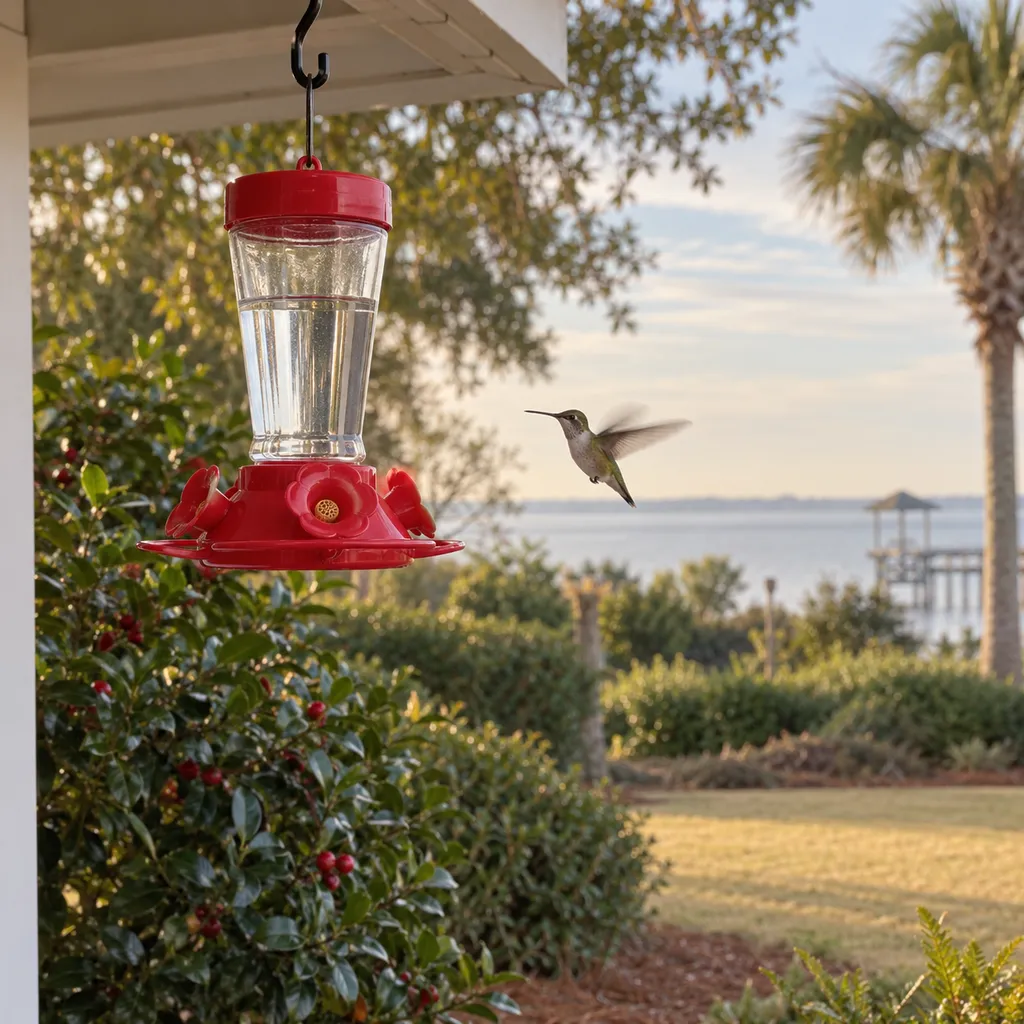
Yes, hummingbirds can show up on the Gulf Coast in winter, and a clean feeder can help them while they remain in the area. The Gulf Coast is different from colder inland regions: Audubon says several hummingbird species regularly overwinter along the U.S. Gulf Coast, southern Arizona, and south Florida, while the Smithsonian notes that clean feeders left up past ordinary fall dates do no harm and can help late or lingering birds. The key is not a special winter nectar recipe. It is a steady routine: fresh clear nectar at the 4:1 ratio, a feeder that does not freeze during short cold spells, and careful observation without trying to handle the bird.
The Short Answer for Gulf Coast Feeders
For most Gulf Coast homes, winter hummingbird feeding is a regional judgment call, not a calendar rule. If you live near the coast from Texas through Florida and you are still seeing hummingbirds after the usual fall migration rush, it is reasonable to keep at least one feeder available as long as you can keep it clean. Audubon’s bird FAQ states that several hummingbird species regularly overwinter along the U.S. Gulf Coast, and Smithsonian guidance says leaving clean feeders up later than the usual dates will not prevent migration because hummingbirds leave according to seasonal cues, including changing day length. See Audubon’s winter feeding answer at audubon.org/birding/faq and the Smithsonian nectar guidance at nationalzoo.si.edu/migratory-birds/hummingbird-nectar-recipe.
Why Winter Birds Appear Along the Coast
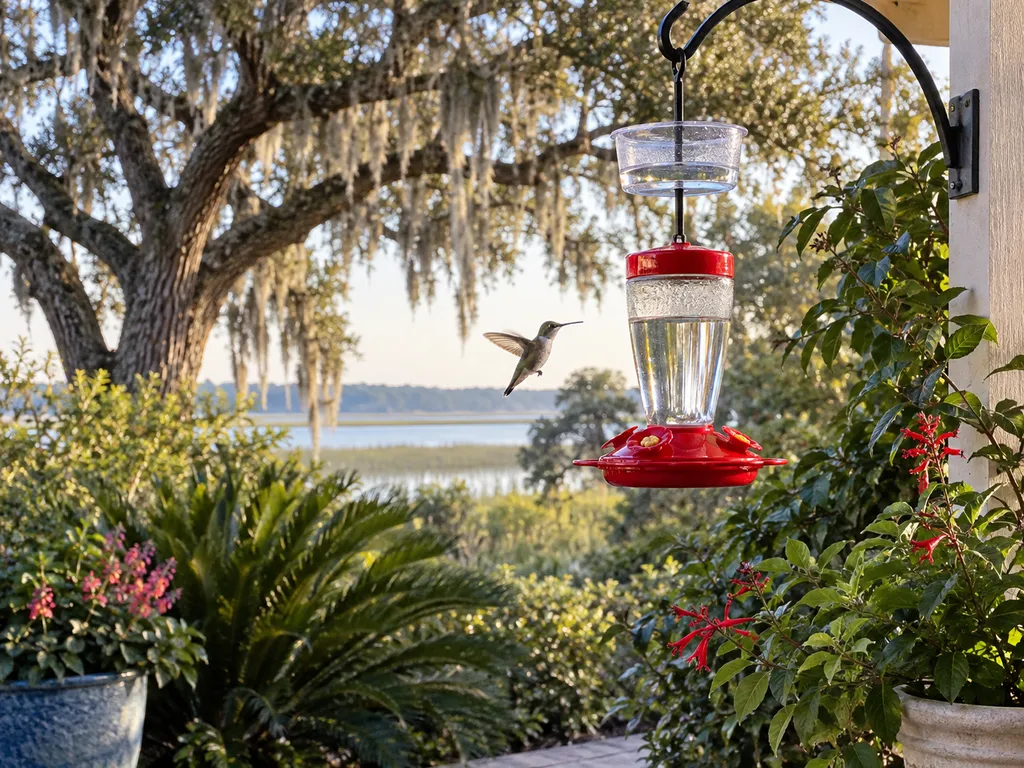
The Gulf Coast sits in a broad meeting zone for migration, mild winter weather, gardens, and feeder networks. Many Ruby-throated Hummingbirds move south in fall, and Audubon describes the species’ route as often following the Gulf Coast through Texas, with some crossing the Gulf of Mexico. But a winter bird at a feeder is not automatically a lost bird. Cornell’s All About Birds explains that hummingbirds can be surprisingly tolerant of cold weather when they can keep finding food, and some individuals have returned to the same winter feeders in more than one season. The practical takeaway is simple: do not assume the bird needs rescuing just because the month is January.
Winter hummingbird reports on the Gulf Coast are not all the same species. The most familiar eastern species is the Ruby-throated Hummingbird, which Cornell describes as eastern North America’s only breeding hummingbird and a frequent feeder visitor in towns and suburbs. Rufous Hummingbirds, Black-chinned Hummingbirds, Buff-bellied Hummingbirds, and occasional other western or southern species can also appear in winter records. Audubon’s 116th Christmas Bird Count regional report for Alabama and Mississippi described wintering hummingbirds mostly along the coast, including Gulf Shores reports of Ruby-throated, Rufous, Selasphorus-type, and Buff-bellied hummingbirds. Another Alabama Christmas Bird Count report recorded Ruby-throated, Rufous, and Black-chinned hummingbirds at Gulf Shores. These count reports are snapshots, not promises for any one yard, but they show why a winter hummingbird feeder on the coast is not unusual.
Species You Might Hear About
Identification should be careful because many winter hummingbirds are female or immature birds, and several species look similar at a quick feeder glance. A backyard article does not replace a field guide or local birding expertise, but these broad patterns help set expectations:
- Ruby-throated Hummingbird: the familiar eastern species; Cornell notes that it uses feeders and tubular flowers and is the only hummingbird that breeds across eastern North America.
- Rufous Hummingbird: a western species famous for long migration; Cornell’s winter hummingbird article names Rufous as one of the species most often reported farther north in winter.
- Buff-bellied Hummingbird: a South Texas and Gulf-associated species; Cornell says some move northward to winter along the central Gulf Coast, especially Louisiana, while Audubon notes that a few move north along the coast in fall to winter on the upper Texas coast or in Louisiana.
- Black-chinned and other western hummingbirds: these are less expected for many readers but do appear in some Gulf Coast winter count summaries.
Use the Same 4:1 Ratio in Winter
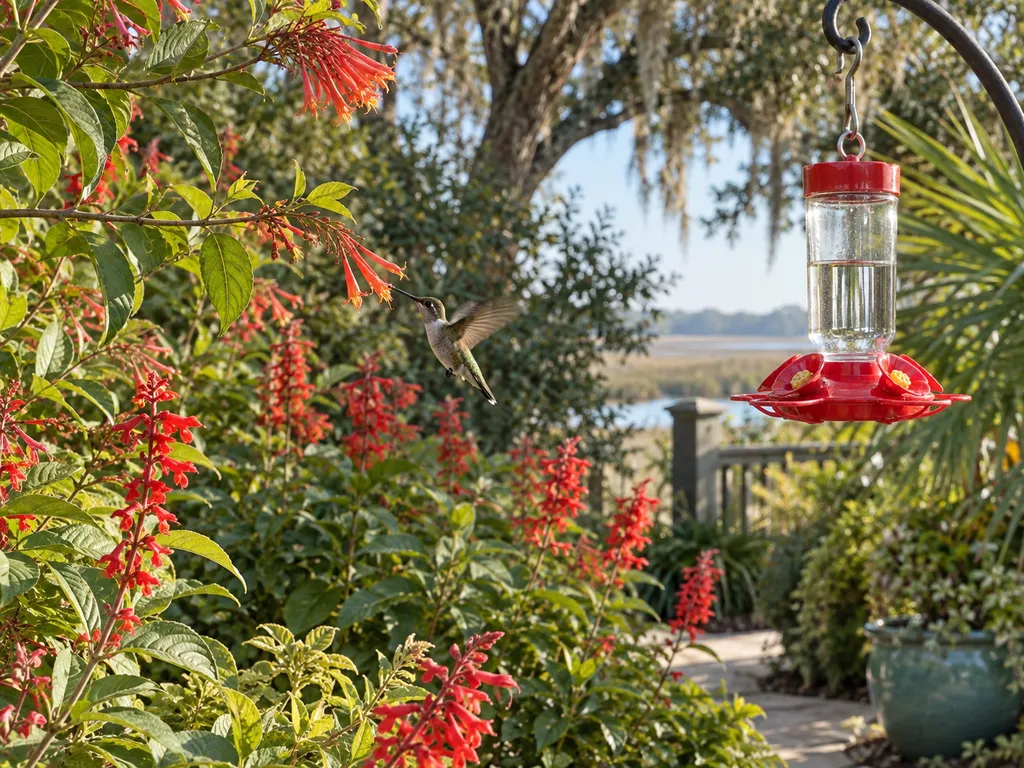
Do not make Gulf Coast winter nectar stronger as a rule. Use fresh clear nectar at the standard 4:1 ratio: 1 part plain white table sugar to 4 parts water. The Smithsonian’s National Zoo gives that same formula, says not to add red dye, and recommends refined white sugar rather than honey, corn syrup, raw sugar, or powdered sugar. The red parts of a feeder are enough visual signal; the liquid itself should look clear, like water. Boiling is optional for dissolving sugar, but the nectar must be cool before it goes into the feeder.
Winter weather can make people tempted to “help” with a sweeter mixture, but that is not the best default. The site’s feeding rule is steady: keep the 4:1 ratio every season. A stronger mix is not needed for ordinary Gulf Coast winter feeding, and it can encourage a false sense that the recipe matters more than cleanliness and access. If you make extra nectar, store it in a clean, covered container in the refrigerator for up to about a week, matching Smithsonian guidance. Discard nectar sooner if it looks cloudy, stringy, sour-smelling, or dirty.
How to Keep Nectar Usable During Brief Freezes
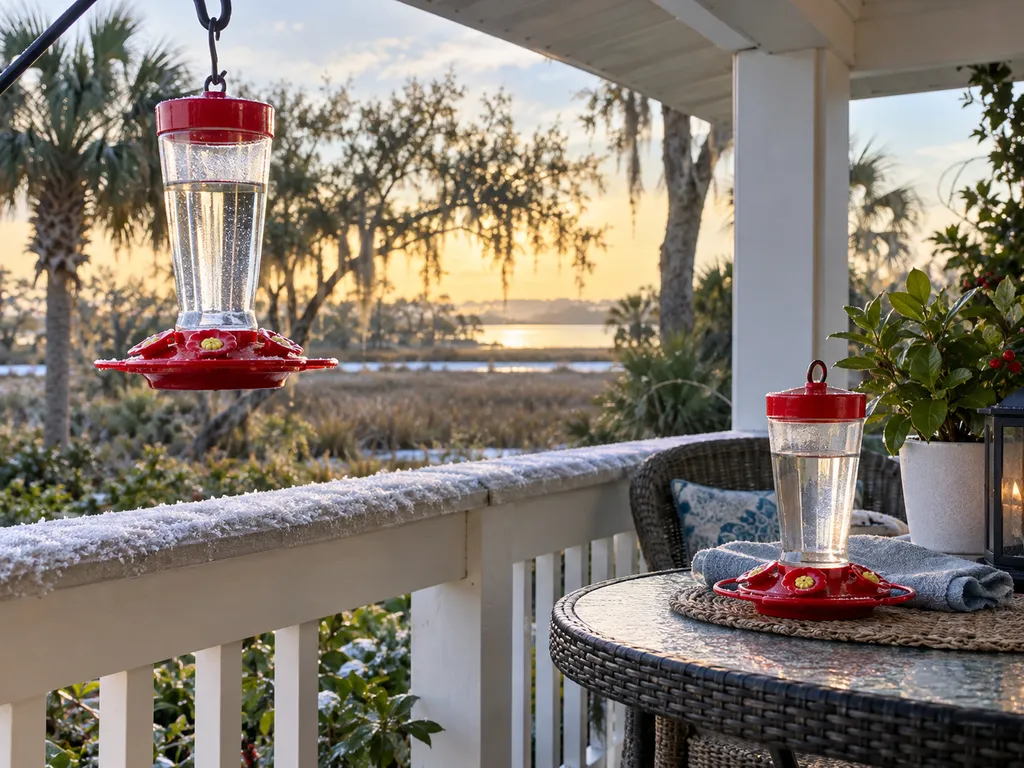
Most Gulf Coast cold snaps are short, so the goal is access rather than a complicated winter station. A feeder under an eave, near wind protection, or in morning sun may stay usable longer than one exposed to north wind. Cornell’s feeder placement guidance recommends protecting hummingbird feeders from wind because swaying can spill sugar solution, and it also recommends mostly shaded locations because sugar solution spoils faster in sun. In winter, that means you can balance shelter, some morning warmth, and shade from harsh afternoon sun.
For a night below freezing, bring the feeder in after dark and put it back out at first light, or rotate two feeders so one is always clean and liquid. Avoid improvised heat setups that could damage plastic, overheat nectar, or create an unsafe cord arrangement outside. If you use a purpose-made feeder heater, follow the manufacturer’s outdoor-use directions and keep all cords arranged away from standing water. The bird does not need warm nectar; it needs liquid nectar it can reach.
Cleaning Matters More Than Calendar Dates
A winter feeder still needs regular cleaning. Cool weather slows spoilage compared with Gulf Coast summer heat, but it does not make nectar permanent. Wash the feeder at every refill with hot water and a bottle brush, and clean the ports with a small brush or pipe cleaner. In warm spells, especially on the Gulf Coast where a “winter” afternoon can feel almost springlike, treat the feeder more like a warm-weather feeder and refresh it sooner. Smithsonian guidance recommends changing feeders every other day and thoroughly cleaning them each time, while also noting at least twice a week in hot weather and once a week in cooler weather.
Choose feeder size for the number of birds actually visiting. A large reservoir looks convenient, but if one winter hummingbird is sipping from it, a smaller feeder is easier to empty, clean, and refill before nectar sits too long. Saucer-style feeders can be useful because their ports are above the nectar reservoir, which often helps reduce leaks that draw insects. If ants become active during a warm spell, use a water-filled ant moat above the feeder. Do not put oil, grease, sticky products, or insecticides on the hanger or feeder, because those can contaminate the station and create needless risk for birds.
Where to Hang a Winter Feeder
Good winter placement is practical: easy for you to monitor, sheltered from wind, visible to birds, and less risky near glass. Cornell’s feeder placement article recommends putting feeders closer than 3 feet to a picture window, or directly on the glass or frame, to reduce the force of any collision; otherwise, place feeders well away from windows and consider treating reflective glass. For hummingbirds specifically, Cornell recommends wind protection and mostly shaded locations. Along the Gulf Coast, an eave, open porch edge, or protected tree line can work if it leaves the feeder visible and lets you retrieve it quickly for cleaning or freeze rotation.
Nearby cover helps too. A hummingbird may perch between visits, and evergreen shrubs or trees can provide wind shelter. Keep the feeder away from places where outdoor cats can hide and spring upward. Do not expect a feeder alone to meet every need. Hummingbirds also take tiny insects and spiders, and flowering plants can support a more complete yard habitat. In mild Gulf Coast winters, late-blooming salvia, coral honeysuckle, Turk’s cap, shrimp plant, and other tubular flowers may provide additional feeding opportunities, depending on your exact coastal climate and freezes.
When to Take the Feeder Down
If you are no longer seeing hummingbirds and do not want to maintain a winter feeder, you can take it down. If a bird is still visiting, leave one feeder up only if you can keep nectar fresh and liquid. The old worry that a feeder traps birds in place is not supported by the main bird authorities cited here. Audubon says migratory birds leave on their own schedule regardless of food availability, and Smithsonian says the belief that late feeders prevent hummingbirds from migrating is a myth. A common practical approach is to keep the feeder up for about two weeks after the last sighting, then clean it thoroughly and store it for spring.
If a hummingbird is grounded, unable to fly, or found in a nest situation, do not keep it, raise it, or try hand-feeding. Hummingbirds, their nests, and eggs fall under U.S. migratory bird protections. The U.S. Fish and Wildlife Service explains that the Migratory Bird Treaty Act prohibits taking, capturing, transporting, or possessing protected migratory birds without authorization. Contact a licensed wildlife rehabilitator through your state wildlife agency. Until you receive instructions, keep the bird warm, dark, and quiet, and avoid repeated checking or handling.
The Bottom Line
Winter hummingbirds on the Gulf Coast are worth taking seriously without turning them into an emergency. If a hummingbird is using your feeder in December, January, or February, keep the setup simple: clear 4:1 nectar, no red dye, a clean feeder, wind protection, and a plan for short freezes. Expect uncertainty in species identification unless an experienced observer confirms the bird. The best winter feeder is not the biggest or most elaborate one; it is the one you can keep clean, liquid, and safely placed for as long as the bird is visiting.
Frequently Asked Questions
Are winter hummingbirds normal on the Gulf Coast?
Yes. Audubon says several hummingbird species regularly overwinter along the U.S. Gulf Coast, and Christmas Bird Count summaries from Gulf Shores and nearby coastal counts have recorded winter hummingbirds. A winter visitor is not guaranteed in every yard, but it is not automatically a mistake or emergency.
Will leaving my feeder up stop hummingbirds from migrating?
No. Audubon says migratory birds leave on their own schedule regardless of food availability, and Smithsonian guidance calls it a myth that late feeders prevent hummingbirds from migrating. A clean feeder can help late migrants or wintering birds that are already in the area.
Should I make nectar stronger in cold weather?
No. Keep the 4:1 ratio in winter: 1 part plain white table sugar to 4 parts water. Do not add red dye, honey, raw sugar, powdered sugar, syrup, fruit juice, or sweeteners. The most helpful winter routine is fresh, clear nectar in a clean feeder.
What should I do when a Gulf Coast freeze is forecast?
Rotate feeders if you can. Bring one clean feeder indoors after dark, then put liquid nectar outside at first light. A sheltered spot under an eave or out of north wind can help. The goal is liquid nectar the bird can reach, not warm nectar.
When can I take a winter feeder down?
If no hummingbirds have visited for about two weeks and you do not plan to maintain the feeder, clean it thoroughly and store it. If a bird is still visiting, keep one feeder up only if you can keep nectar fresh, clear, and liquid.
Sources
This guide was researched using these sources.
- https://www.audubon.org/birding/faq
- https://www.nationalzoo.si.edu/migratory-birds/hummingbird-nectar-recipe
- https://www.allaboutbirds.org/news/theres-a-hummingbird-at-my-feeder-in-the-dead-of-winter-will-he-be-okay
- https://www.allaboutbirds.org/guide/Buff-bellied_Hummingbird/maps-range
- https://www.audubon.org/field-guide/bird/buff-bellied-hummingbird
- https://www.allaboutbirds.org/guide/Ruby-throated_Hummingbird/overview
- https://www.audubon.org/news/the-116th-cbc-alabama-and-mississippi
- https://www.audubon.org/news/the-119th-cbc-alabama
- https://www.allaboutbirds.org/news/where-to-put-your-bird-feeder
- https://www.fws.gov/law/migratory-bird-treaty-act-1918
- https://www.audubon.org/magazine/where-do-hummingbirds-go-winter-do-they-migrate