
 Pin it
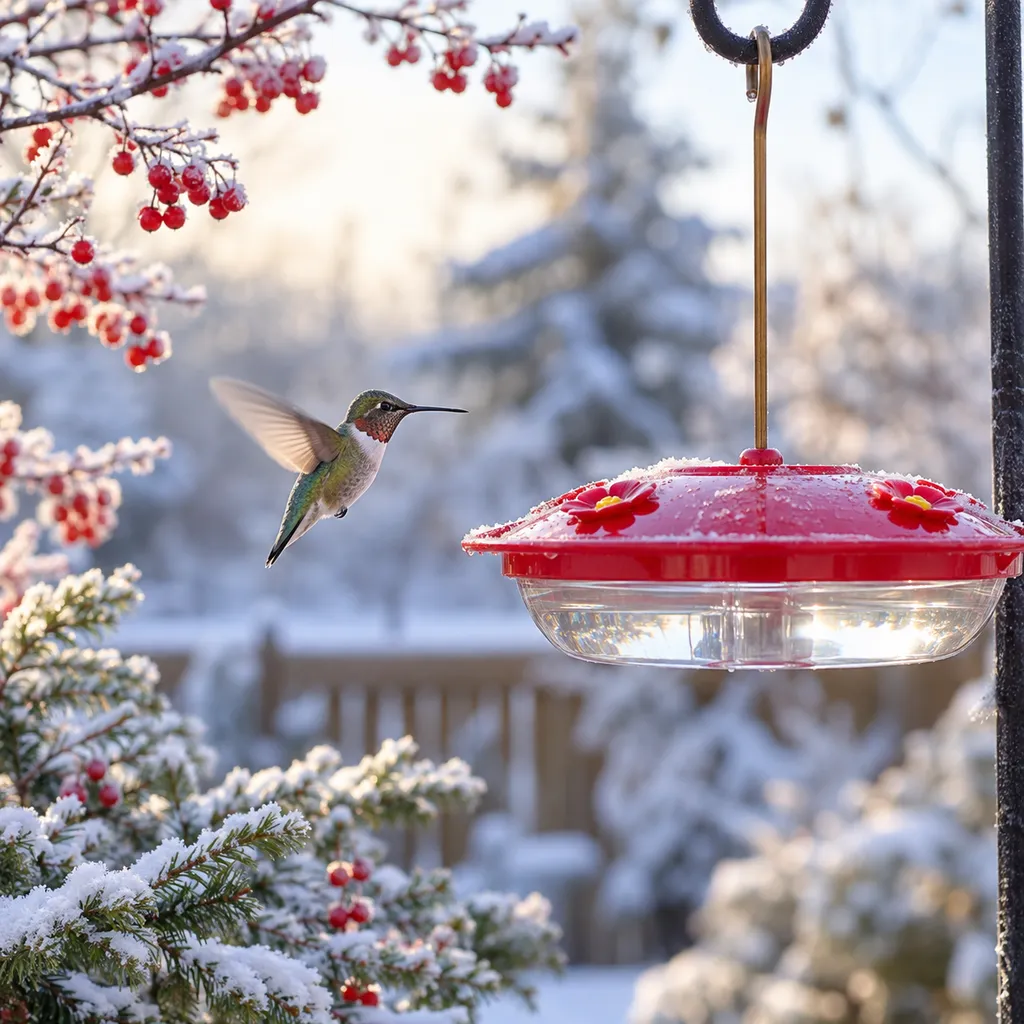
If hummingbirds are still visiting during a cold snap, the most useful thing you can do is keep fresh 4:1 nectar liquid and available at dawn. Do not make a stronger winter mix, do not add dye, and do not assume the bird should be forced to leave. Cornell Lab says winter hummingbirds can tolerate cold when they can keep finding food, and Audubon notes that feeders do not prevent migration because timing is guided mainly by day length, not a backyard feeder.
What Actually Matters During a Freeze
A cold snap changes the job of a feeder. In mild weather, your main work is freshness and cleaning. In freezing weather, your first task is access: can the bird reach liquid nectar when it starts feeding after a cold night? The feeder can look fine from a kitchen window while the ports are frozen shut, so check the ports and the saucer or base, not only the reservoir.
Several hummingbirds winter in parts of North America, especially Anna's Hummingbird along the Pacific Coast and into the Pacific Northwest. Cornell Lab's All About Birds notes that Anna's Hummingbirds often visit feeders year-round and can enter torpor when temperatures fall, a temporary low-activity state that helps them get through cold periods: https://www.allaboutbirds.org/guide/Annas_Hummingbird/overview. Cornell Lab also says a winter hummingbird at a feeder is often likely to be okay if it can continue finding food: https://www.allaboutbirds.org/news/theres-a-hummingbird-at-my-feeder-in-the-dead-of-winter-will-he-be-okay/.
Use The Same Nectar, But Manage It Differently
Keep the standard 4:1 ratio: 1 part plain white table sugar to 4 parts water. Cornell's Anna's Hummingbird page gives that same ratio and says not to use honey or food coloring. Audubon also advises refined white sugar only and no artificial sweeteners: https://www.audubon.org/magazine/hummingbird-feeding-faqs. In other words, the cold snap plan is not a recipe change. It is a feeder-management change.
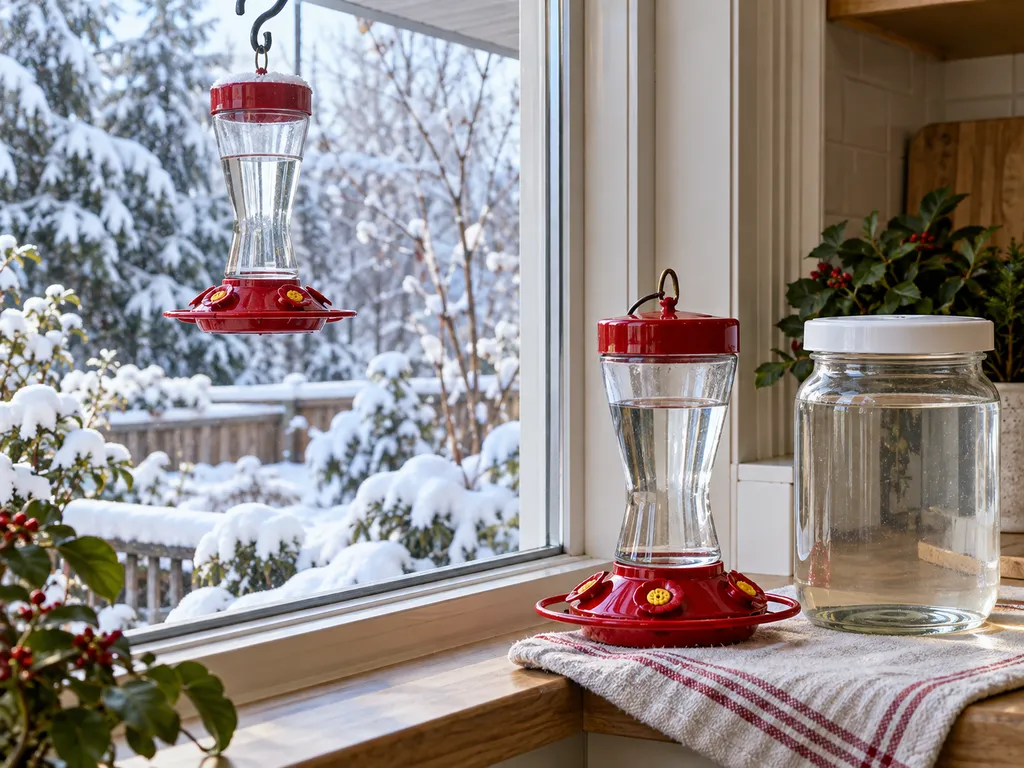
Boiling is optional for dissolving sugar, but nectar must be cool before filling the feeder. In winter, a lukewarm feeder from indoors may buy you time, but do not put out hot liquid, and do not use colored liquid. A proper hummingbird feeder already has red parts to help birds notice it. If you store extra nectar, keep it covered in the refrigerator and use it within about a week.
A Simple Overnight Rotation Plan
The lowest-tech cold snap system is two feeders. Before dark, bring one feeder indoors so it does not freeze overnight. At first light, hang the thawed feeder outside and bring the frozen or chilled one in to thaw and clean. If the day stays below freezing, swap again as needed. This is often more dependable than hoping one exposed feeder will stay open through a long freeze.
Use this checklist when the forecast drops below freezing:
- Fill with fresh, clear 4:1 nectar.
- Hang one feeder before dawn or as early as possible.
- Keep a second clean feeder indoors for rotation.
- Check the feeding ports, not just the reservoir.
- Place the feeder out of strong wind but still visible.
- Clean at every refill, even when the weather is cold.
Shelter Helps, But Do Not Hide The Feeder
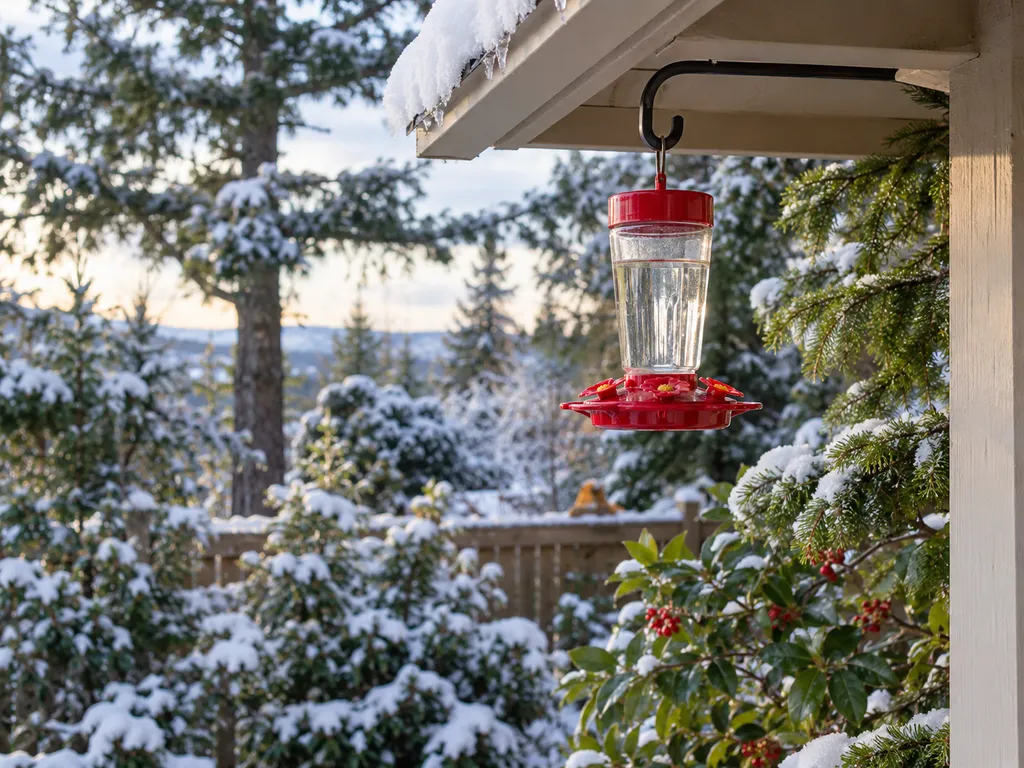
Placement can make a real difference. A feeder under an eave, beside a windbreak, or near evergreen cover may stay liquid longer than one hanging in open wind. The goal is shelter, not darkness. Hummingbirds still need to locate the feeder quickly, and a bird that has used one spot for days may waste time if the feeder suddenly moves far away.
Move a feeder only as much as needed to reduce wind and ice. If you must relocate it, keep it within the same general sight line when possible. A bright red saucer-style feeder can be especially practical in cold weather because the ports are easy to inspect and the shallow design is quick to thaw. Avoid metal perches or exposed metal parts that may become icy. A feeder with red plastic ports and a clear reservoir is easier to monitor.
Use Gentle Heat Carefully
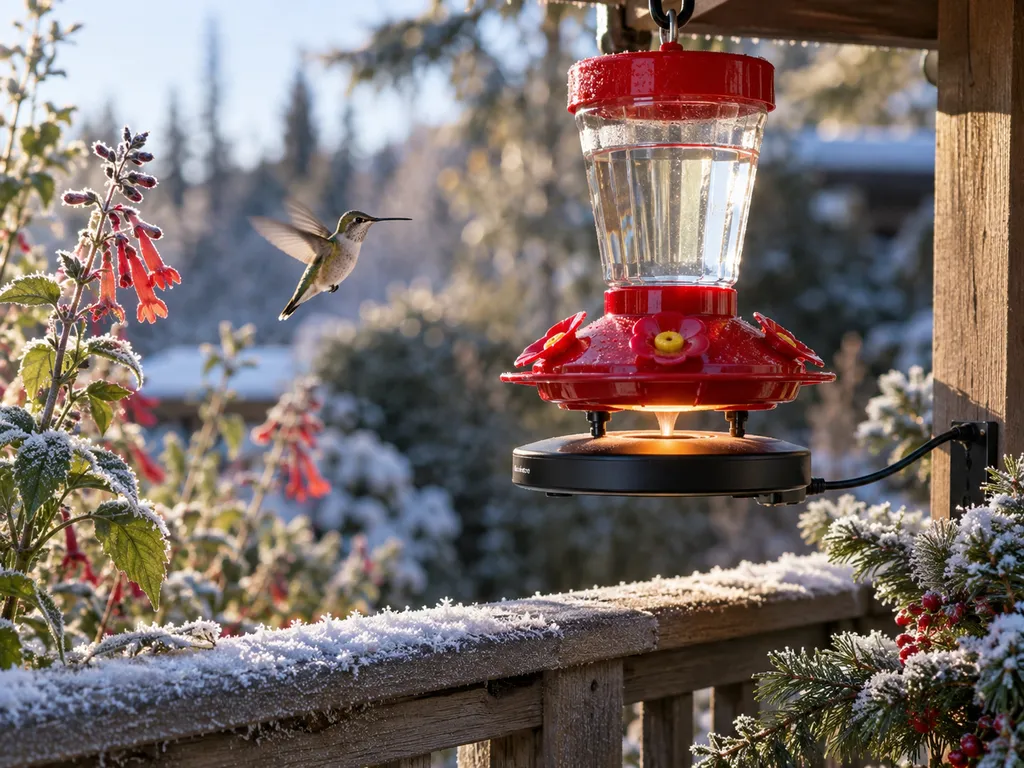
A purpose-made feeder heater can help where freezes are regular, provided it is rated for outdoor use and used exactly as the manufacturer directs. Some households also use non-LED holiday lights or other mild warmth near, not against, the feeder, but any electrical setup outdoors needs weather-safe equipment and a ground-fault-protected outlet. If you cannot make a warming setup safely, feeder rotation is the cleaner plan.
Do not use open flames, boiling water, space heaters aimed at the feeder, sticky wraps, oil, grease, petroleum jelly, or insecticides around a feeder. Those shortcuts create new risks and do not belong near hummingbirds. The aim is only to keep the nectar liquid, not to warm the bird or turn the feeder into a heated perch.
Cold Nectar Is Not The Main Worry
Audubon's hummingbird feeding FAQ addresses a common winter worry directly: cold nectar itself does not appear to cold-stun hummingbirds, but frozen nectar is a practical problem because the birds cannot drink it. The same FAQ says nectar may stay liquid a little below the freezing point of plain water, but in regular below-freezing conditions the feeder still needs active attention: https://www.audubon.org/magazine/hummingbird-feeding-faqs.
That distinction matters because it keeps the plan realistic. You do not need to serve warm nectar all day. You need the feeder to remain drinkable. A port that freezes over at sunrise can matter more than a reservoir that still has some liquid in the middle. During a hard freeze, check often enough to know what is happening at the feeding surface.
Keep Cleaning In The Plan
Cold weather slows some spoilage, but it does not cancel feeder care. Audubon recommends emptying and cleaning feeders often, with cooler weather allowing a less frequent schedule than hot weather, while still cleaning whenever the feeder is emptied or any problem appears. In a cold snap, the practical rule is simple: every time you refill or rotate, rinse and scrub with hot water and a bottle brush, and clear the ports with a small brush.
If you use a feeder heater, cleaning matters even more because a warmer base can keep nectar liquid and also keep residue from being obvious at a glance. Use clear nectar only. Replace it at once if it turns cloudy, stringy, sour-smelling, or shows dark specks. A clean feeder is part of the cold snap plan, not a separate chore for better weather.
Will Feeding Make Them Stay Too Late?
No. Audubon says leaving feeders up does not keep hummingbirds from migrating on time; migration is guided mainly by day length and seasonal cues, not by whether one feeder remains available. Its guide to attracting hummingbirds and orioles makes the same point and notes that feeders can supplement natural flower nectar: https://www.audubon.org/news/the-audubon-guide-attracting-hummingbirds-and-orioles.
This means you do not need to remove a feeder during a freeze to encourage a bird to leave. If hummingbirds are still present, a clean thawed feeder can help them keep moving through normal daily routines or continue migration when conditions allow. When the bird has not been seen for about two weeks, many backyard feeders use that as a practical point to clean, dry, and store the feeder.
A Feeder Is A Supplement, Not A Whole Habitat
Even in winter, a feeder should be seen as one support, not the entire yard. Audubon recommends native flowers, trees, shrubs, perches, water, and avoiding pesticides because nectar-feeding birds also use insects and natural shelter. In a cold snap, you may not be planting anything new, but you can avoid stripping every perch from the feeder area and avoid sprays near the feeder.
If your yard has multiple hummingbirds, one bird may guard a single feeder. In freezing weather, that can leave a less dominant visitor with fewer chances. If you can maintain them, two small feeders placed out of sight from one another are better than one large feeder that one bird can defend all day. Smaller feeders also thaw faster and waste less nectar when visits are light.
What If A Bird Looks Unable To Fly?
Do not try to keep, hand-feed, cage, move a nest, or raise a hummingbird. In the United States, the Migratory Bird Treaty Act protects native migratory birds and prohibits capturing, transporting, or keeping protected birds without authorization from the U.S. Fish and Wildlife Service: https://www.fws.gov/law/migratory-bird-treaty-act-1918. If a hummingbird cannot fly away, contact a licensed wildlife rehabilitator or your state wildlife agency for instructions.
Until you receive professional wildlife instructions, the usual emergency principle is minimal disturbance: keep children and pets away, reduce noise, and do not offer improvised food by hand. A feeder can remain available outside for visiting birds, but a bird that cannot leave the ground or a perch needs qualified wildlife help rather than a homemade rescue attempt.
The Bottom Line
A winter hummingbird cold snap plan is mostly about reliability. Use the normal 4:1 ratio, keep nectar clear, clean the feeder at refills, and prevent the ports from freezing by rotating feeders, sheltering the feeder, or using a purpose-made outdoor-safe heater. Do not strengthen the mix, add dye, or take a feeder down because of the myth that feeding stops migration. If the bird is visiting, make the feeder available at first light and keep it drinkable until the freeze passes.
Frequently Asked Questions
Should I make hummingbird nectar stronger during a cold snap?
No. Keep the standard 4:1 ratio: 1 part plain white table sugar to 4 parts water. The cold-weather fix is keeping the feeder thawed and clean, not changing the mix.
Do hummingbird feeders stop migration in winter?
No. Audubon explains that migration timing is guided mainly by day length and seasonal cues. Leaving a clean feeder up can help late migrants or wintering birds without forcing them to stay.
Is cold nectar dangerous for hummingbirds?
Audubon says cold nectar itself does not appear to cold-stun hummingbirds. The bigger problem is frozen nectar, especially frozen feeding ports that block access.
What is the easiest way to keep a feeder open in freezing weather?
Use two small feeders and rotate them. Bring one indoors overnight, hang the thawed one at first light, and swap as needed through the day if ports begin to freeze.
Can I use a feeder heater?
Yes, if it is designed for outdoor use and installed according to its instructions. Use gentle heat only to keep nectar liquid. Avoid open flames, unsafe electrical setups, oils, grease, sticky barriers, and anything that could coat feathers or contaminate the feeder.
Sources
This guide was researched using these sources.
- https://www.audubon.org/magazine/hummingbird-feeding-faqs
- https://www.allaboutbirds.org/guide/Annas_Hummingbird/overview
- https://www.allaboutbirds.org/news/theres-a-hummingbird-at-my-feeder-in-the-dead-of-winter-will-he-be-okay
- https://www.audubon.org/news/the-audubon-guide-attracting-hummingbirds-and-orioles
- https://www.fws.gov/law/migratory-bird-treaty-act-1918
- https://academy.allaboutbirds.org/live-event/winter-bird-feeding-101-with-project-feederwatch